

Imagine walking through the streets of ancient Rome, the aroma of freshly made pasta in the air. Picture rolling hills of vineyards bathed in the Tuscan sun or perhaps the breathtaking views of the Amalfi Coast. Italy beckons travelers with its history, culture, food, and scenery. But when is the best time to travel to Italy? The answer, like a well-prepared gelato, comes in many delicious flavors. In short, the best time to travel to Italy off-peak is Spring and Autumn. It’s hottest from May to October, with the beach season from June to August.
Indeed, Italy is painted in various colors and seasons, each presenting its own travel experience. I’ve been there three times and made all the possible tourist mistakes. So, in this article, I will share some of the most important things to consider when planning your Italian trip.
Navigating travel seasons
Just as Hawaii has its rhythms, Italy also has different tourist waves. We refer to them as the peak, off-peak, and shoulder seasons.
Peak (from June to August)
This is when the country sees the most visitors, namely the summer months.
- Pros: The weather is mostly warm and sunny in most of the country, ideal for beach trips and outdoor recreation.
- Cons: However, the most visited sites are very crowded, and you will wait in queues most of the time rather than enjoying the sights. Airfares and accommodations are also the most expensive.
Off-peak (from November to March)
This is when fewer tourists travel to the country. This time is usually during the winter months. The weather is cold and in some areas, there is even snow.
- Pros: You will have fewer crowds to deal with at popular spots. And you are likely to get better airfare and hotel rates.
- Cons: Some small hotels or restaurants, particularly in resort locations, may be shut down. Also, the temperature will not be perfect for all outdoor activities.
Shoulder (from April to May, from September to October)
These are the months between off-peak and peak seasons. Mainly, this is the best time to travel to Italy for sightseeing.
- Pros: The weather is mostly pleasant, neither extremely hot nor cold. A smaller crowd than in the peak season is also an advantage. The scenery is typically pleasant, with blossoms in the spring or yellow fall colors.
- Cons: The prices of travel and accommodation in big cities are higher than in the off-season.
Best month to visit Italy without crowds
The months of April and May in the spring and September and October in the fall generally offer a sweet escape from the biggest visitor rushes. After the Easter holidays in April, the initial spring break crowds tend to thin out. Similarly, by September, the peak summer vacationers have usually returned home, and the weather is still wonderfully pleasant in many areas.
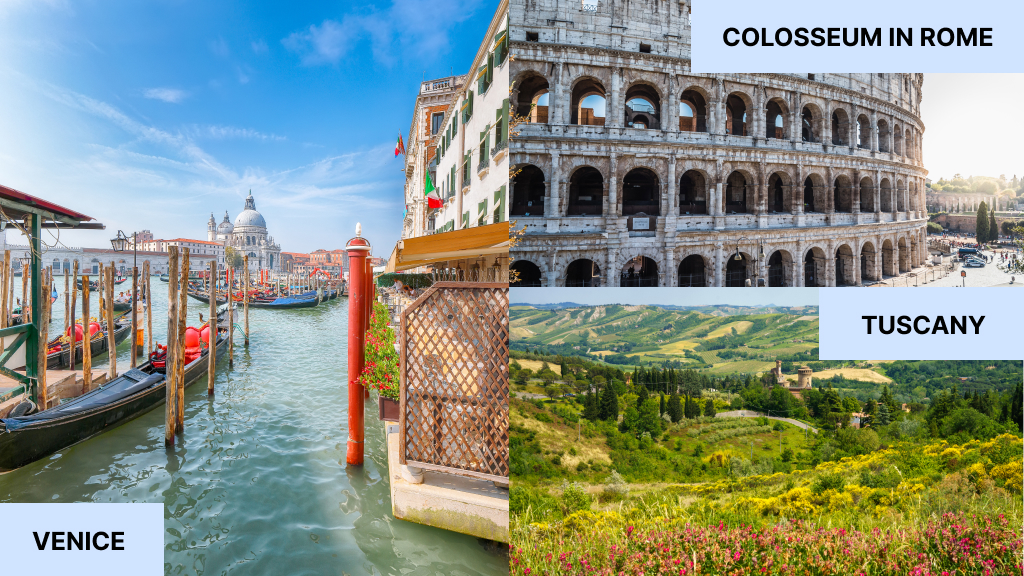
During these shoulder months, you will likely find shorter lines at popular attractions like the Colosseum in Rome or the Uffizi Gallery in Florence. You will also discover a more relaxed atmosphere in the charming streets of Venice or the picturesque villages of Tuscany.
Best time to visit Italy on a budget
The most budget-friendly time to explore this beautiful country is generally during the low season, which runs from November to March. Just keep in mind that the Christmas and New Year’s holidays tend to be a bit more expensive.
There are a couple of main reasons why prices are lower during these months:
- First, you might encounter some rain or snow, especially in the northern regions. While it’s perfect for cozying up in a café, it is not always ideal for traditional sightseeing for everyone.
- Second, fewer tourists visit Italy during this cold time. With fewer crowds wanting to travel, airlines and hotels often lower their prices to attract visitors.
Tips for even more savings: to snag the best deals on flights and accommodations during the off-season, be flexible with your travel dates and consider mid-week flights or less popular airports. For lodging, look at smaller towns or guesthouses, travel during the week if possible, and always check for off-season promotions and discounts.
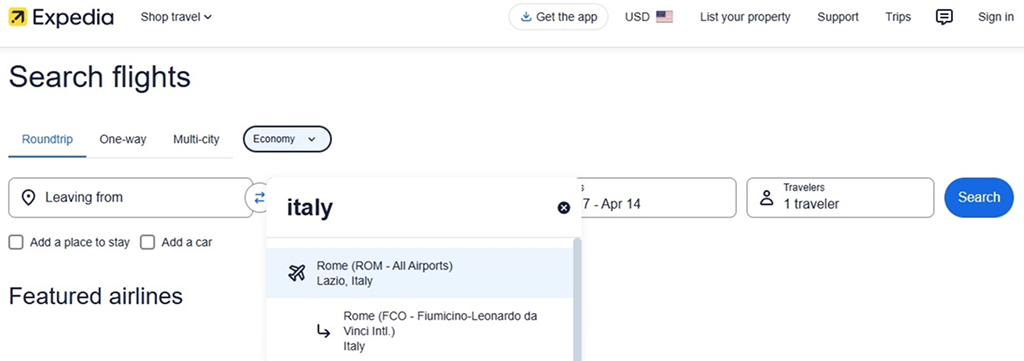
Meanwhile, check aggregators like Google Travel, Expedia, or KAYAK for the cheapest fares and inexpensive stays. Need more options? – Check my article about the best travel apps.
Best time to travel to Italy, weather-wise
The country enjoys a Mediterranean climate. This means you will usually find warm, dry summers and mild, wet winters. However, because the country stretches from the Alps in the north down to the Mediterranean Sea, you will experience different seasonal conditions depending on where you are.
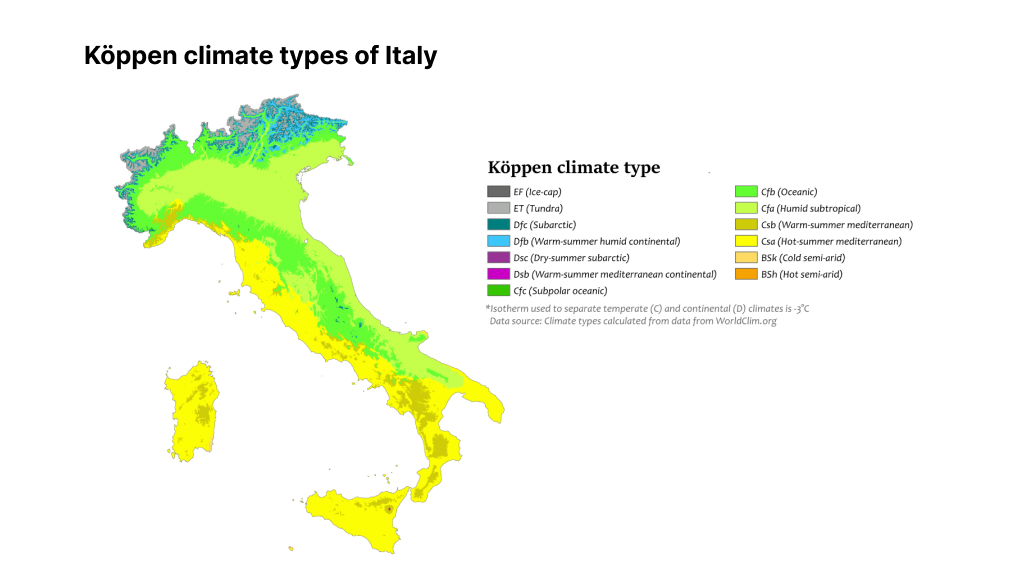
Temperature
- In the summer months, from June to August, temperatures climb quite high, especially in the central and southern regions. As you head north toward the mountains, the temperatures tend to be a bit cooler.
- Then, as fall arrives, the weather gradually cools down across the country.
- Winter brings colder temperatures, particularly in the northern mountains, where snow is common and great for skiing. Even in the South, though, you will feel a noticeable chill.
- Finally, spring brings a welcome warmth, with temperatures rising gently throughout the country.
Rainfall
- The Mediterranean area tends to get most of its rain during the winter months. You might encounter more showers from November to February.
- Spring and autumn can also bring some rain, although typically less than winter.
- Summers are usually quite dry, especially in the south. However, you might experience occasional thunderstorms, particularly in the north during the summer.
Tip: No matter what the best time to travel to Italy is for you, dressing in layers is always a good idea, as temperatures can change throughout the day. Additionally, before you go and even during your trip, check the forecast for the specific areas you will be visiting.
Italy weather by month
January
Expect cold temps, with potential snow, especially in the north and mountains. Crowds are generally low, except around New Year’s. You can enjoy winter sales and Epiphany celebrations. Fewer tourists and lower prices are definite perks. However, be prepared for the cold and possible reduced hours at some attractions.
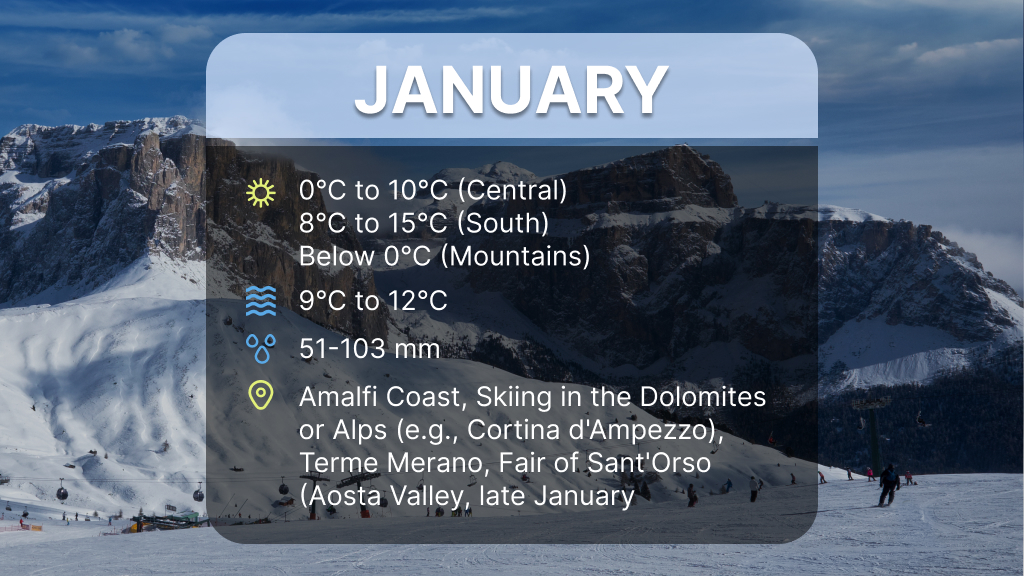
| Average t° | Rainfall | Water temp | Recommended spots |
| 0°C to 10°C (Central)8°C to 15°C (South)Below 0°C (Mountains) | Moderate (around 51 – 103 mm) | 9°C to 12°C (Coastal) | Amalfi Coast, Skiing in the Dolomites or Alps (e.g., Cortina d’Ampezzo), Terme Merano, Fair of Sant’Orso (Aosta Valley, late January) |
February
February in Italy brings a chill similar to January but with a vibrant twist! Carnival celebrations, especially in Venice, add a festive air, drawing moderate crowds to those areas. You will still find relatively low crowds overall, which is a plus. However, cold remains a con.
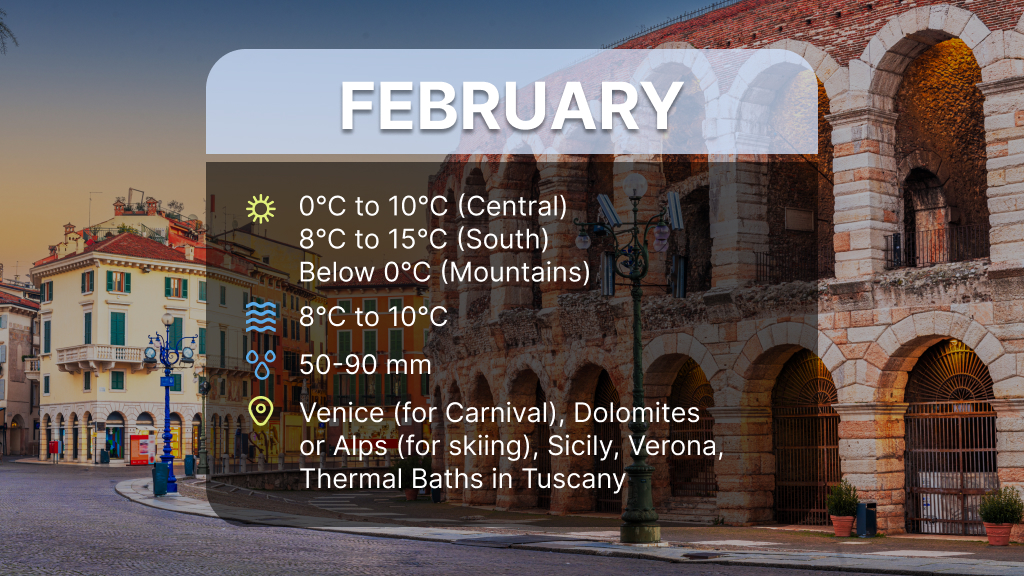
| Average t° | Rainfall | Water temp | Recommended spots |
| 0°C to 10°C (Central)8°C to 15°C (South)Below 0°C (Mountains) | Moderate (around 50 – 90 mm) | 8°C to 10°C (Coastal) | Venice (for Carnival), Dolomites or Alps (for skiing), Sicily, Verona, Thermal Baths in Tuscany |
March
March marks the beginning of spring, with milder temperatures and the first signs of blooming flowers. While the atmospheric conditions remain a bit unpredictable, it’s generally pleasant for walking around. Crowds start to increase but are still manageable in most places. Easter celebrations might occur in March, adding to the cultural experience. Still, the variable weather is the main drawback.
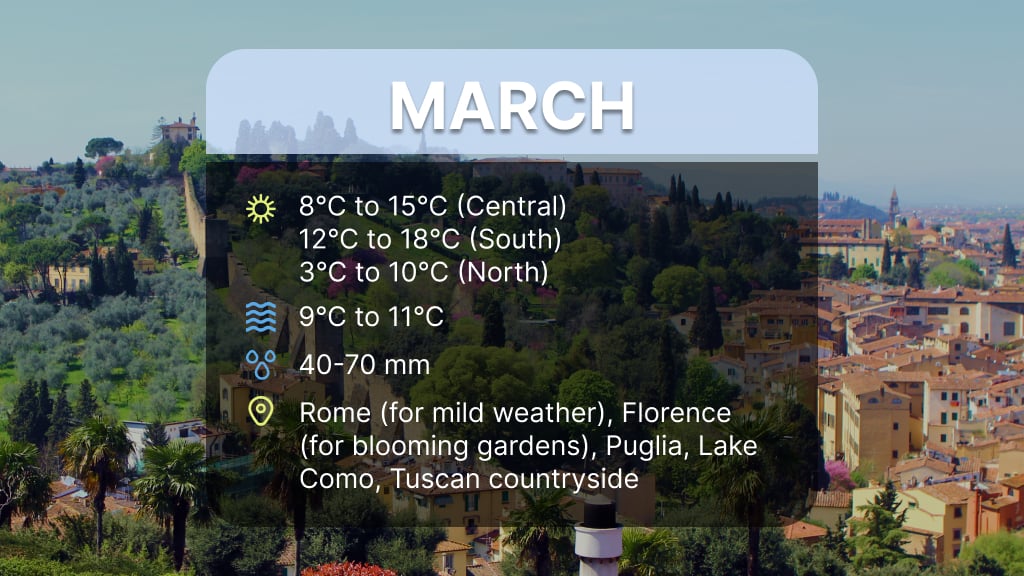
| Average t° | Rainfall | Water temp | Recommended spots |
| 8°C to 15°C (Central)12°C to 18°C (South)3°C to 10°C (North) | Moderate (around 40 – 70 mm) | 9°C to 11°C (Coastal) | Rome (for mild weather), Florence (for blooming gardens), Puglia, Lake Como, Tuscan countryside |
April
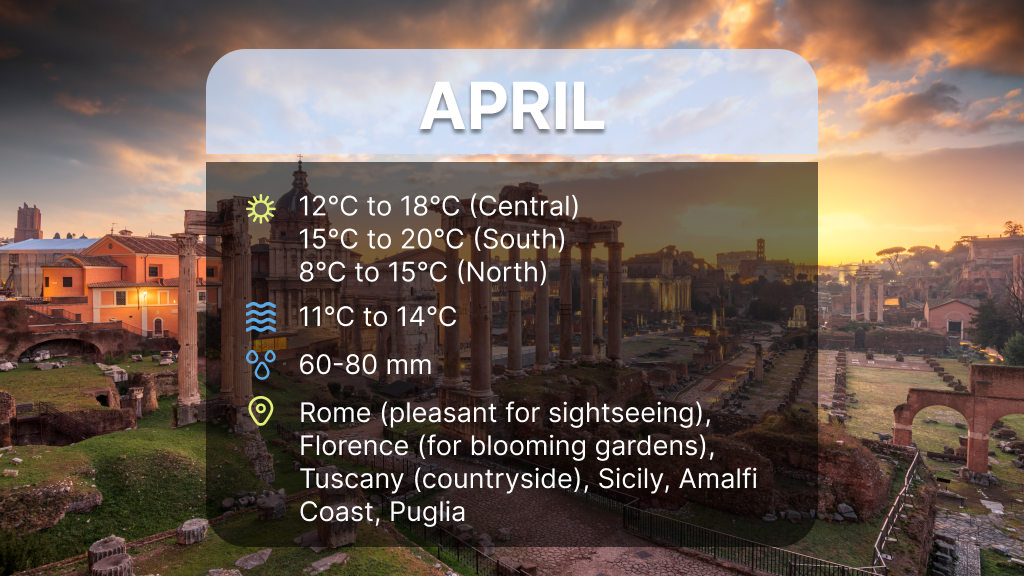
Mid-spring arrives with warmth and sunshine gracing many regions, though occasional rain is possible. Crowds are moderate, especially around Easter. You will find a vibrant atmosphere as landscapes burst into bloom. However, expect prices and tourist numbers to start their climb.
| Average t° | Rainfall | Water temp | Recommended spots |
| 12°C to 18°C (Central)15°C to 20°C (South)8°C to 15°C (North) | Moderate (around 60 – 80 mm) | 11°C to 14°C (Coastal) | Rome (pleasant for sightseeing), Florence (for blooming gardens), Tuscany (countryside), Sicily, Amalfi Coast, Puglia |
May
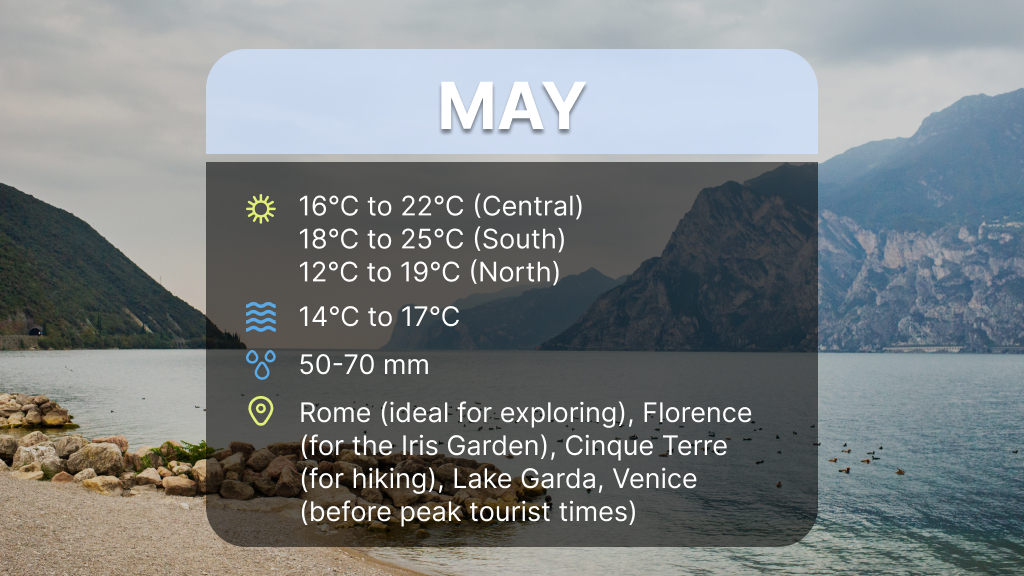
Picture this: Italy bathed in warm sunshine, perfect for all sorts of adventures outside! This is what you will likely find in the fifth month of the year. The climate is excellent for seeing the sights and exploring. However, popular spots do get busier, and you will notice prices starting to creep up. On the bright side, numerous local concerts and events add to the lively atmosphere.
| Average t° | Rainfall | Water temp | Recommended spots |
| 16°C to 22°C (Central)18°C to 25°C (South)12°C to 19°C (North) | Moderate (around 50 – 70 mm) | 14°C to 17°C (Coastal) | Rome (ideal for exploring), Florence (for the Iris Garden), Cinque Terre (for hiking), Lake Garda, Venice (before peak tourist times) |
June
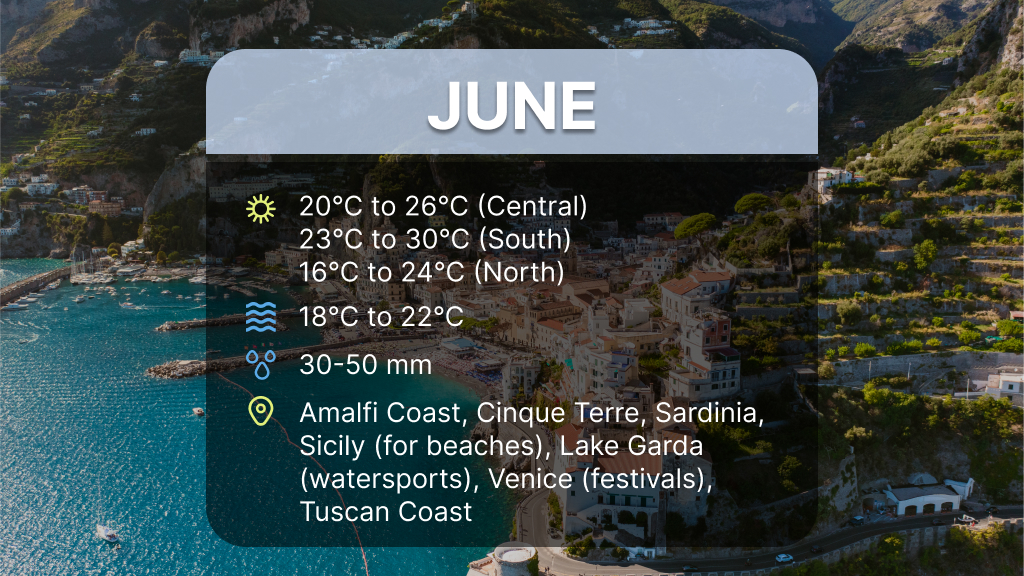
Expect hot and sunny days, perfect for those seeking a classic Mediterranean experience. However, with the arrival of such lovely weather comes the start of the peak tourist season, meaning larger crowds and higher prices. You will find plenty of summer festivals (e.g., Festa del Redentore, Venice) and outdoor concerts adding to the lively atmosphere. The long daylight times are a definite bonus, especially if you are planning a beach getaway.
| Climate | Rainfall | Water temp | Recommended spots |
| 20°C to 26°C (Central)23°C to 30°C (South)16°C to 24°C (North) | Low (around 30 – 50 mm) | 18°C to 22°C (Coastal) | Amalfi Coast, Cinque Terre, Sardinia, Sicily (for beaches), Lake Garda (watersports), Venice (festivals), Tuscan Coast |
July
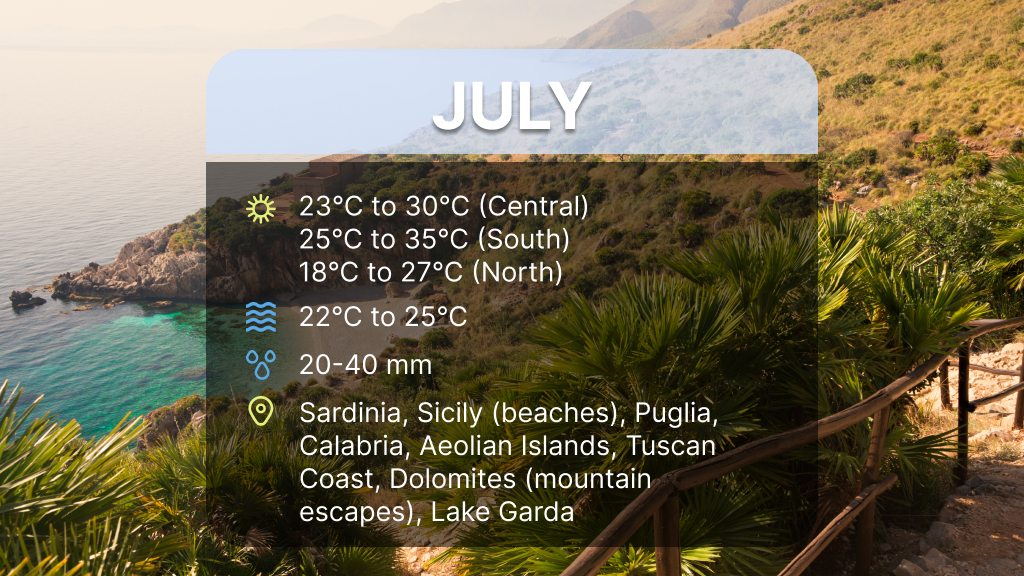
Midsummer is typically hot and humid, particularly as you head south. Expect very large crowds as it’s the height of the peak season, which also means the highest prices. The atmosphere is lively with summer festivals. If your dream is a beach vacation, this is the perfect time. However, be prepared for intense heat and significant tourist numbers.
| Climate | Rainfall | Water temp | Recommended spots |
| 23°C to 30°C (Central) | Low (around 20 – 40 mm) | 22°C to 25°C (Coastal) | Sardinia, Sicily (beaches), Puglia, Calabria, Aeolian Islands, Tuscan Coast, Dolomites (mountain escapes), Lake Garda |
| 25°C to 35°C (South) | |||
| 18°C to 27°C (North) |
August
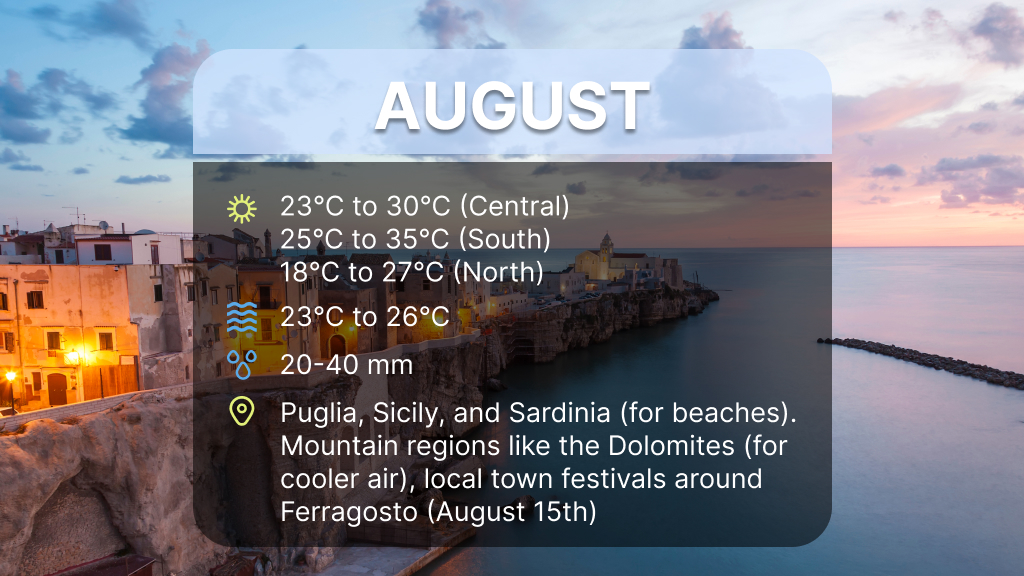
Italy, in the heart of summer, sees August much like July – very hot, especially in the south. Expect the best attendance of the year, and be aware that many local businesses, particularly smaller ones, might close for the Italian summer holiday of Ferragosto. While resort towns buzz with a festive atmosphere, you will face extreme heat and massive numbers of tourists.
| Climate | Rainfall | Water temp | Recommended spots |
| 23°C to 30°C (Central)25°C to 35°C (South)18°C to 27°C (North) | Low (around 20 – 40 mm) | 23°C to 26°C (Coastal) | Puglia, Sicily, and Sardinia (for beaches). Mountain regions like the Dolomites (for cooler air), local town festivals around Ferragosto (August 15th) |
September
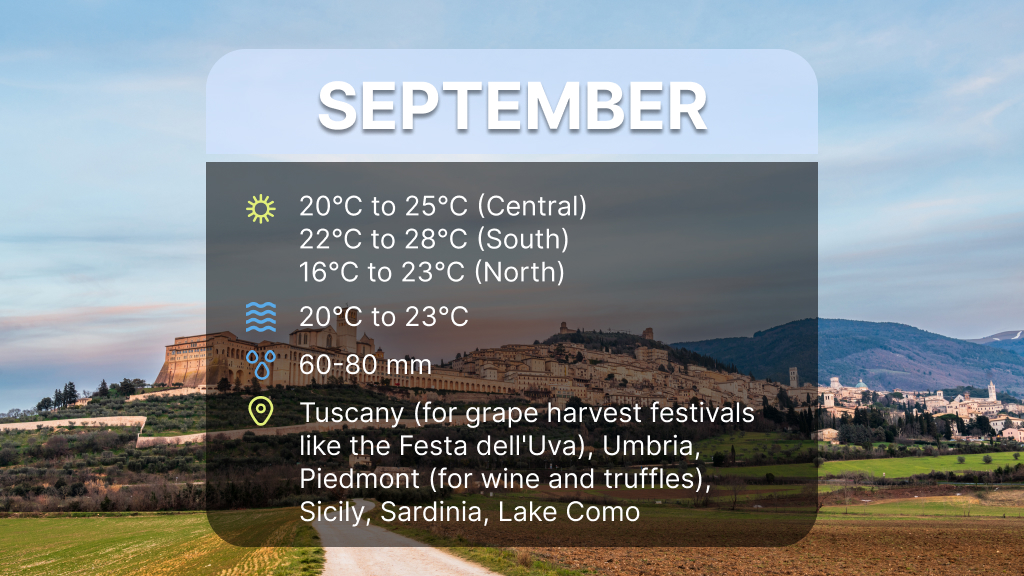
As summer gently fades, Italy, in the ninth month, offers warm and sunny days, with temperatures beginning to feel more comfortable. While still a popular time to travel, the large summer tourist groups start to thin out. You will find the exciting atmosphere of harvest feasts and grape harvests in many regions. The pleasant climate and fewer tourists are big pluses.
| Temperature | Rainfall | Water temp | Recommended spots |
| 20°C to 25°C (Central) | Moderate (around 60-80mm) | 20°C to 23°C (Coastal) | Tuscany (for grape harvest festivals like the Festa dell’Uva), Umbria, Piedmont (for wine and truffles), Sicily, Sardinia, Lake Como |
| 22°C to 28°C (South) | |||
| 16°C to 23°C (North) |
October
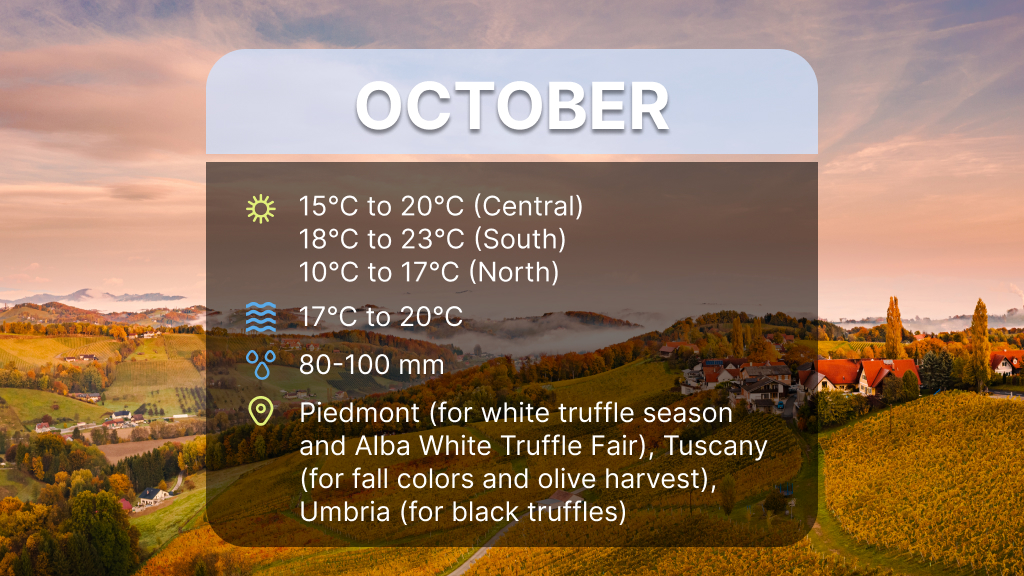
October welcomes mild and sunny weather, with the added beauty of autumn leaves painting some areas in vibrant colors. Tourist numbers continue to decrease, creating a pleasant atmosphere for sightseeing. You will find the delicious highlights of the truffle harvest and various food festivals (e.g., International White Truffle Fair, Alba). Comfortable temperatures and fewer tourists are definite advantages, though there is a chance of rain.
| Temperature | Rainfall | Water temp | Recommended spots |
| 15°C to 20°C (Central) | Moderate (around 80-100mm) | 17°C to 20°C (Coastal) | Piedmont (for white truffle season and Alba White Truffle Fair), Tuscany (for fall colors and olive harvest), Umbria (for black truffles) |
| 18°C to 23°C (South) | |||
| 10°C to 17°C (North) |
November
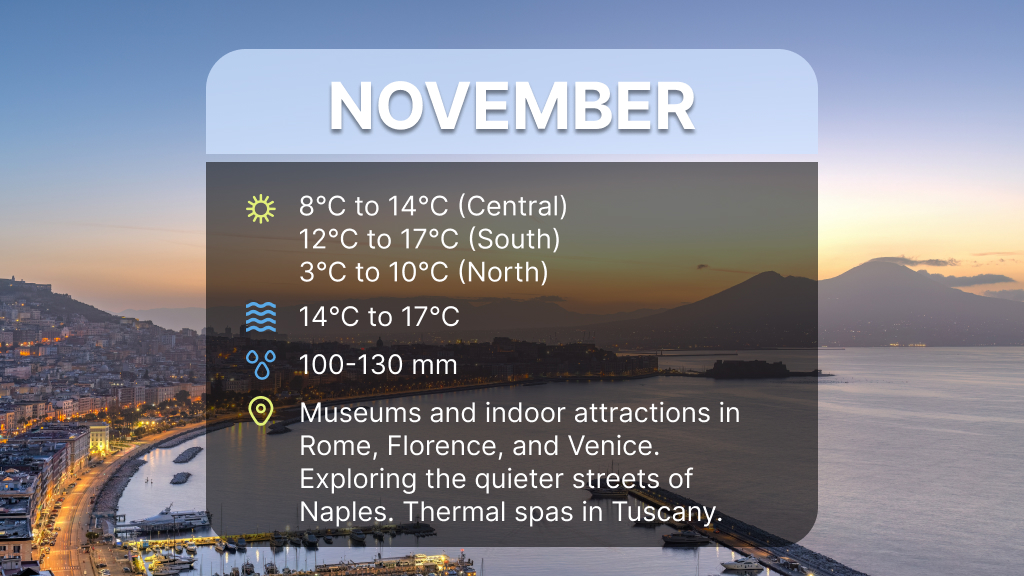
Italy in November is often seen as cool and wet, with daylight hours becoming shorter. You will find very few tourists, leading to lower prices, except around the All Saints’ Day holiday. This time offers a quieter experience. However, the weather might feel gloomy, and some outdoor attractions might have reduced hours or be closed.
| Temperature | Rainfall | Water temp | Recommended spots |
| 8°C to 14°C (Central) | High (around 100-130 mm) | 14°C to 17°C (Coastal) | Museums and indoor attractions in Rome, Florence, and Venice. Exploring the quieter streets of Naples. Thermal spas in Tuscany. |
| 12°C to 17°C (South) | |||
| 3°C to 10°C (North) |
December
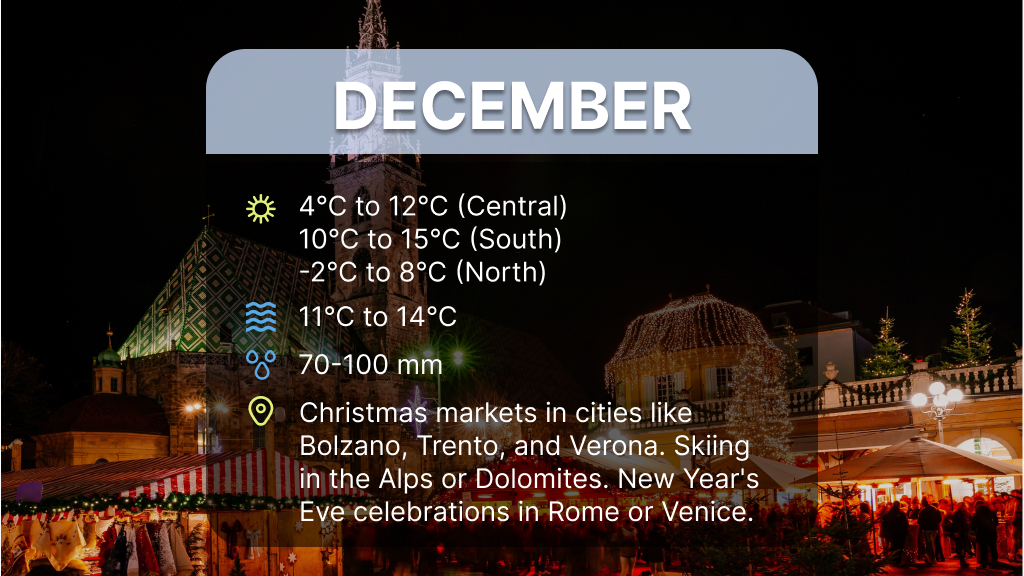
Italy embraces a cold but festive atmosphere in its final month. You might see snow in some areas, adding to the holiday charm. While crowds are generally low, expect more visitors around Christmas and New Year’s. The highlights are the delightful Christmas markets and the exciting New Year’s Eve celebrations. The festive spirit is a major draw, but be prepared for chilly weather and potentially reduced hours at some attractions.
| Temperature | Rainfall | Water temp | Recommended spots |
| 4°C to 12°C (Central) | Moderate (around 70-100mm) | 11°C to 14°C (Coastal) | Christmas markets in cities like Bolzano, Trento, and Verona. Skiing in the Alps or Dolomites. New Year’s Eve celebrations in Rome or Venice. |
| 10°C to 15°C (South) | |||
| -2°C to 8°C (North) |
Best time to travel to Italy by activity
So, you are dreaming of a specific Italian adventure? This table will help you pinpoint the ideal opportunity to go for your favorite activities:
| Activity | Best time to travel to Italy | Why |
| Beaches | Summer (June-August) | The warmest water and lots of sunshine |
| Hiking in the Dolomites | Summer (June-September) | The trails are clear, and this time is good for walking |
| City sightseeing (Rome, Florence, Venice) | Spring (April-May) and Fall (September-October) | Nice weather and fewer tourists |
| Skiing in the Alps | Winter (December-March) | The snow is perfect for hitting the slopes |
| Food and wine experiences (Tuscany, Piedmont) | Fall (September-October) | The harvest period with many food festivals |
No matter what you plan to do, Italy offers something special in every season. Choose the season that best fits your interests and get ready for an unforgettable trip!
Worst time to visit Italy
While the country shines in many seasons, there are a couple of moments when you might want to think twice about traveling if certain things bother you.
- August: This time is usually at its hottest, and you will find huge lines everywhere as it’s peak vacation time for many Europeans, including Italians themselves (due to Ferragosto). Plus, many smaller, family-run businesses might be closed for their summer break, which could limit your options.
- Mid-July: Many of the same challenges as August. In particular, you will likely experience very high heat and significant numbers of tourists at all the popular attractions.
- Winter: It might not be the best time to travel to Italy if you are not a fan of cold and rainy weather. Some outdoor activities might not be possible, and the shorter daylight hours could limit your sightseeing opportunities.
However, it’s important to remember that “worst” is subjective. If you love hot days and don’t mind crowds, August might still be enjoyable for a beach holiday.
Final thoughts
So, as you have seen, the best time to travel to Italy truly depends on what you are looking for in your vacation.
Italy has a season that will suit you perfectly. Think about what excites you most – soaking up the sun, diving into culture, savoring incredible meals, or saving some money. Also, consider how you feel about crowded places and different types of weather.
No matter when you choose to travel, Italy’s beauty and charm will captivate you. The country has stunning landscapes, a rich history, and a vibrant culture, so there is always something wonderful to discover.
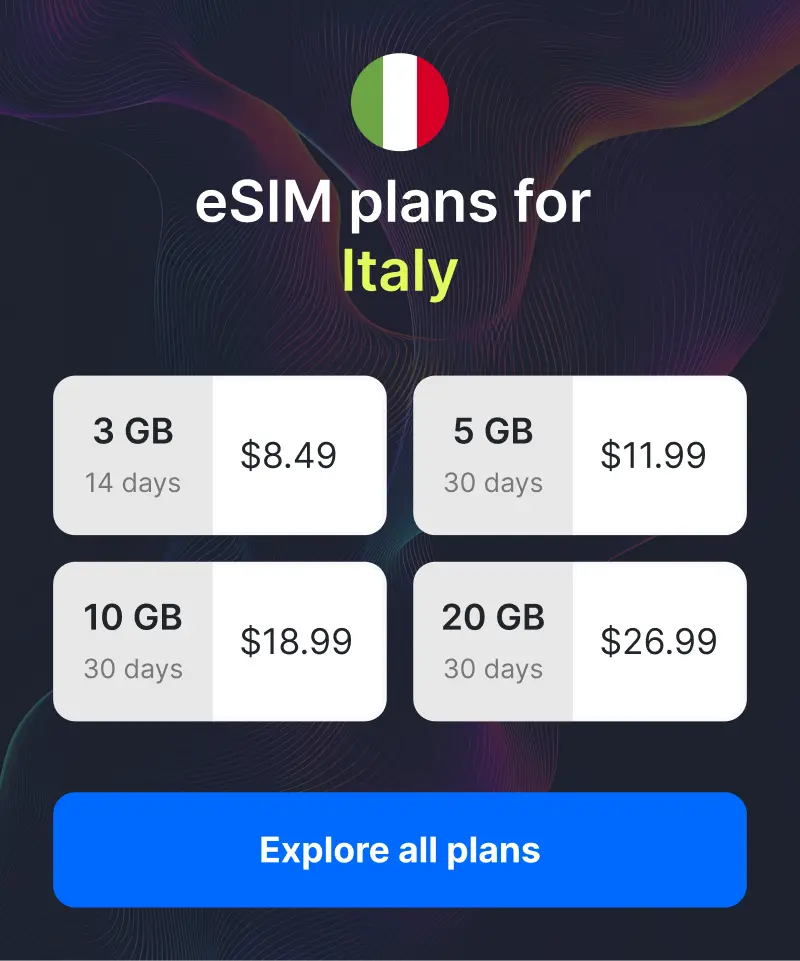
To ensure you stay connected and share all your amazing experiences, remember to check out Ohayu eSIM for iPhone and Android. Using a travel eSIM for Italy, you can connect to local Italian networks and get mobile internet shortly after you arrive in the coutry.