


The New Zealand mobile market stands out for its dynamic development and the introduction of advanced technologies. The three main operators – One NZ, Spark New Zealand, and 2degrees – actively compete. In this article, we will analyze the main advantages and coverage quality of New Zealand mobile networks.
New Zealand mobile market overview
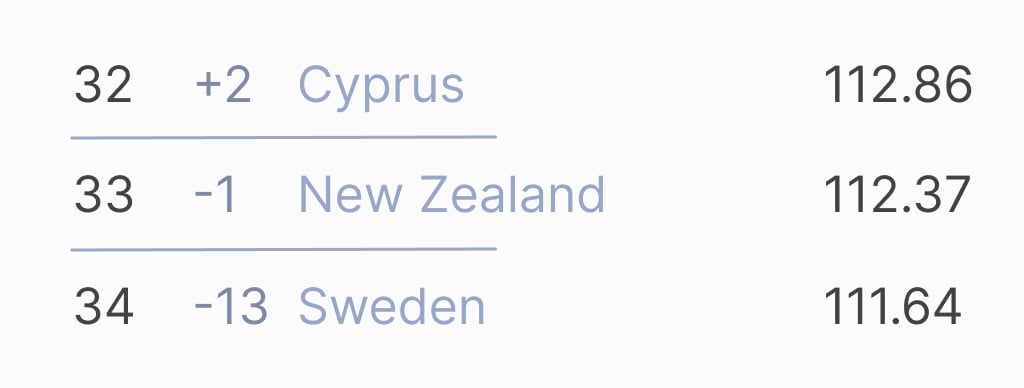
Urban centers in the country have wide coverage and good service quality. According to the Speedtest Global Index, in January 2025 the median mobile download speed in New Zealand was 112.37 Mbps, and the upload speed was 12.21 Mbps, with a latency of 29 ms.
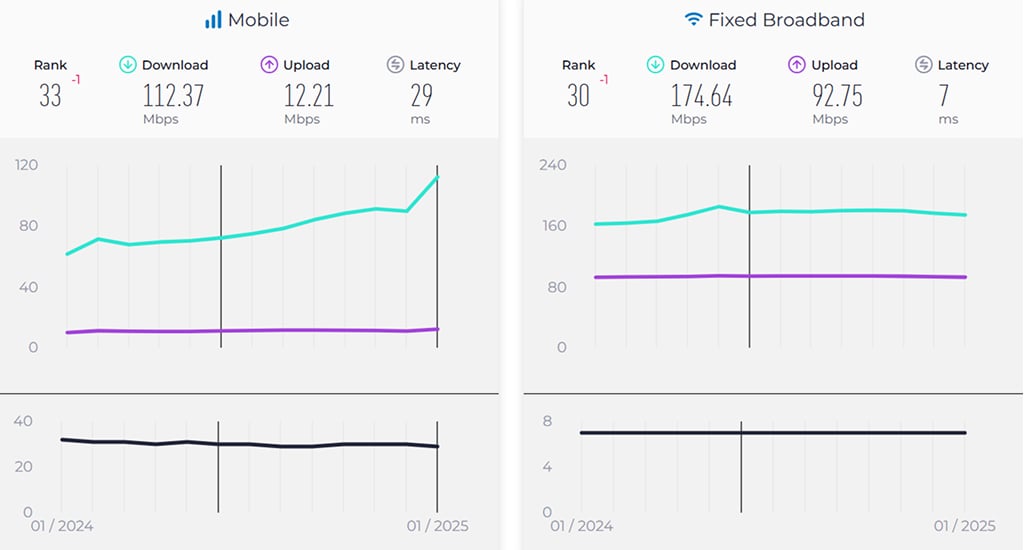
This performance put the country in 33rd place in the Speedtest ranking for January 2025.
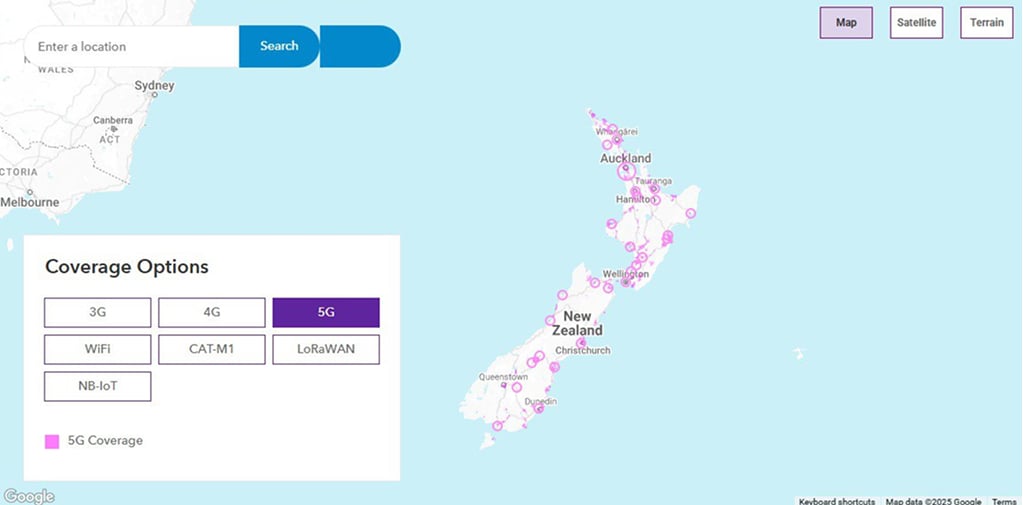
Major operators such as One NZ (formerly Vodafone), Spark, and 2degrees provide 4G coverage for the majority of the population, and 5G in cities and larger towns.
Coverage and quality
In urban areas such as Auckland, Wellington, and Christchurch, users can expect reliable connectivity and high-speed internet. Providers are actively expanding their 5G networks. They strive to deliver cutting-edge services to customers. Meanwhile, coverage can be patchy or absent in remote and rural areas. This is due to difficult terrain and low population density. To improve the situation, they are introducing new technologies:
- 5G Standalone – technology that doesn’t depend on the 4G network and improves the performance and stability of communication.
- Satellite-to-mobile services – One NZ works with SpaceX Starlink on Satellite TXT, and Spark announced a satellite-to-mobile partnership with Lynk Global in 2023.
- LTE-M and NB-IoT – connecting smart devices (smart meters, sensors, monitoring systems) in rural areas with minimal power consumption.
To improve connectivity in rural and remote areas, New Zealand mobile networks have joined forces to form the Rural Connectivity Group (RCG) joint venture. RCG’s goal is to build new mobile towers to provide high-speed wireless Internet to additional households. This also improves mobile coverage on public roads.
Disconnecting outdated systems
All three major operators have switched off their 3G networks (2degrees completed its shutdown in February 2026, followed by One NZ and then Spark), freeing up the frequency spectrum for the expansion of 4G and 5G services. This transition was driven by declining demand for 3G and the need to maintain modern communication standards. Phones that only support 3G no longer work in New Zealand.
eSIM technology
eSIM technology is available in New Zealand, giving users the ability to easily change operators and plans without physically replacing the SIM card. This is convenient for travelers and those who frequently change service suppliers.
Ohayu has travel eSIM plans for New Zealand that can connect you to local networks without a physical SIM card.
Plans
In cities, public Wi-Fi networks are available, but they can come with costs and traffic restrictions. Therefore, we recommend choosing mobile plans carefully, considering your requirements and budget.
3 main New Zealand mobile networks
There are three main operators in the country – 2degrees, Spark New Zealand and One NZ – and a number of MVNOs. Mobile virtual operators are providers without their own towers and network equipment. They use the networks of large operators to deliver communication solutions.
2degrees
Launched in 2009, 2degrees quickly gained popularity thanks to its affordable tariffs and quality service. Today, 4G coverage is available in most populated areas of the country. As of early 2025, 5G was reachable in Wellington, Auckland, Invercargill, the Gore area, Queenstown, Dunedin, Christchurch, Dannevirke, and other places across the country.
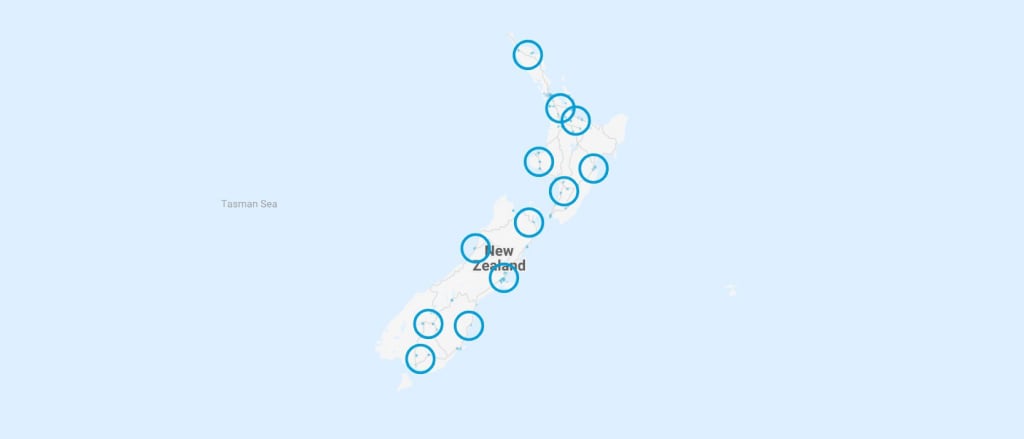
The operator continues to expand its presence in the market in terms of extensive coverage. The company is focused on improving coverage and service quality, especially in regional and remote areas.
Spark
This is another major player in the country’s telecoms market. In August 2014, the company changed its name from Telecom New Zealand to Spark, reflecting its new direction and commitment to innovation. Spark provides a wide range of services, from mobile communications to cloud solutions. It constantly invests in infrastructure.
In April 2023, the company announced plans to invest between NZ$250 million and NZ$300 million in data center construction over the next three years, as well as up to NZ$60 million in 5G network development.
The company is actively developing IoT solutions. It runs fleet tracking, water monitoring, and asset management solutions. This makes Spark an attractive partner for business customers interested in implementing modern technologies.
One New Zealand (formerly Vodafone)
It is one of the largest mobile operators in the country, formerly known as Vodafone NZ. One has partnered with Starlink to provide the Satellite TXT service. It allows users to send text messages in places without traditional cellular coverage. This is useful for customers in remote areas or when traveling.

One NZ, 2degrees, and Spark – detailed analysis
So how do the New Zealand mobile networks compare? Here are the results of Opensignal’s analysis from September 2024. According to it, 2degrees led in most categories, including download and upload speeds.
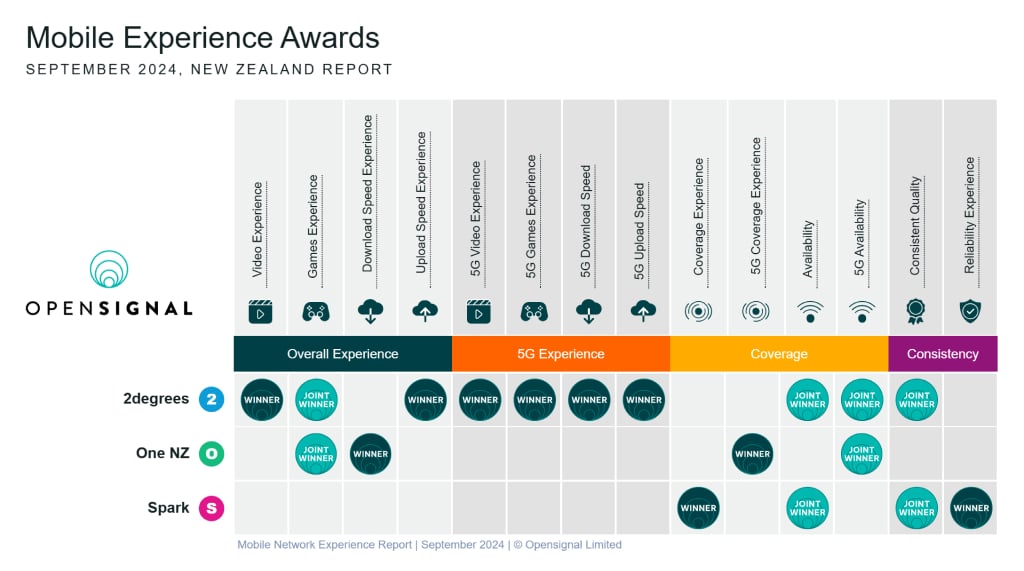
In terms of 5G, 2degrees led most subcategories in that report. For example, it scored 76.5 points (video) and 84.7 (games) on a 100-point scale, with a 5G download speed of 343.1 Mbps.
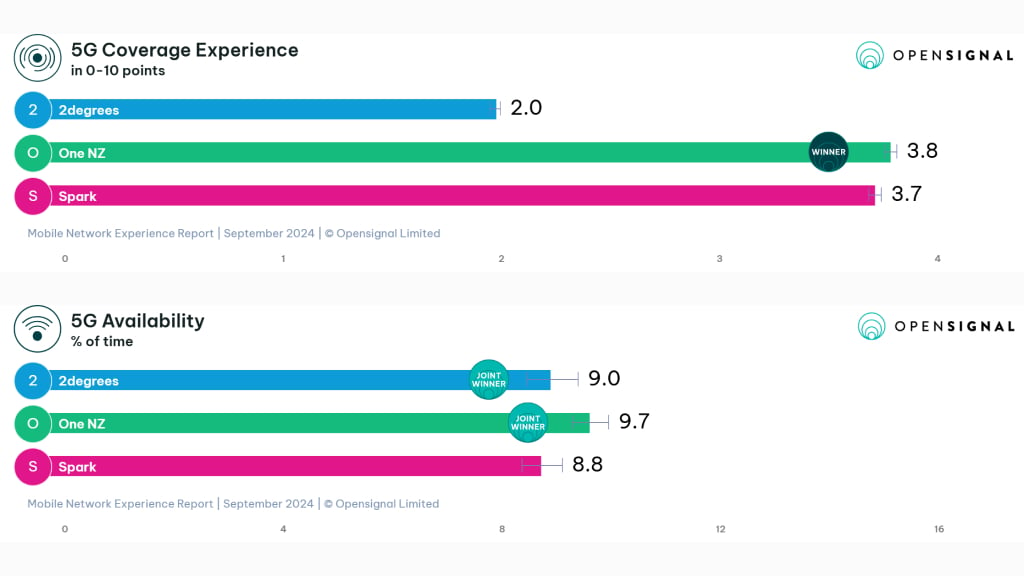
One NZ was a co-winner in 5G coverage and availability.
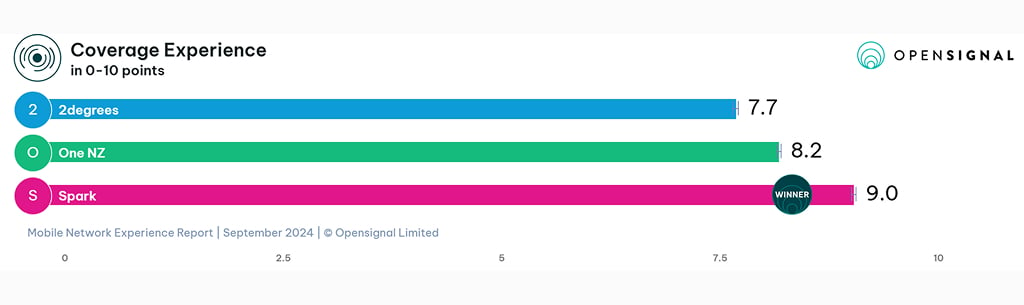
Spark won in overall coverage experience with a score of 9 out of 10.
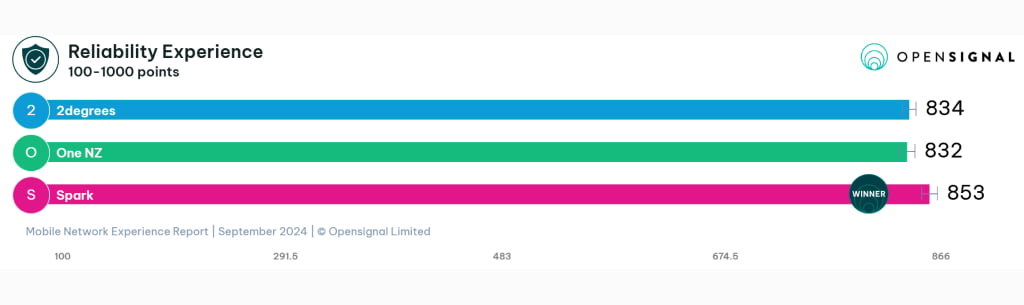
The operator also scored 853 points out of 1000 in reliability experience. It is measured based on the quality of network connectivity, task completion, and sufficiency.
To sum up
New Zealand mobile networks are developing 5G technologies, although 5G is mostly limited to cities and larger towns. They provide residents and tourists with high-quality communication and data transfer speeds in urban areas. Outside towns and main highways, coverage can be patchy or absent, and 3G has been switched off.
What about the best operator? In Opensignal’s September 2024 report, 2degrees led most speed and 5G experience categories, which matters for gamers and streamers. One NZ was a co-winner for 5G coverage and availability, and Spark won the coverage experience award, which matters if you travel around New Zealand or work in remote areas.
International eSIM providers like Ohayu can connect you to local New Zealand mobile networks with no physical cards. This is a beneficial solution for traveling because eSIMs often cost less than your home operator’s roaming.
Aside from the single country plan, Ohayu has a Global eSIM that can get you connected in 120+ countries. It’s an option for multi-country trips.