

The main Nigeria mobile networks are MTN (the fastest in SpeedGeo’s Q1 2026 ranking), Airtel, T2 (9mobile), and Globacom, known for generous data bundles.
Let’s plan your next trip to Nigeria together, so that the experience of learning about a new culture won’t be spoiled by poor communication. This country in West Africa is multicultural, authentic, and appealing to adventurers. It has a well-developed 4G signal, which sometimes switches to a weaker range. In the meantime, MTN, Globacom, Airtel, and T2 (formerly 9mobile) continue to introduce technology to improve the speed and quality of connection. Let’s learn more about the features of mobile networks in Nigeria to choose the best one for your trip and avoid connection problems.
eSIM from Ohayu has data-only travel eSIM plans for Nigeria, which can be easier than buying a local SIM after arrival.
Brief overview of the mobile market in Nigeria
One of the first questions that arises upon arrival in the country is how to stay connected. Wi-Fi quality in hotels varies. Google Maps and WhatsApp are must-haves. Here’s how things work with mobile Internet, coverage, and SIM cards in Nigeria.

What are the main mobile networks in Nigeria?
There are several major players in Nigeria: MTN, Airtel, Globacom, and T2 (9mobile). MTN is the largest operator and has wide coverage, including many rural areas. If you are going to Lagos, Abuja, or other big cities, almost any carrier works well. Airtel often gives good speeds. Globacom is known for generous data bundles, but connection quality varies. T2 is the smallest of the four.
Loading speed and coverage
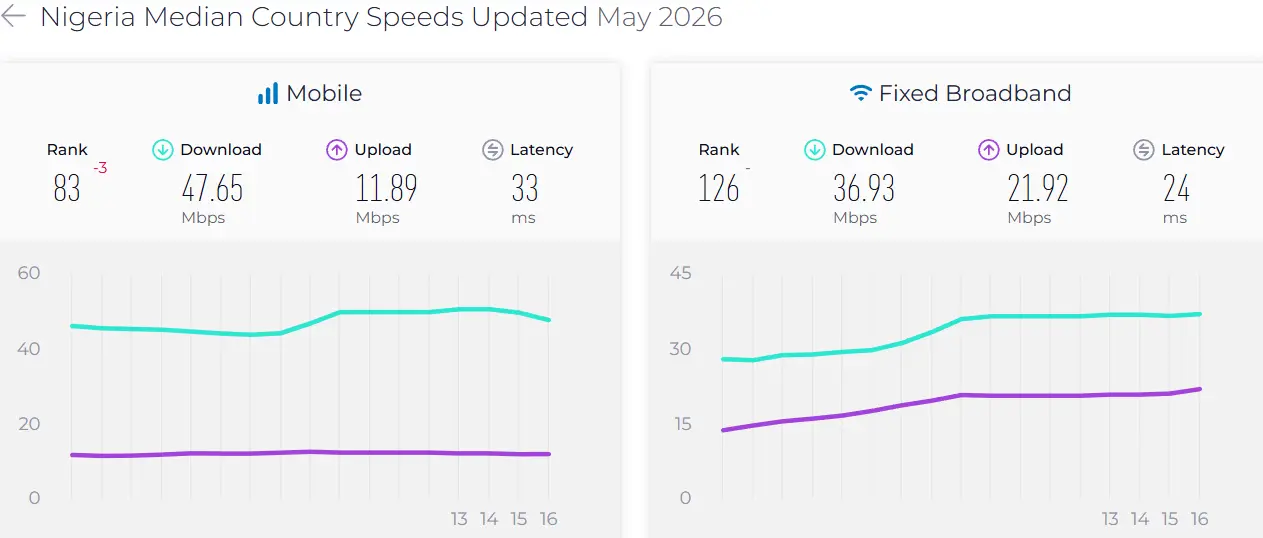
Connections in cities are generally good, although Nigeria ranked 85th for mobile in the Speedtest Global Index for December 2025, with a median download speed of 44.14 Mbps. Speedtest, SpeedGeo, and Opensignal measure speed in different ways, so the figures in this article are not directly comparable.
4G is generally good in cities. But as soon as you go somewhere remote, the nuances begin to emerge. In some regions, only 2G is available, or there is a dead zone.
How to buy a SIM card?
SIM cards in Nigeria must be registered. As a tourist, you will need a passport or other document, sometimes even a photo, to register a SIM in Nigeria. If you later become a resident, you will also need a NIN. It’s best to go to the carrier’s branded store or kiosk at the airport. Tariffs are flexible: you can choose data-only bundles or bundles with call minutes.
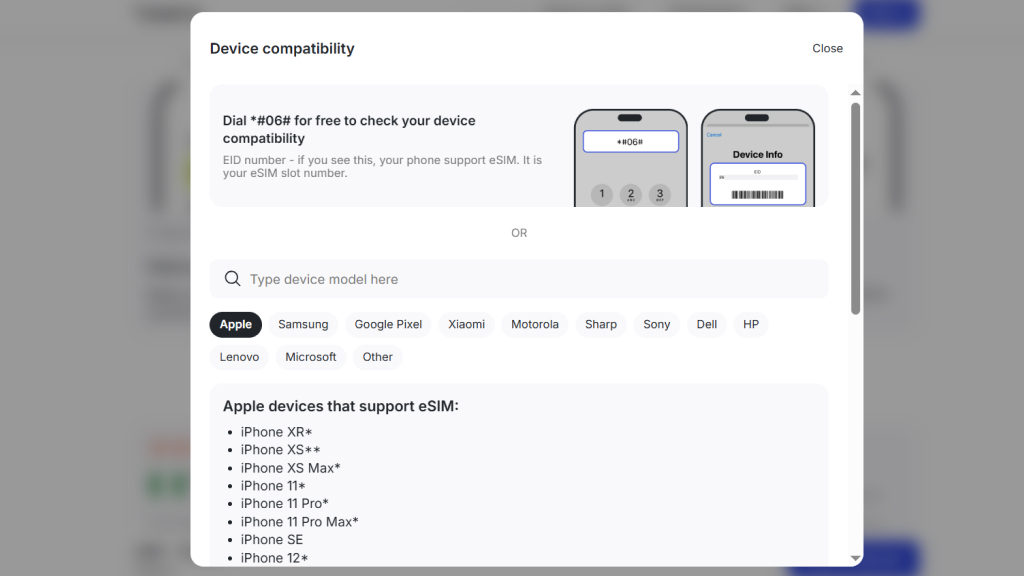
To avoid hunting for a SIM shop, you can order a plan from Ohayu in advance, install the eSIM over Wi-Fi before you travel, and activate it when you arrive. You can check the compatibility with the smartphone via this link.
Nigerian mobile operators in detail
Mobile Internet is essential in Nigeria: navigation, taxi calling, and booking accommodation – all require access to the network. The four main mobile networks in Nigeria provide prepaid SIM cards that are easy to purchase, even at the airport. But which carrier suits a tourist best? Let’s find out.
MTN
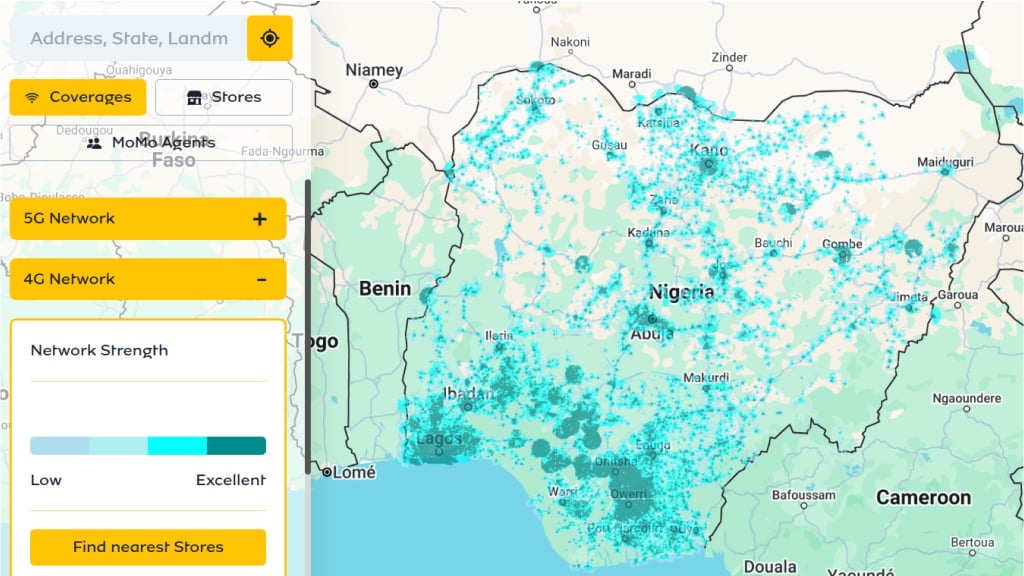
MTN is the largest player on the market. It has wide coverage, including many remote regions. If you plan to travel outside of big cities – to villages, nature reserves, or beaches near Lagos or Cross River – MTN is more likely to keep you connected. As the map below (screenshot from 2025) shows, 4G was working well in towns, and 5G was available in cities including Abuja, Lagos, Lekki, and Benin City.
In addition, MTN was the fastest operator in two independent speed reports. In SpeedGeo‘s Q1 2026 report (tests from April 2025 to March 2026), its average download speed was 27.2 Mb/s with 61.4 ms latency. Opensignal’s July 2025 report showed MTN leading Nigeria for all six speed awards, with 20 Mbps overall download speed experience, and MTN also won the reliability and availability awards.
There is also a convenient application for topping up your account and buying data packages. You can choose from daily plans, as well as monthly and longer deals.
Globacom
Glo is a Nigerian operator that is often praised for its generous data packages. If you need a lot of Internet for a little money, Glo can be a good option.

In the same SpeedGeo report, Glo’s average download speed was 11.6 Mb/s with 145.4 ms latency – less than half of MTN’s.
But as always, there’s a caveat: the quality of the connection depends on the location. In some areas of Lagos or Abuja, 4G works great, while in other areas, there is almost no signal. For a city tourist who plans to stay in major metropolitan areas, Glo can be an economical and practical choice.
Airtel
Airtel is another major player. In SpeedGeo’s Q1 2026 report, its average download speed was 17.4 Mb/s with 131.2 ms latency, second to MTN.
The operator delivers 4G LTE in cities such as Lagos, Abuja, and Port Harcourt, but signals in rural areas can be limited.

Airtel offers daily and weekly packages, which can suit a short trip. Its SIM cards are also easy to find.
T2 (formerly 9mobile)
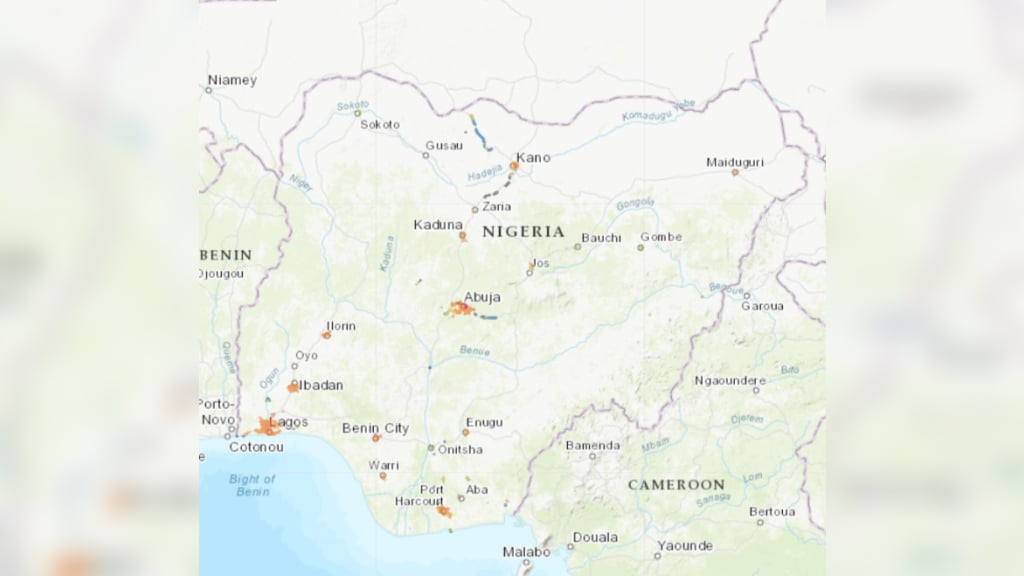
T2 (9Mobile) is the smallest among the main carriers. Its own network is concentrated in large cities, but since July 2025 a national roaming arrangement approved by the regulator (NCC) lets T2 customers use MTN’s network. T2 also offers short-term packages. If your trip is centered only in Abuja or Lagos and you need a temporary connection, this option may be beneficial.
MVNOs in Nigeria
Connecting Africa reported at the beginning of 2025 that it would be a year of change in Nigeria, as the mobile ecosystem began to expand with mobile virtual network operators (MVNOs).
An MVNO is a virtual mobile operator that doesn’t have its own network of towers but provides mobile services by renting infrastructure from large telecom companies. In other words, it is like a light version of a traditional carrier, but with simpler tariffs, flexible terms, and often lower prices.
Nigeria eSIM
For international trips to Nigeria, many travelers use an eSIM (embedded SIM). eSIM is built into many modern phones, and a travel eSIM connects to local partner networks.
With Ohayu, you can choose a single-country Nigeria plan if you’re staying local, or a Global eSIM plan (one eSIM for 120+ countries) if Nigeria is part of a longer trip – check that your destinations are on its country list. The eSIM activates quickly, requires no physical SIM, and connects you to supported local networks, which makes it practical for travel, work, and everyday use.
Final thoughts
So, MTN is recommended for those who plan to travel all over Nigeria and need reliable communication. Globacom is good for tourists staying in major cities and looking for competitive rates. Airtel is well-suited for backpackers who need a variety of tariff plans. T2 is an option for short-term visits, especially in big cities.