



Hawaii is a dream destination for many. The best time to visit Hawaii off-peak is April, May, September, and October. It’s hottest from May to October, with high season in July and August. In this Hawaii travel guide, I’ll share travel tips to keep you out of the busiest tourist periods and let you get the best prices.
Tourist season in Hawaii
The season you choose can greatly impact your trip. Peak seasons in Hawaii are winter and summer, and low seasons are late fall and early spring. Let’s review them in detail.
Peak season (winter and summer)
The most crowded time to go to Hawaii by far is December to March (winter is perfect for whale watching and escaping colder climates) and June to August (summer brings perfect beach temps and family vacations).
- Pros: Excellent weather for outdoor activities.
- Cons: Flights and hotel costs are usually more expensive.
Off-peak season
Crowds are at their lowest in late fall (November) and early spring (April). Ideal for off-season travel to Hawaii.
- Pros: Cheapest prices and the least crowds.
- Cons: Surfing or hiking are wind-dependent.
Shoulder season (spring and fall)
April to May and September to November are about a balance between cost and comfort.
- Pros: Lower price level. The weather is pleasant.
- Cons: There is less availability of seasonal activities, such as whale-watching tours.
Best time to visit Hawaii for smaller crowds
If you do not want to encounter large crowds, you should consider visiting Hawaii during the shoulder or off-season. The quietest months are April, May, September, October, and November.
Tips for avoiding crowds
- Visit crowded destinations early or late in the day: Places such as Waikiki Beach or Haleakalā National Park are crowded at midday, so it is recommended to visit them early in the morning or the evening.
- Choose less popular objects of interest: Avoid visiting popular tourist attractions. For instance, head to Molokai or Lanai.
- Travel midweek: During the weekdays, flights and attractions are less busy (from Tuesday to Thursday).
- Book in advance: Some of the specific tours and activities may get fully booked (even during the off-season). Make your bookings early to avoid missing out.
Best time to travel to Hawaii for lower prices
Scheduling at the right time helps you save a lot on flights and hotels. For that reason, you should know the cost differences by season:
- Peak: Prices are the highest because of demand.
- Shoulder: Moderate costs, good weather, and a balance between price and weather.
- Off-peak: This is the cheapest period to visit. Flights and accommodations will be the best deals. This is the best time to travel to Hawaii cheap.
Other tips for saving money are:
- Search for bargains: Stay on the lookout for Hawaii travel specials and travel packages on the Hawaiian Airlines website.
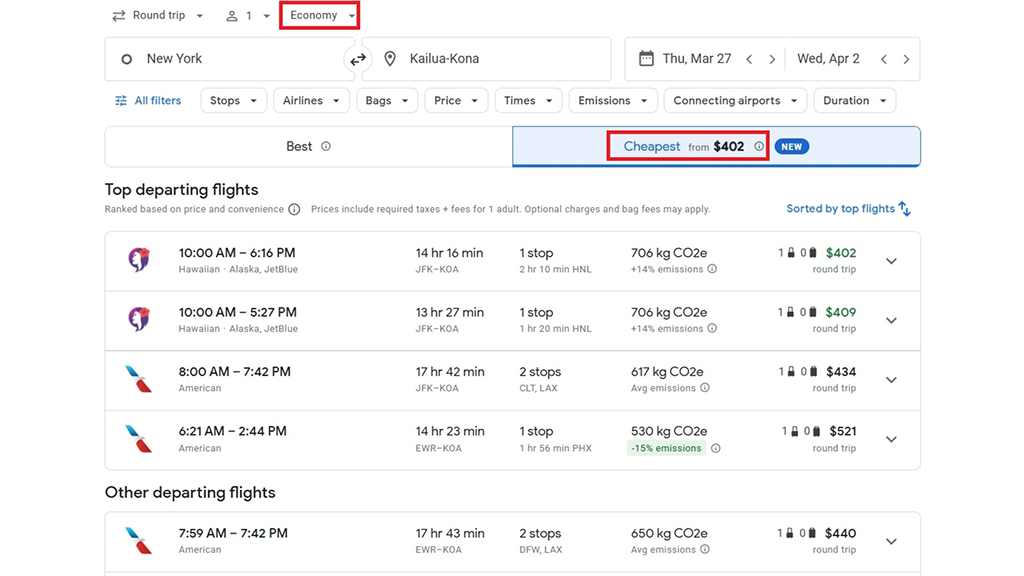
- Book early: Google Travel is very handy for exploring plane tickets and hotels/vacation rentals. Just set economy class and sort by the cheapest departing flights.
Hawaii climate
The island is warm and tropical year-round, but it varies by season and location.
Temperature
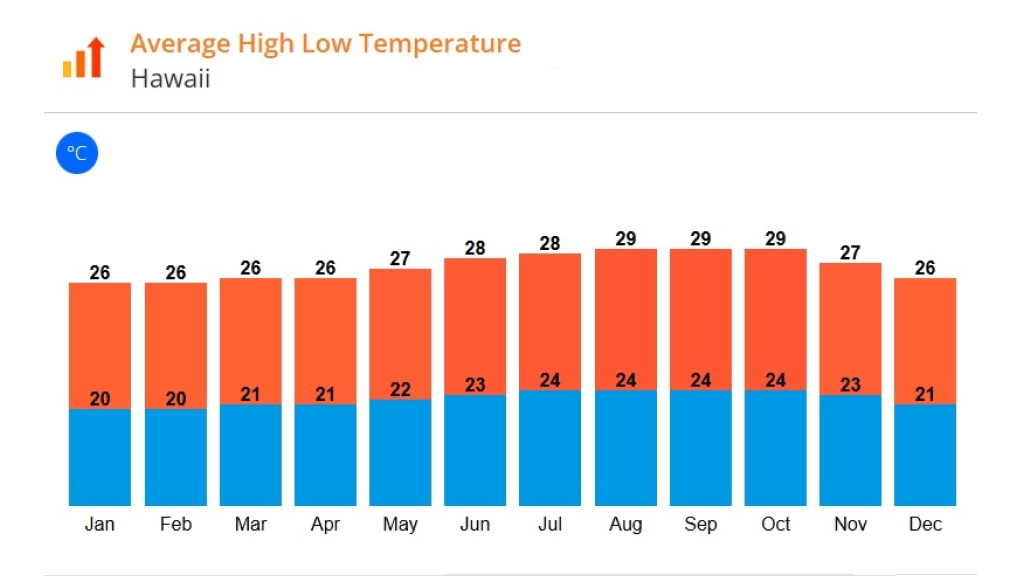
- Year-round 73°F to 80°F (23°C to 27°C).
- Cooler dates: December to April – slightly lower temps.
- Warmer dates: June to October, with hotter days perfect for the beach.
Rainfall
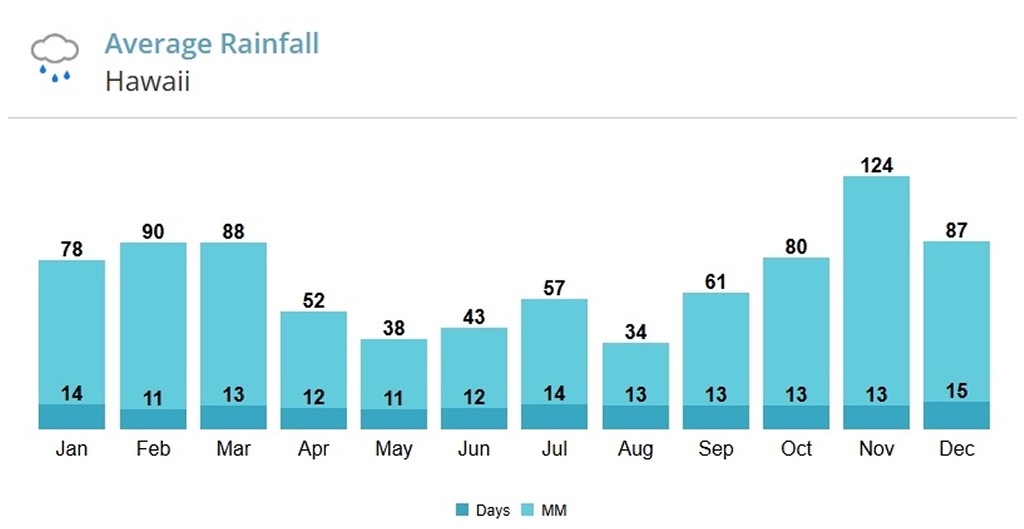
- Wet season: October to March. There is more rain, especially on the windward (northeastern) sides of the islands.
- Dry season: April to September. Rainfall is lighter, good for outdoor activities.
Microclimates
Hawaii’s islands have diverse microclimates. For example, one side of an island may be sunny, while the other is rainy.
Tip: Always pack layers and a light raincoat, no matter the season.
Hawaii weather by month
Here’s a month-by-month guide to help you decide when it is the best time to visit Hawaii.
January
January is the coolest month, but don’t worry – it’s still warm and pleasant. Here’s what to expect.
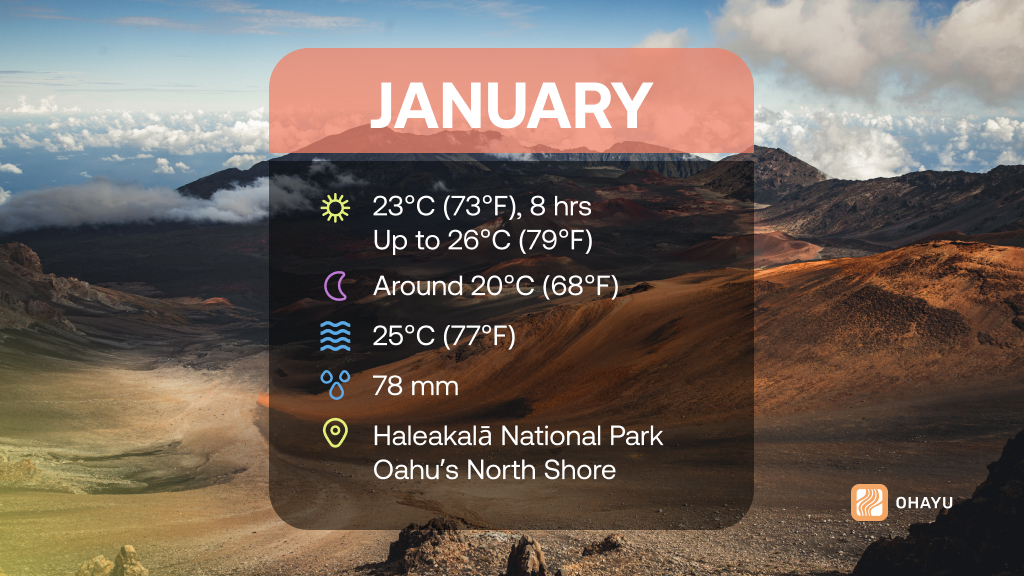
| Condition | Details | Recommended spots |
| Temperature | 23°C (73°F) High: 26°C (79°F), Low: 20°C (68°F) | Haleakalā National Park |
| Rainfall | 78 mm over about 18 days | Oahu’s North Shore |
| Ocean temp | 25°C (77°F) | Waikiki Beach |
Even at its coolest, January is perfect for escaping winter. The ocean is cooler than in summer but still pleasant for swimming. Plus, big swells make this month great for surfing.
And yes, January is part of the wet season, but it’s not the rainiest of the year. The majority of rainfall happens at night, and daytime showers are brief.
February
This month is cozy and inviting, though slightly rainier than January.

| Condition | Details | Recommended spots |
| Temperature | 23°C (73°F) High: 26°C (79°F), Low: 20°C (68°F) | Hanauma Bay |
| Rainfall | 90 mm over about 16 days | Waimea Cherry Blossom Festival |
| Ocean temp | 24°C (75°F) | Poipu Beach |
Even in February, it feels relaxing. You might not even notice the floods, especially if you stay in drier areas like the south. The ocean is still warm enough for swimming, and its bigger waves make it a good time for surfing.
March
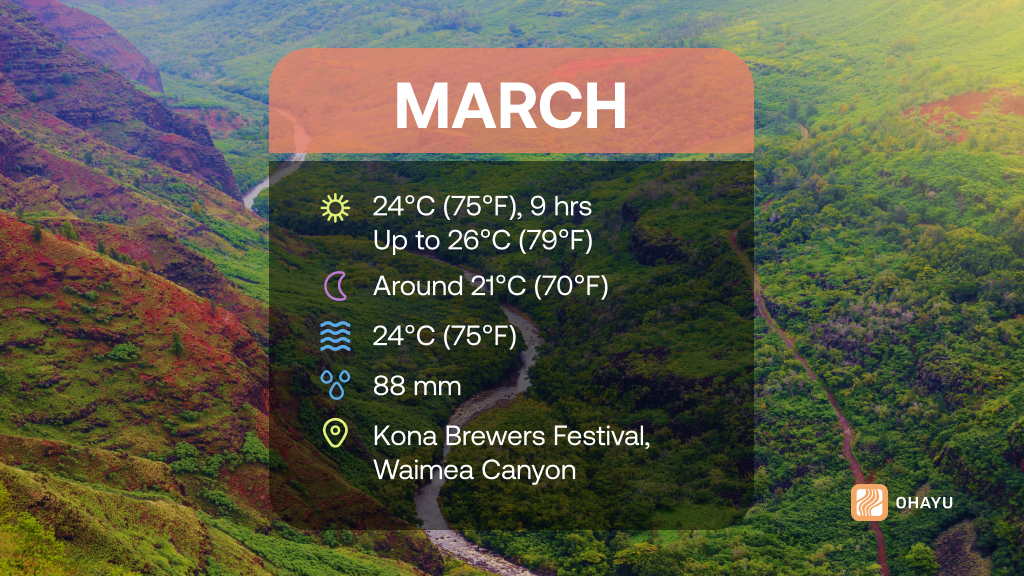
March marks the transition from the wet to the drier season. While rain is still possible, the weather starts to warm up.
| Condition | Details | Recommended spots |
| Temperature | 24°C (75°F) High: 26°C (79°F), Low: 21°C (70°F) | Waimea Canyon |
| Rainfall | 88 mm over about 19 days | Kona Brewers Festival |
| Ocean temp | 24°C (75°F) | Lanikai Beach |
The ocean is still cool but great for swimming. If it’s cloudy, drive to the other side of the island. On rare occasions, there can be snow on the highest mountains.
April
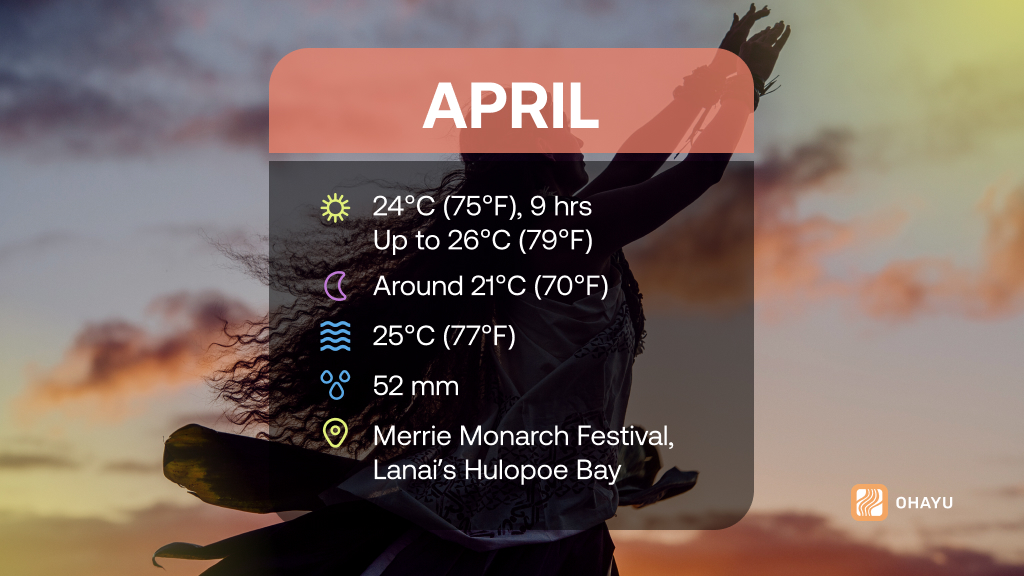
April has warmer temperatures and less precipitation. It’s a great time to enjoy the beaches as the dry season begins.
| Condition | Details | Recommended spots |
| Temperature | 25°C (77°F) High: 27°C (81°F), Low: 21°C (70°F) | Napali Coast |
| Rainfall | 54 mm over about 15 days | Maui’s Upcountry |
| Ocean temp | 25°C (77°F) | Hapuna Beach |
The sea begins to warm up, and it’s great for snorkeling. If you’ll be looking for sandy excursions, the dry south and west sides are your best bet.
By the way, in this post, I described why April is the best time to travel to Hawaii – what to do, where to go, what prices are, and other interesting facts.
May
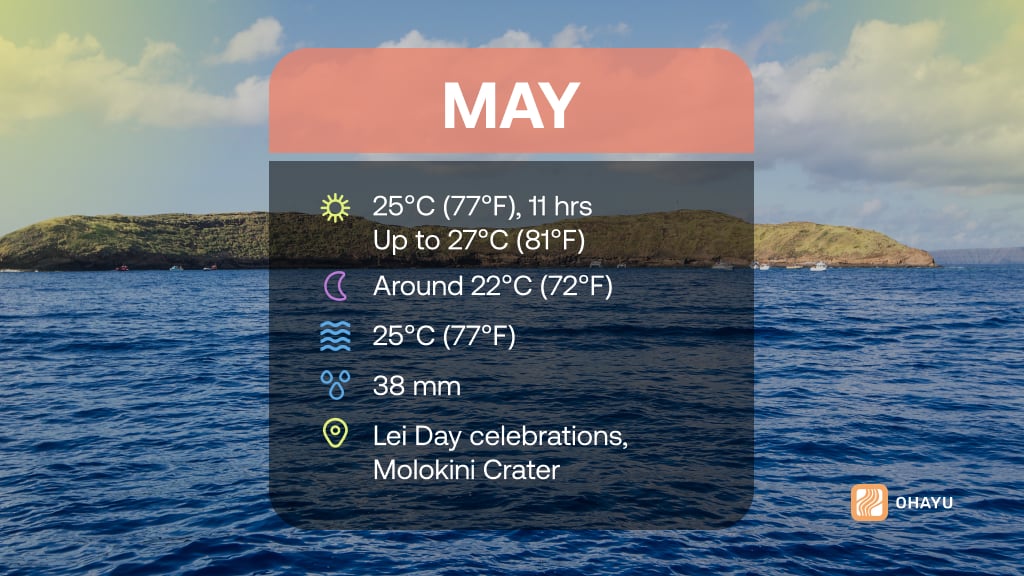
May marks the start of the dry season. It has perfect beach weather.
| Condition | Details | Recommended spots |
| Temperature | 26°C (79°F) High: 28°C (82°F), Low: 22°C (72°F) | Waikiki Beach |
| Rainfall | 40 mm over about 12 days | Kapalua Bay |
| Ocean temp | 26°C (79°F) | Makena Beach |
The south and west sides are especially dry and sunny in May. The sea is comfortable for snorkeling and watersports. Long days are best for hiking trails.
June
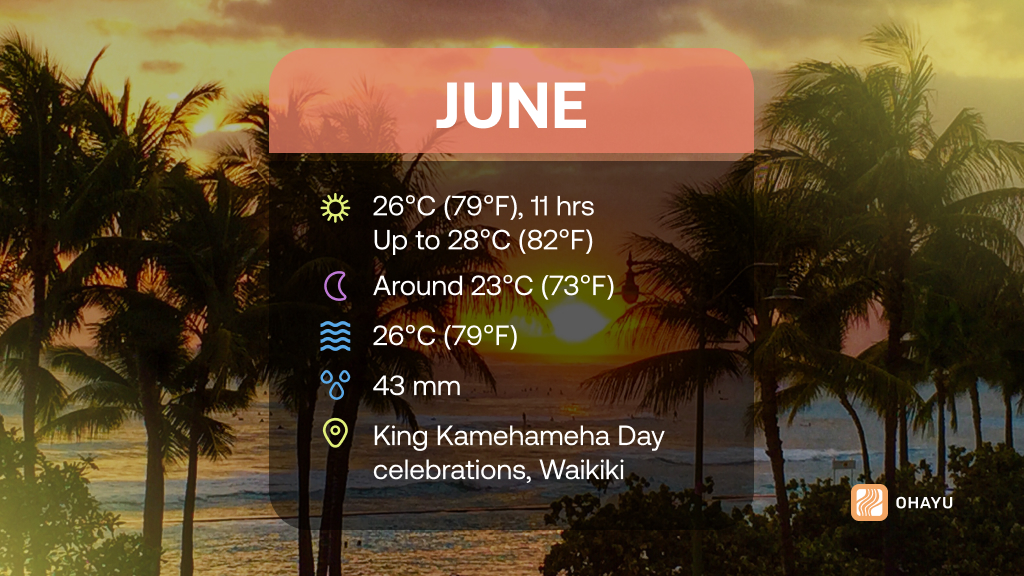
June is peak summer and the top of the dry season in Hawaii.
| Condition | Details | Recommended spots |
| Temperature | 27°C (81°F) High: 29°C (84°F), Low: 23°C (73°F) | Wailea Beach |
| Rainfall | 30 mm over about 10 days | Pololu Valley |
| Ocean temp | 26°C (79°F) | Hanalei Bay |
Although June is pleasant, trade winds can shift, which brings more humidity. June is the second driest month, so showers are rare and usually light. As for the sea, surfers may find the south and west coasts too flat, but the north and east coasts have good waves.
July
July has warm temperatures and minimal rainfall, it is the sunniest month, the best for beach vacation and water sports. It’s also the best time to visit Hawaii due to the July 4th celebrations and school holidays.
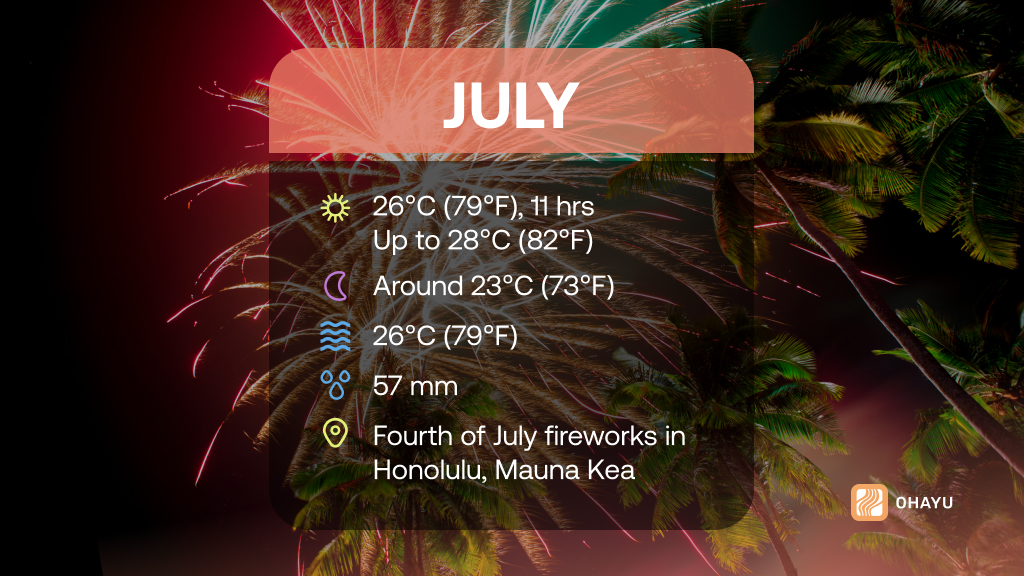
| Condition | Details | Recommended spots |
| Temperature | 28°C (82°F) High: 30°C (86°F), Low: 24°C (75°F) | Kailua Beach |
| Rainfall | 27 mm over about 9 days | Ko Olina Lagoons |
| Ocean temp | 27°C (81°F) | Punalu’u Black Sand Beach |
Trade winds keep the heat comfortable. But when the winds slow, humidity can rise. Daytime showers are rare and brief, so rain won’t disrupt your plans.
August
August is Hawaii’s hottest month, perfect for snorkeling and swimming.
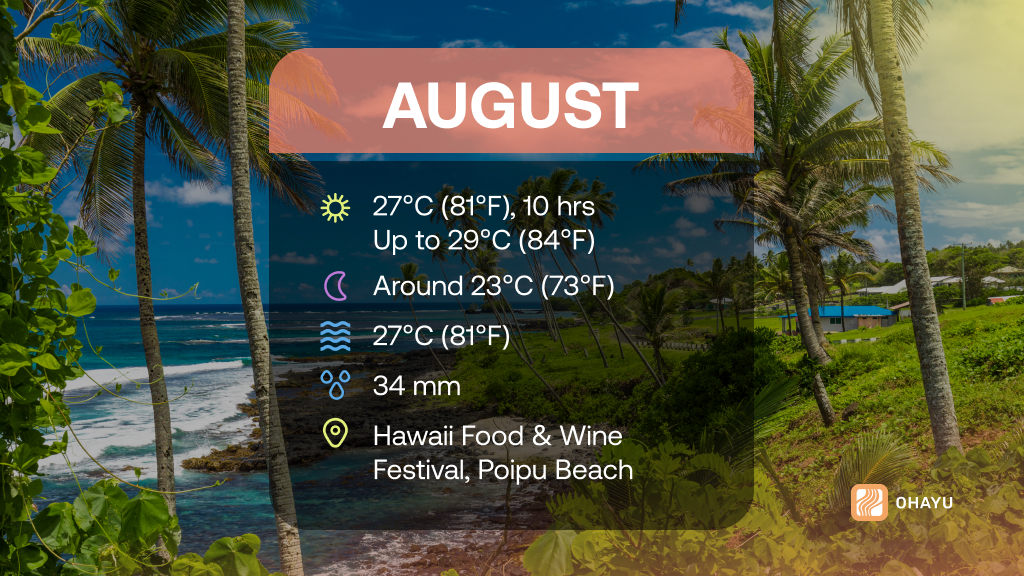
| Condition | Details | Recommended spots |
| Temperature | 28°C (82°F) High: 30°C (86°F), Low: 24°C (75°F) | Hanauma Bay |
| Rainfall | 32 mm over about 10 days | Waikiki Beach |
| Ocean temp | 27°C (81°F) | Poipu Beach |
August is the driest month of the year. The sea is mostly calm, but surfers can still find good waves on the north and east coasts.
September
September is the last dry month of the Hawaiian season.
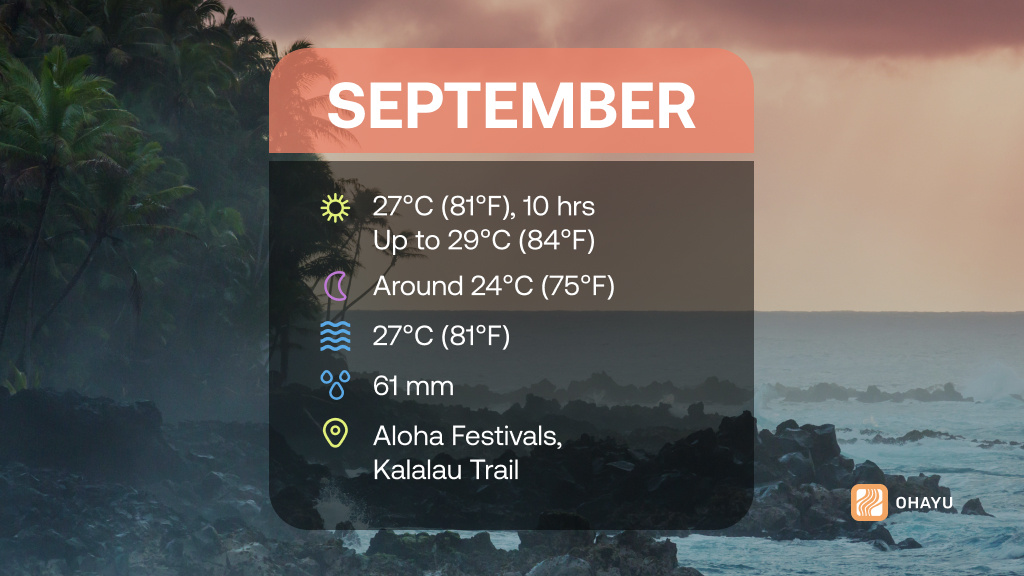
| Condition | Details | Recommended spots |
| Temperature | 28°C (82°F) High: 30°C (86°F), Low: 24°C (75°F) | Lanikai Beach |
| Rainfall | 38 mm over about 10 days | Waimea Valley |
| Ocean temp | 27°C (81°F) | Hulopoe Beach |
September is moderate, but stronger trade winds make the heat more comfortable and reduce humidity. Daytime showers are rare; the ocean is warm and calm, so prepare for swimming and diving.
October
October has pleasant weather with moderate rainfall, perfect for hiking and exploring nature.
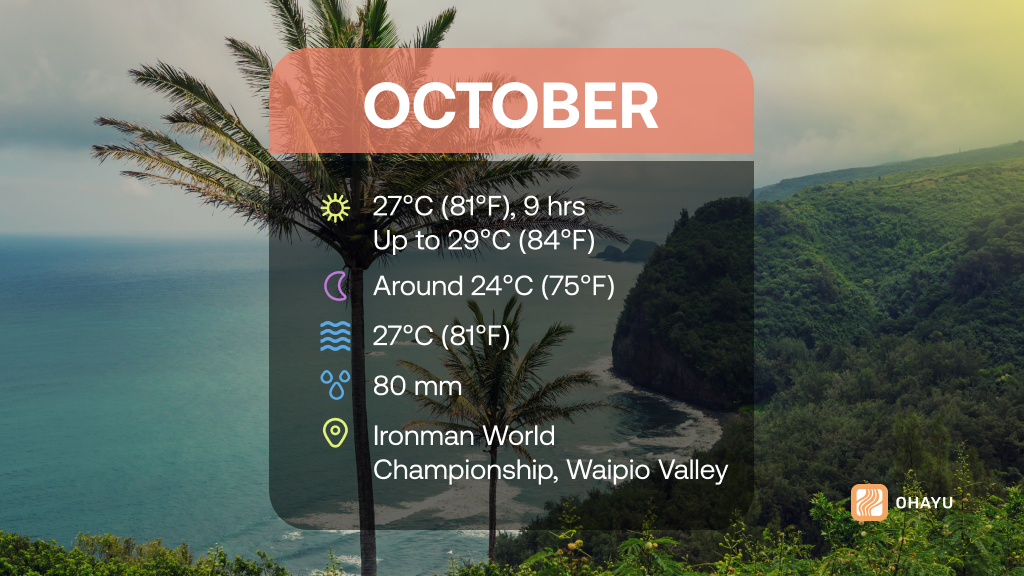
| Condition | Details | Recommended spots |
| Temperature | 27°C (81°F) High: 29°C (84°F), Low: 23°C (73°F) | Waipio Valley |
| Rainfall | 52 mm over about 12 days | Wailua Falls |
| Ocean temp | 27°C (81°F) | Hana Highway |
October is comfortable, with stronger trade winds cooling the air. Popular resorts and lowland areas stay dry, so rain won’t disrupt your plans. The ocean stays warm and clear.
November
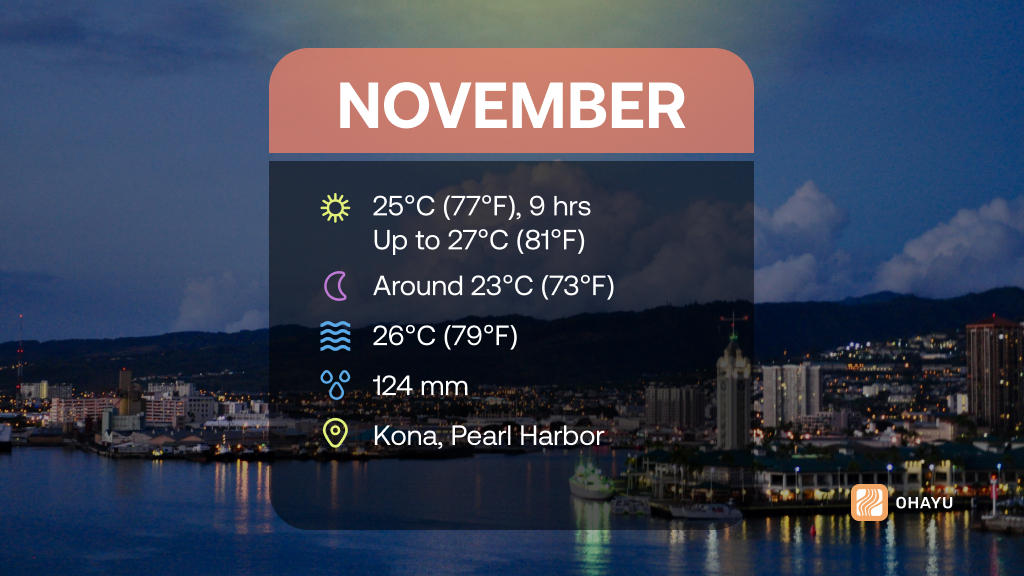
November has cooler evenings and occasional rain showers, great for sightseeing and cultural events. It brings the end of hurricane season. Rain increases, extreme weather is rare, and there’s still plenty of sunshine to enjoy.
| Condition | Details | Recommended spots |
| Temperature | 26°C (79°F) High: 28°C (82°F), Low: 22°C (72°F) | Haleakala National Park |
| Rainfall | 74 mm over about 14 days | Waimea Canyon |
| Ocean temp | 26°C (79°F) | Mauna Kea Observatory |
Stronger easterlies help reduce humidity and keep the air fresh. The north and east get more rain while the south and west stay drier. Despite the floods, November still has plenty of sunny hours for outdoor activities.
December
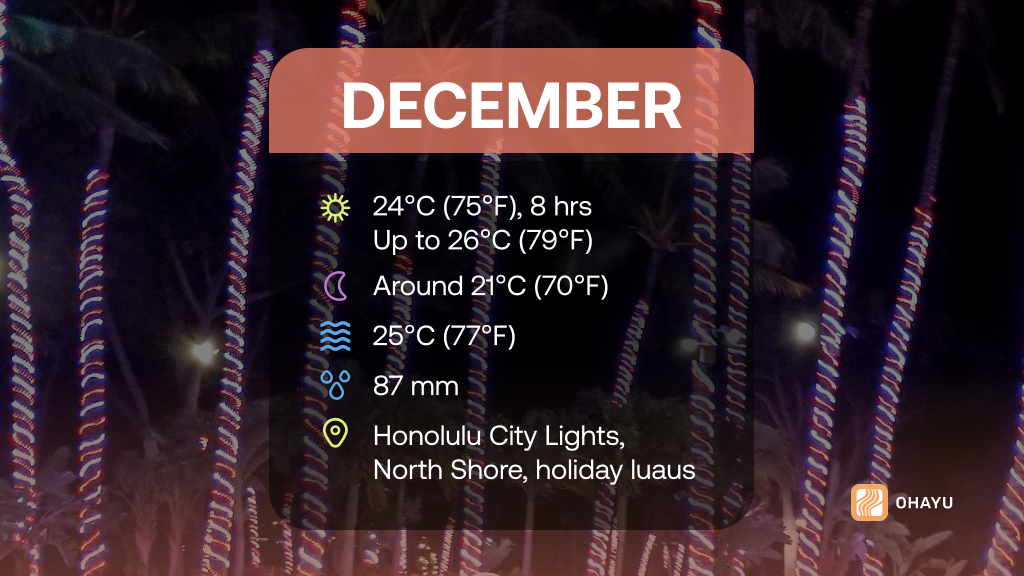
December is the start of Hawaii’s winter season with cooler temperatures and occasional rains. It is cooler than previous months but still warm with eight hours of daily sunshine.
| Condition | Details | Recommended spots |
| Temperature | 24°C (75°F) High: 26°C (79°F), Low: 20°C (68°F) | Waikiki Christmas Lights |
| Rainfall | 89 mm over about 16 days | Kalalau Trail |
| Ocean temp | 25°C (77°F) | Poipu Beach for whale watching |
December is comfortable, with the fresh air. It is sunny time, so prepare for outdoor activities and holiday celebrations. The ocean is warm enough for swimming, plus bigger waves attract sailors.
Hawaii’s yearly weather and climate conditions
| Month | Temperature | Precipitations | Seaside temp | Sunlight |
| January | 23°C (73°F) | 78 mm | 25°C (77°F) | 8 hrs |
| February | 23°C (73°F) | 90 mm | 24°C (75°F) | 8 hrs |
| March | 24°C (75°F) | 88 mm | 24°C (75°F) | 9 hrs |
| April | 24°C (75°F) | 52 mm | 25°C (77°F) | 9 hrs |
| May | 25°C (77°F) | 38 mm | 25°C (77°F) | 11 hrs |
| June | 26°C (79°F) | 43 mm | 26°C (79°F) | 11 hrs |
| July | 26°C (79°F) | 57 mm | 26°C (79°F) | 11 hrs |
| August | 27°C (81°F) | 34 mm | 27°C (81°F) | 10 hrs |
| September | 27°C (81°F) | 61 mm | 27°C (81°F) | 10 hrs |
| October | 27°C (81°F) | 80 mm | 27°C (81°F) | 9 hrs |
| November | 25°C (77°F) | 124 mm | 26°C (79°F) | 9 hrs |
| December | 24°C (75°F) | 87 mm | 25°C (77°F) | 8 hrs |
Best time to visit Hawaii by activity
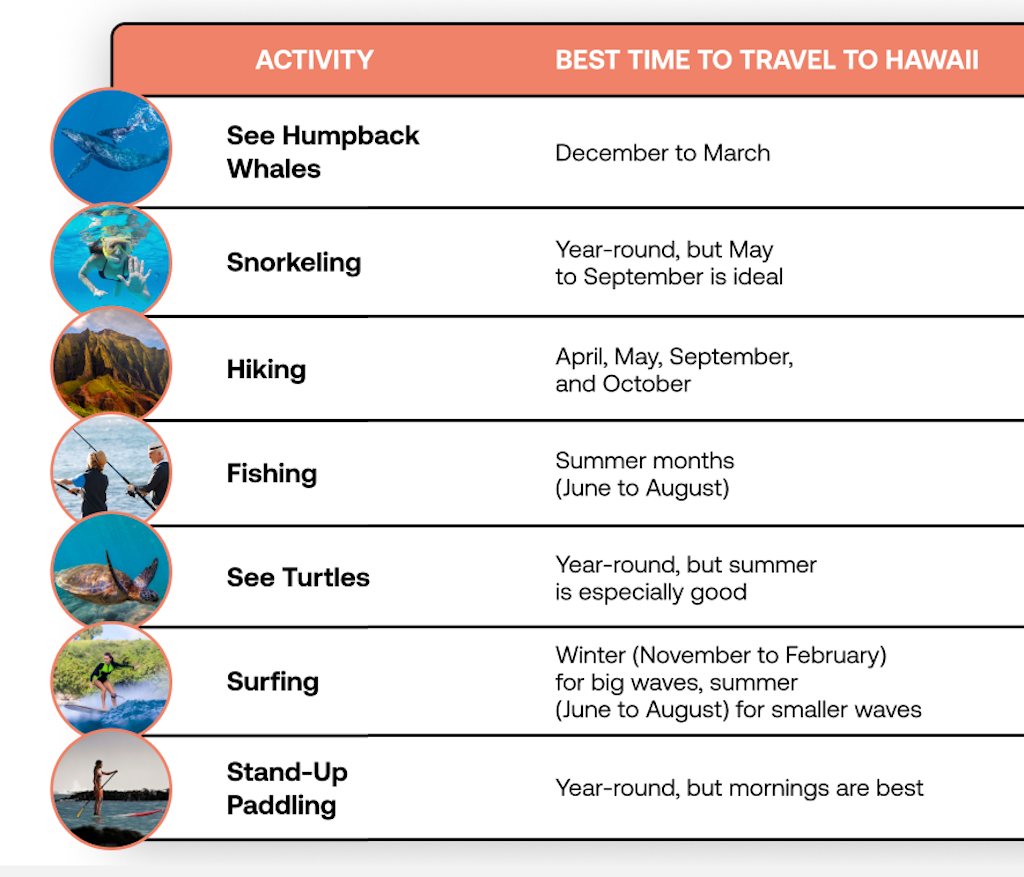
Here’s a guide to when to enjoy the most popular experiences, such as Humpback whale watching, snorkeling, fishing, and surfing.
| Activity | Best time to travel to Hawaii | Why |
| See Humpback Whales | December to March | This is the peak for whale-watching as humpbacks migrate to warm waters. |
| Snorkeling | Year-round, but May to September is ideal. | Calm ocean conditions and clear visibility make snorkeling unforgettable. |
| Hiking | April, May, September, and October | Cooler temperatures and fewer rain showers create perfect hiking conditions. |
| Fishing | Summer months (June to August). | Warmer waters attract a variety of fish, so it’s best for deep-sea fishing. |
| See turtles | Year-round, but summer is especially good. | Hawaiian green sea turtles are often spotted basking on beaches or swimming near shore. |
| Surfing | Winter (November to February) for big waves, summer (June to August) for smaller waves. | Winter swells attract pros, while summer waves are ideal for beginners. |
| Stand-up paddling | Year-round, but mornings are best. | Calm waters in the early hours make stand-up paddling easier and more enjoyable. |
As you can see, no matter your interests. Hawaii has something for everyone. Plan your trip around your favorite activities for an unforgettable experience!
How to stay connected in Hawaii with eSIM
When traveling to Maui, Kauai, Oahu, or another Hawaiian island, staying connected is super important. Fortunately, an eSIM (embedded SIM) can help you get connected right after arrival in Hawaii. If you are traveling from the USA, your network can work perfectly in Hawaii, but if you are traveling from other countries, consider installing a travel eSIM for the USA or choose a Global Plan (covers the United States and 120+ other countries) for multi-country travel.

Why use an eSIM?
- No SIM card needed: eSIM-compatible phones are already equipped with a virtual subscriber identity module, so no physical SIM card is required to connect to local networks.
- Get mobile internet faster: Activate a data plan after you land (you can install it before your trip and activate after arrival using airport Wi-Fi). It can connect you to one of the supported local networks, like AT&T, Verizon, or T-Mobile.
- Save money: eSIM plans might be cheaper and more flexible (choose how many days and gigabytes you need, and pay for the actual data you use) than expensive roaming charges from your home operator.
How to set up an eSIM
- Download before you go: Choose a Global eSIM plan or eSIM for the USA (use the iOS or Android app for convenience).
- Activate on arrival: Follow simple steps to activate your eSIM when you arrive at the destination country.
Conclusion
The best time to travel to Hawaii depends on your priorities. For smaller crowds and lower prices, consider traveling during the shoulder or off-peak days. April, May, September, and October are great choices as they offer pleasant weather and fewer tourists.
If you want the warm weather, plan your trip between May and October. During this period, you’ll enjoy higher temperatures and more sunlight. However, this is also the busiest and most expensive period.
For a balance of good weather, fewer crowds, and affordable prices, April and September are ideal. These months provide a mix of moderate rainfall and comfortable temperatures.
No matter the time you’re traveling, planning is key. Book flights and accommodations early to secure the best deals. Start your Hawaii vacation planning today and make the most of your trip!