



Verizon, T-Mobile, and AT&T are the three largest US mobile operators with their own networks. The competition between these providers is not only in coverage (it’s a big deal to build a network for all 50 states), but also in network quality, speed, pricing, and, of course, roaming terms for international travel.
According to Opensignal’s July 2026 report, T-Mobile has the fastest mobile speeds and the best 5G availability, Verizon leads on coverage, and AT&T users spend the most time connected to the network.
For travelers, there are also online eSIMs like Ohayu that connect to supported local US networks without a physical SIM card or store visits and offer data plans for short visits.
Before buying, check that your phone supports eSIM. Dial *#06# (it’s not a call and does not charge you) – if your phone displays an EID number, it’s eSIM-compatible.
US mobile market overview
The United States is geographically so large that network coverage and signal quality are very different between states.
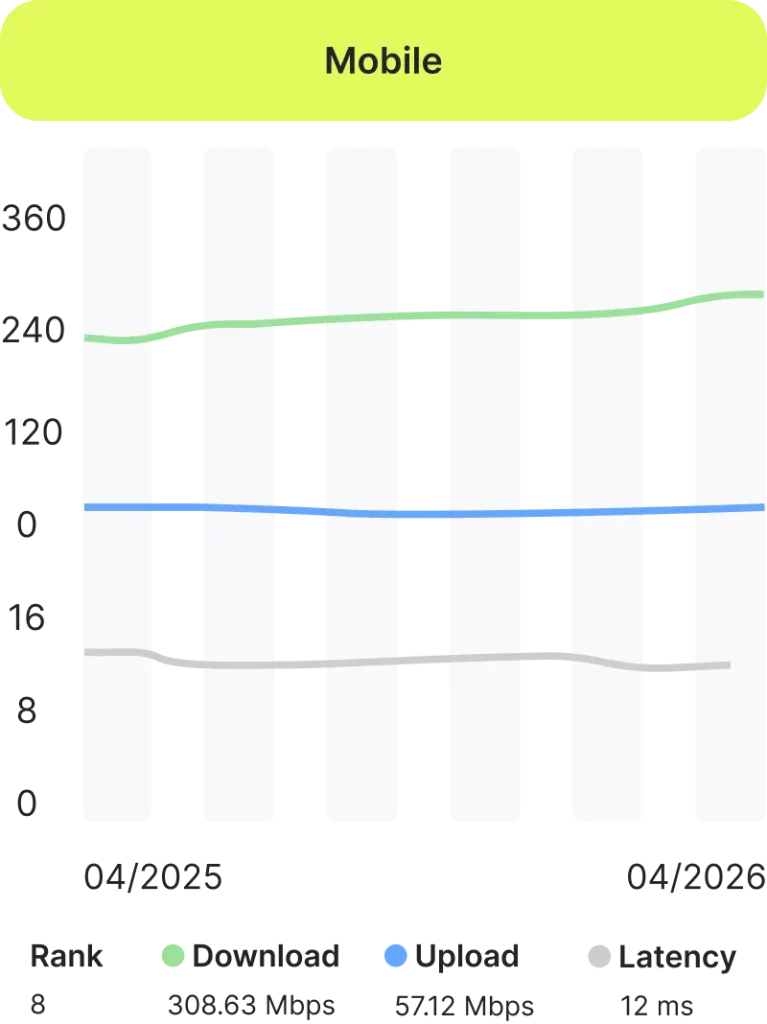
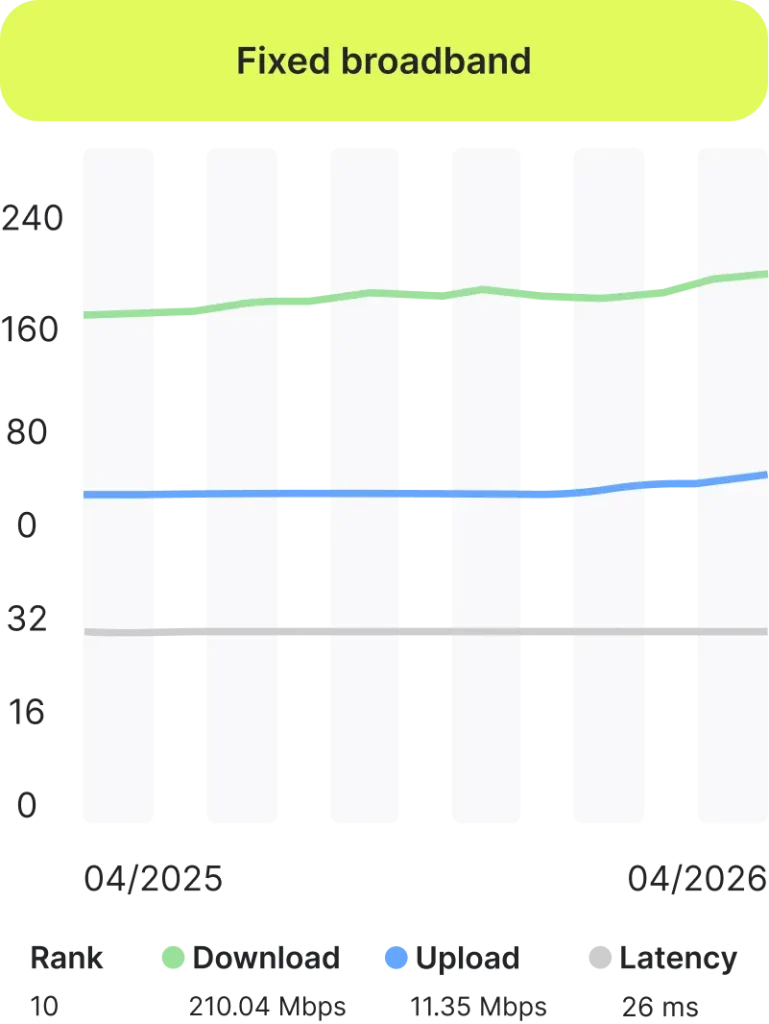
According to the Speedtest Global Index for August 2026, the United States ranked 11th in the world for mobile internet speed, with a median download speed of 186.64 Mbps, an upload speed of 9.62 Mbps and 27 ms latency. For fixed broadband, it ranked 7th, with a median download speed of 307.16 Mbps.
US mobile coverage
In New York, Chicago, Miami, Los Angeles, Dallas, and San Francisco, 5G is standard. However, on highways and in deserts, mountains, and national parks, you may only get LTE. Here are the reasons for that:
- Geography. The country is huge, landscape differs. In cities, the signal is stable because operators invest in infrastructure.
- Frequency spectrum (low-band and mid-band). Low frequencies penetrate walls better and cover longer distances. High frequencies provide fast Internet but cover a small area. It explains why the Internet is faster in cities and slower in rural areas.
- Market development and competition. In cities, operators compete for customers and build strong infrastructure. In remote locations, competition is weaker, so the connection quality also varies.
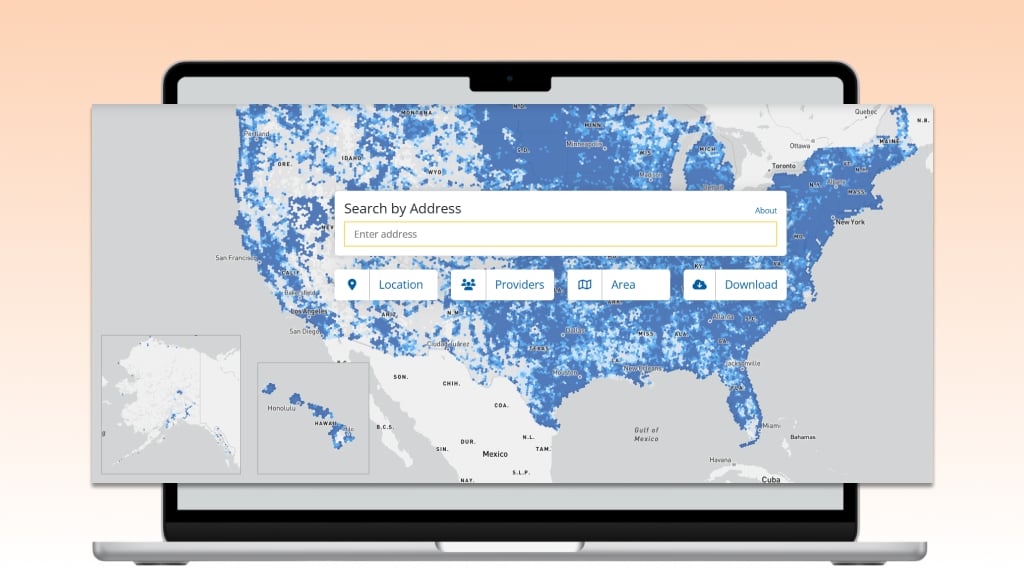
- Federal programs. Authorities encourage the development of communications in villages. For example, the Federal Communications Commission (FCC) continues to set rules based on a broadband coverage map. This stimulates investment to improve 5G in the countryside, you can check it by address using this coverage map.
5G technology
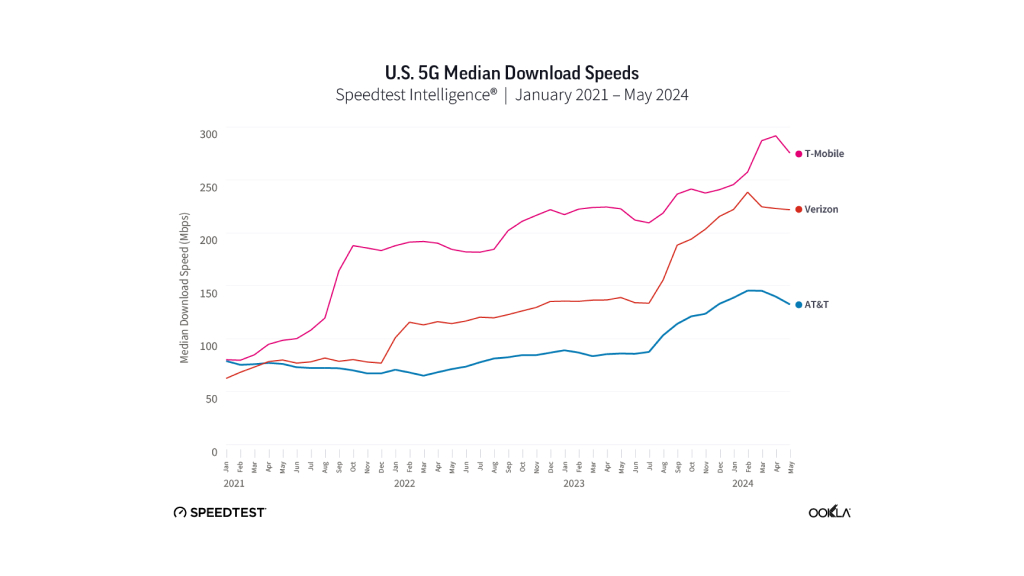
The Ookla chart below shows how each operator’s 5G median download speed developed from 2021.
Top 3 US mobile operators
There are three main mobile operators in the US: Verizon, T-Mobile, and AT&T. They cover almost the entire country.
Apart from the 3 major providers, there are also plenty of MVNOs (mobile virtual network operators). These companies lease network capacity from one of the 3 main networks and sell their own plans and services. There are also regional operators that work only in certain states and have roaming for other regions.
Now let’s take a closer look at the market leaders.
Verizon
Verizon is one of the most popular US mobile networks. It doesn’t have the highest speed, but it is known for its wide coverage (it won the Coverage award in Opensignal’s July 2026 report) and uses a mix of low-band, C-band, and mmWave spectrum.
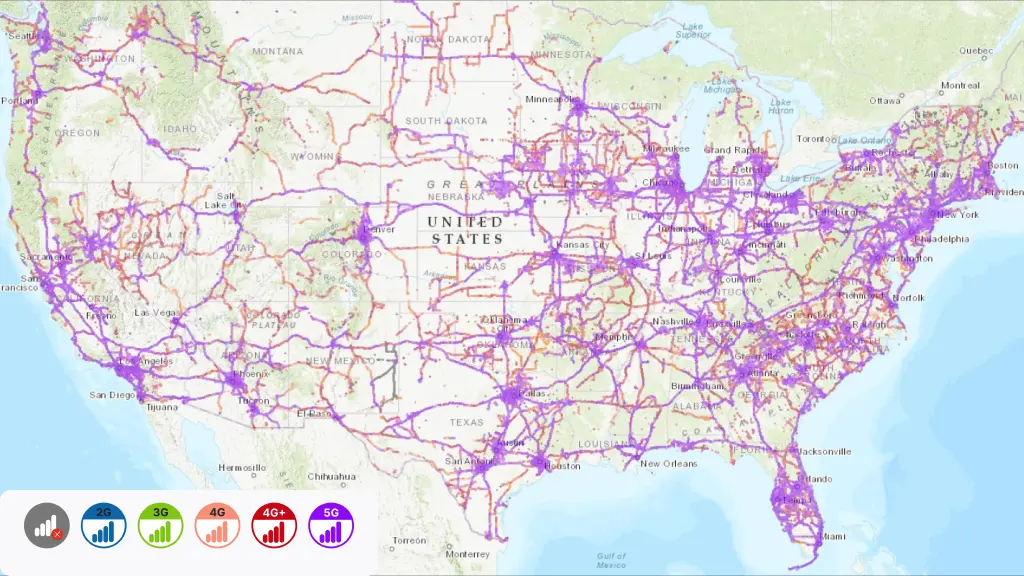
The operator has wide 4G LTE coverage. Verizon’s 5G Ultra Wideband (its fastest network) covers many large metro areas; elsewhere you get Nationwide 5G or 4G LTE.
Features
- 4G LTE technology: Verizon has very wide 4G LTE coverage and launched its LTE network in 2010.
- 5G: The provider is actively developing a 5G network. The company uses mmWave (faster but with a smaller coverage radius) and Sub-6 GHz (slower but with greater coverage) technologies for 5G.
T-Mobile
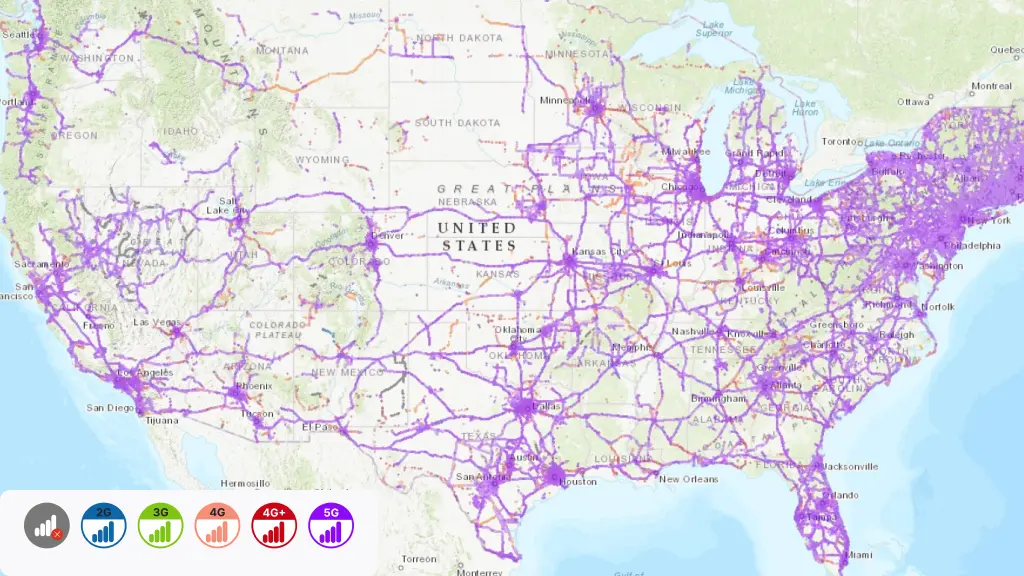
According to Opensignal’s July 2026 report, T-Mobile is the fastest mobile operator in the US. It has good coverage in cities, but its rural coverage varies by region, and Verizon scores higher for coverage. T-Mobile combines 600 MHz low-band spectrum for reach with 2.5 GHz mid-band spectrum for speed.
AT&T
AT&T is one of the three largest US mobile operators and also sells home internet and business solutions.
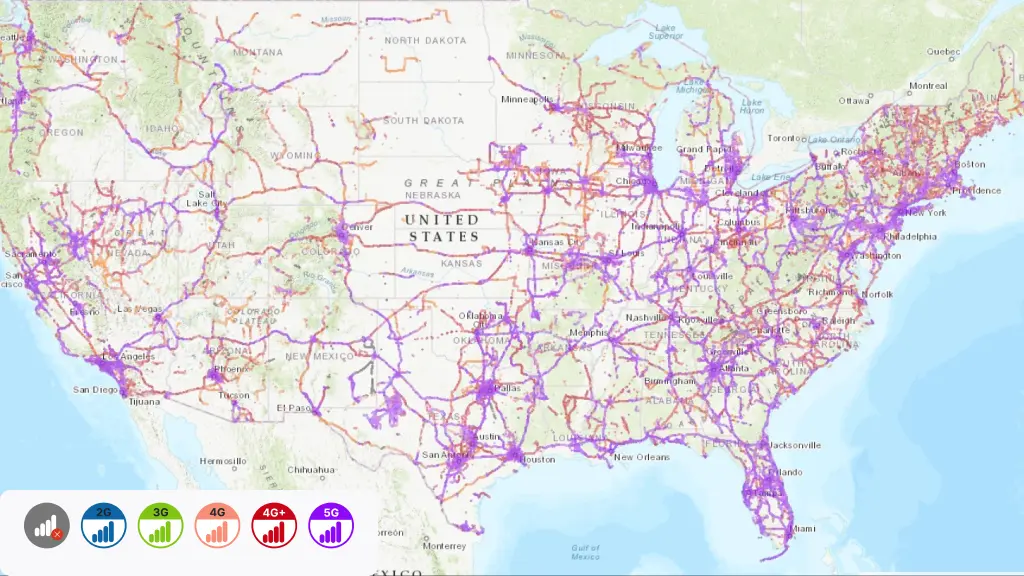
In Opensignal’s July 2026 report, AT&T’s coverage score was second, less than one point behind Verizon’s, and for most users in cities and suburban regions, coverage won’t be a problem. The operator is actively developing 5G.
Other mobile operators in the USA
Several smaller operators and MVNOs also compete in the US market, like Boost Mobile. U.S. Cellular is no longer an independent carrier: T-Mobile completed the purchase of its wireless operations in August 2025.
Boost Mobile
Boost Mobile sells prepaid and contract-free plans. According to its parent company EchoStar, since November 2025 Boost has carried its customers’ traffic on AT&T’s network while keeping its own 5G core.
Comparison of the main US mobile networks: T-Mobile, AT&T, Verizon
US mobile networks differ in their approach to customers and tariff packages. Still, the coverage quality is good for each company: in the Opensignal report from July 2026 (data from April 1 to June 29, 2026), Verizon scored 9.7 and T-Mobile 9.1 out of 10 for coverage, with AT&T in between.
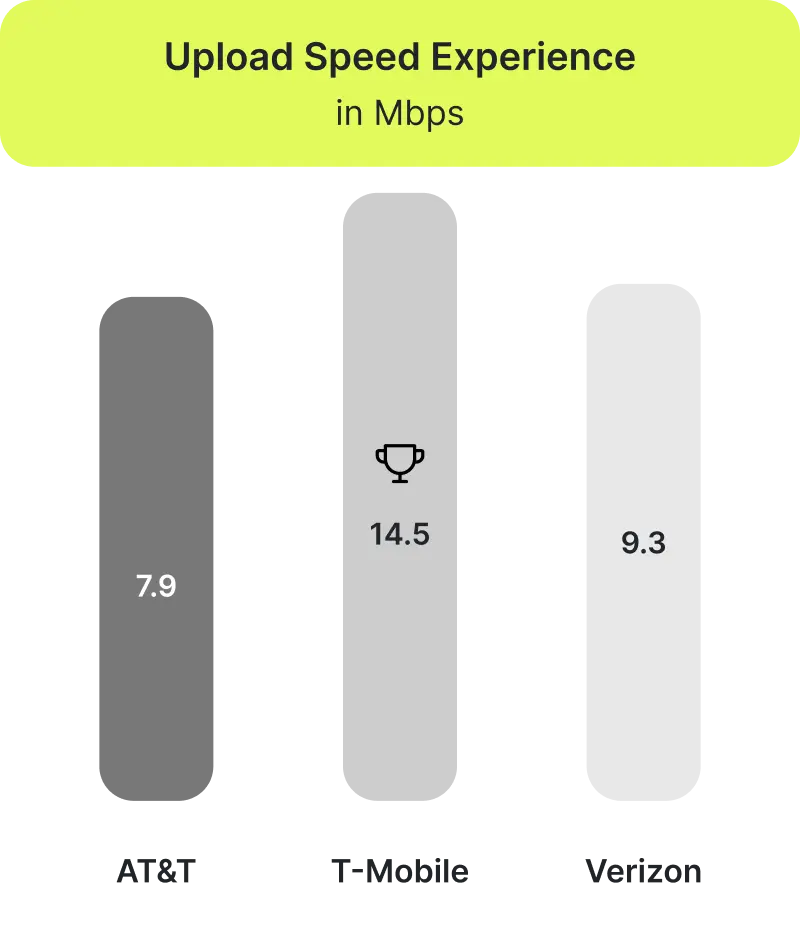
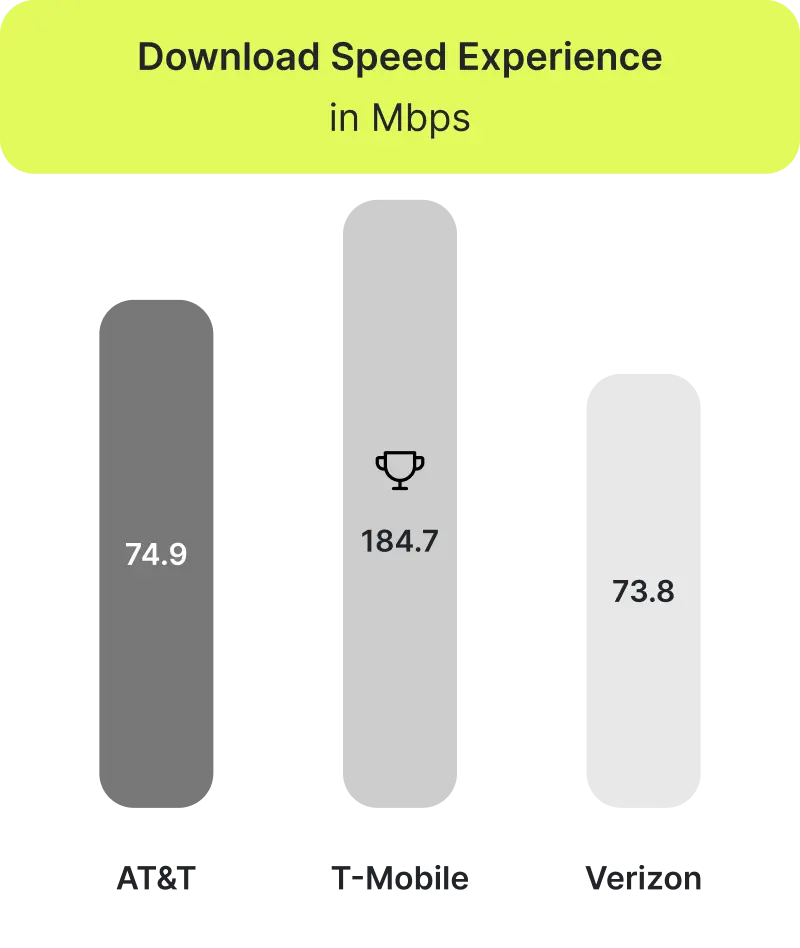
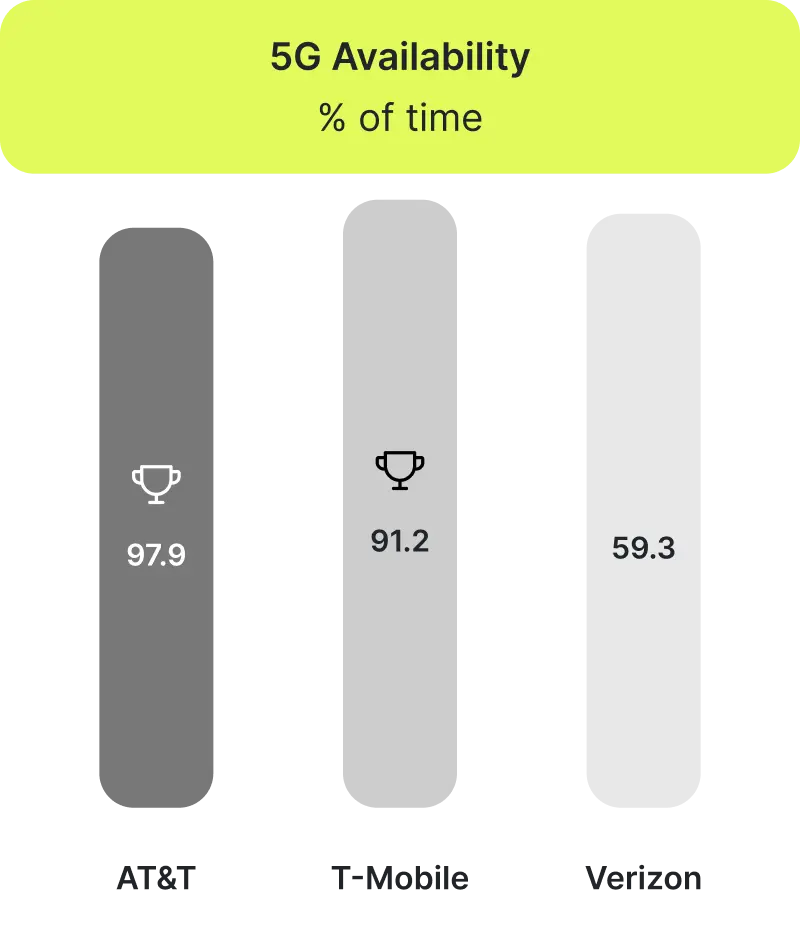
In the July 2026 report, T-Mobile won 12 of the 16 awards, including Reliability, Consistent Quality, Video and Games. Verizon won Coverage, 5G Video and 5G Live Video, and AT&T won Time on Network.
T-Mobile has the fastest download speeds (192.5 Mbps, against 96.0 Mbps for AT&T and 89.4 Mbps for Verizon) and the fastest upload speeds. It also leads in 5G availability (91.8%), ahead of AT&T (89.8%) and Verizon (66.6%).
| Operator | Best for | Main limitation |
| Verizon | Coverage and 5G video | Slower download speeds than T-Mobile and AT&T |
| T-Mobile | Fast 5G speeds and 5G availability | Rural coverage still varies in some regions |
| AT&T | Balanced nationwide service | Slower than T-Mobile |
Final thoughts
US mobile networks continue to improve. In Opensignal’s July 2026 report, AT&T offers balanced nationwide service and keeps its users connected the longest, Verizon leads on coverage and 5G video, and T-Mobile has the fastest network and the best 5G availability. It’s also worth keeping in mind that there are plenty of regional operators and MVNOs.
For short-term visitors, prepaid SIM cards and travel eSIMs are usually simpler than long-term contracts. Most travelers mainly need stable mobile internet for navigation, transport apps, hotel bookings, messaging, and hotspot use, so a data-only eSIM like Ohayu is often enough. It helps to save time and stay connected during your trip.