

If you are going abroad, then communication is highly important for you, and here is the question: pay money for mobile roaming or look for Wi-Fi? For a long time, the usual way out was international roaming, when your operator connects services through supported networks abroad. But technology doesn’t stand still. Now there’s eSIM – a virtual SIM card that is built into your smartphone and allows you to connect to supported local operator networks without physically replacing the chip.
The problem is that both options have pitfalls. Using your SIM card with a home operator roaming abroad comes with surprises like incoming call or background Internet charges, and eSIM requires a compatible device and configuration skills. So, what to choose? It all depends on the length of your trip, your budget, and your willingness to understand new technology.
In this article, we will outline the pros and cons of eSIM vs an international plan for mobile roaming. We’ll find out when it’s easier to overpay for a familiar service, and when it’s worth switching.
What is an international plan?
An international mobile plan (or roaming) is a service that allows you to call, text, and use mobile internet abroad. How does it work? Your provider has agreements with foreign operators, and they share their networks.
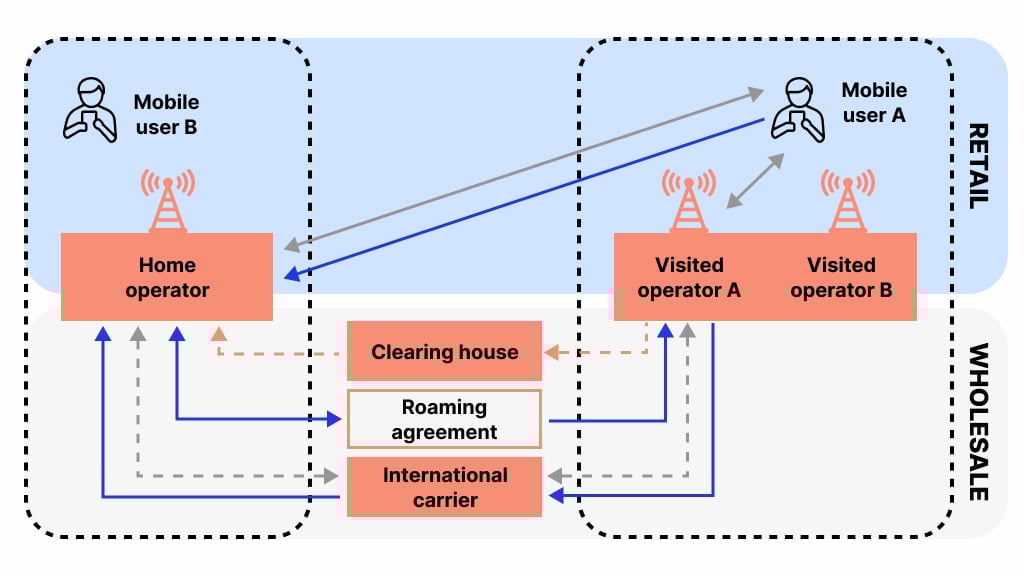
Roaming is divided into two types:
- Voice roaming – for calls and SMS;
- Internet – access to data (social networks, maps, translator).
It would seem convenient: you don’t need to change your SIM card, and your number remains active. However, the catch is in the details. International tariffs often include hidden fees, for example, for incoming calls or automatic application updates. Also, mobile Internet can be very slow if the carrier restricts traffic.
Pros
- No need to set up anything – the connection works as soon as you cross the border.
- Suitable for emergencies: your number stays available.
Cons
- Price bites: A minute of conversation can be quite expensive.
- Risk of “silent charges”: even background photo synchronization can eat into your budget.
Alternative – travel eSIM
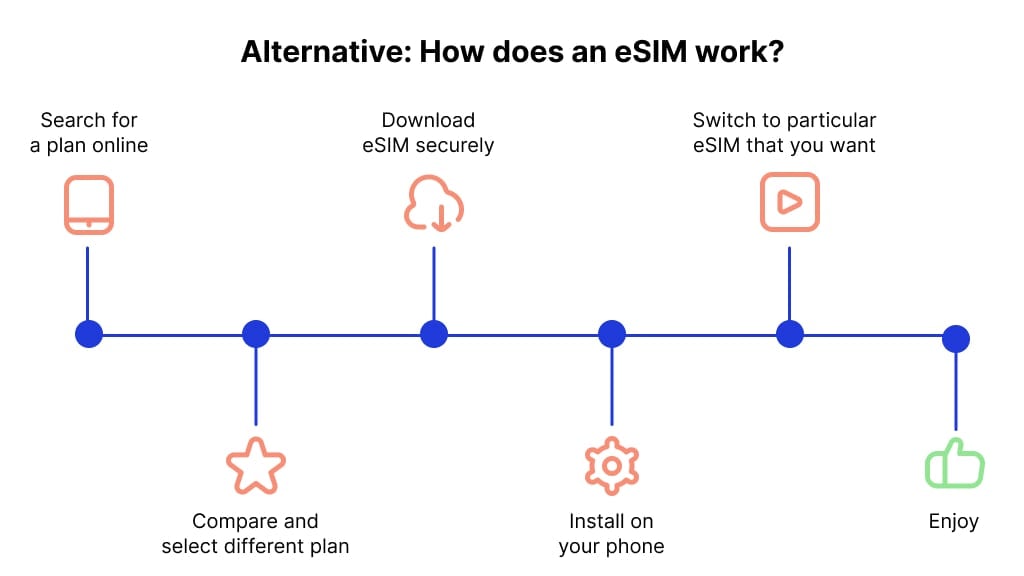
The essence of an electronic SIM profile is that your phone gets access to the network without the usual plastic card. There is an operator profile, which is downloaded directly into the memory of your device.
What you get with travel eSIM
- Compatibility. The technology is available on many modern smartphones, from iPhone XS and newer to Samsung flagships or Google Pixel.
- Flexibility. You can keep your phone number for calls and install an eSIM to get mobile internet abroad.
- Activation. With eSIM, you don’t need to visit the operator’s store: choose a plan online (through services like Ohayu), scan a QR code to install the profile, and activate it when you arrive in the destination country.
eSIM advantages
- Prices. A travel eSIM data package can cost less than data roaming with your home carrier, so compare both before you travel.
- No need to change SIMs. No more losing the tiny chip in your pocket or searching for a pin at the airport.
- Switch operators in a minute. With eSIMs, it’s easier to switch to a different provider if you are not satisfied with the connection quality, because travel eSIM plans usually come without a long-term contract.
However, you should note that the built-in profile will not work if your smartphone is from 2012, for example. Therefore, you should check whether your device is eSIM compatible before buying.
If you want extra certainty, test the eSIM at home. Buy a test plan for your home country, install it, activate it, and make sure the internet works. And don’t forget to disable automatic updates in the settings – otherwise, gigabytes can be spent on background processes.
Comparison by key parameters

Convenience and customization
- International roaming – keep roaming on your home SIM card turned on, and that’s it. When you cross the border, the connection automatically switches over. Ideal for those who don’t want to spend time on settings. But simplicity comes at a price: if you don’t disable background updates, your Internet bill can surprise you even if you barely use your phone.
- The eSIM requires setup: download the app, choose a plan, and scan a QR code. It might take a few minutes, but you have more control: from traffic volume to blocking unnecessary services. This is an option for those who are ready to spend a little time for the sake of economy and convenience.
Coverage and speed
- With roaming, the quality of the connection depends on your operator’s partner networks. In suburban areas or places with poor infrastructure, the signal may be lost, and Internet speeds may drop to minimum values.
- A travel eSIM connects you to the provider’s supported local networks, so check which networks a plan uses before buying. If you are not satisfied with the connection, you can add another eSIM without replacing the SIM card. But here it is important to check reviews in advance: not all plans deliver the declared speed, especially during rush hour.
Device compatibility
Roaming works on almost any phone, but very old 2G/3G-only phones may not connect in countries that have switched those networks off. Digital profiles require modern gadgets. For example, iPhones older than the XS and XR, or Android phones without eSIM, can’t use them. If your device does not support eSIM, roaming remains the main option.
Security: where are the bigger risks?
A physical SIM can be removed. If the device falls into the wrong hands, an attacker can take out the card, use it to access 2FA codes (banking, social media), or initiate unauthorized transactions. Network-level risks are the same for SIM and eSIM users: SMS hijacking via SS7 exploits, SIM swap fraud, and outdated encryption on 2G networks (e.g., A5/1), which allows voice calls to be intercepted even without physical access to the device.
The digital SIM is protected by a secure element built into the device. It can’t be physically removed, and a profile can only be downloaded through a certificate-protected process. However, the risks shift to software: phishing applications, fake QR codes, or data leaks through unreliable providers. Choose an established provider that protects customer data.
What’s more profitable?
To understand which option, eSIM vs international plan, is right for you, imagine three typical situations that almost all travelers face.
Short trip
Here we need fast internet for navigation and social networking, but we don’t have time to deal with local operators. Here, eSIM will be a better option, because in a couple of minutes you can activate a package with gigabytes, and after returning, just delete it. As opposed to it, your home operator roaming can eat up the budget due to automatic updates, even if you have not opened the browser.
Multi-country travel
Let’s say you plan to visit 4-5 countries in a month. With a traditional plastic SIM card, you will have to look for a new SIM every time and swap it into the tray. However, with travel eSIMs like Ohayu, you can get a Global Plan that can connect you to supported local networks in 120+ countries. In this case, you don’t need to buy separate plans for every country you visit, and you keep one eSIM as you cross borders.
Working from abroad
There are times when you have to perform work duties even on vacation or business trips. Here we advise combining both options, which will be the best solution. After all, you often need high-speed internet for Zoom, but you also have to use a mobile number. So do it this way:
- Main traffic via eSIM (often cheaper).
- Leave roaming for emergency calls (so as not to lose access to bank SMS).
What does the future hold for mobile communications?
Physical SIM cards are slowly giving way to eSIM. Today, eSIMs are built into many new smartphones, and support keeps growing.
Operators will move online. Why go to the store when you can download a tariff through an app, like Netflix? For example, before traveling to Asia, you will buy a package from a local provider right from home, and when you return, you will delete it – no contracts and no termination penalties.
But there are risks, too. The more data stored in the cloud, the more often hackers will target operators. So, in the not-too-distant future, there will likely be more attacks, as well as more data breaches.
eSIM vs international plan – final words
Choosing between eSIM vs international plan is always a debate. eSIM already outperforms roaming in key parameters: a data package can cost less, and setup takes minutes. Yes, roaming still helps if your phone does not support eSIM. But it’s only a temporary indulgence.
The future looks digital. eSIMs are not just more convenient – they erase boundaries, allowing you to switch carriers in minutes. Why overpay when you can download a tariff in a couple of clicks? Technology does not stand still, and those who have already switched to a built-in SIM are unlikely to return to roaming, just like they don’t go back to button phones after touch screens.