



Many travelers now head to Vietnam for its stunning temple complexes, vibrant locals, and bustling markets. A trip to Vietnam will leave you with unforgettable impressions and memories that will last a lifetime, especially if you choose a mobile operator that keeps you connected.
The 4 biggest mobile operators in Vietnam are: Viettel (the largest carrier), VNPT’s VinaPhone, MobiFone (one of the oldest providers), and Vietnamobile. Let’s see which of these operators is the best for traveling and local use. Also, we will figure out whether it’s better to go with a local physical SIM card or use an eSIM from online providers like Ohayu.com.
Brief overview of Vietnam’s mobile market
Vietnam has a well-developed mobile infrastructure, and the government supports the growth of digital services.
The biggest players in the market are Viettel, VNPT, MobiFone, and Vietnamobile. All of them offer prepaid SIM cards and internet plans.
Connection speed and quality
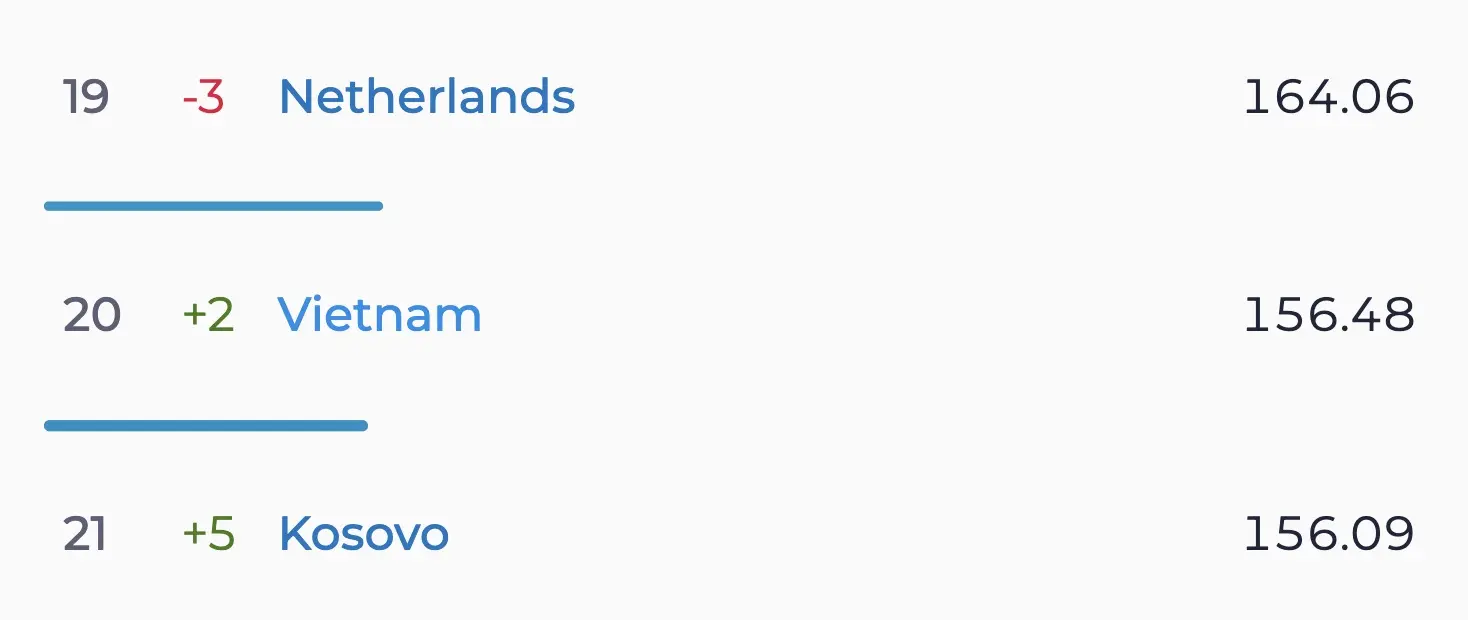
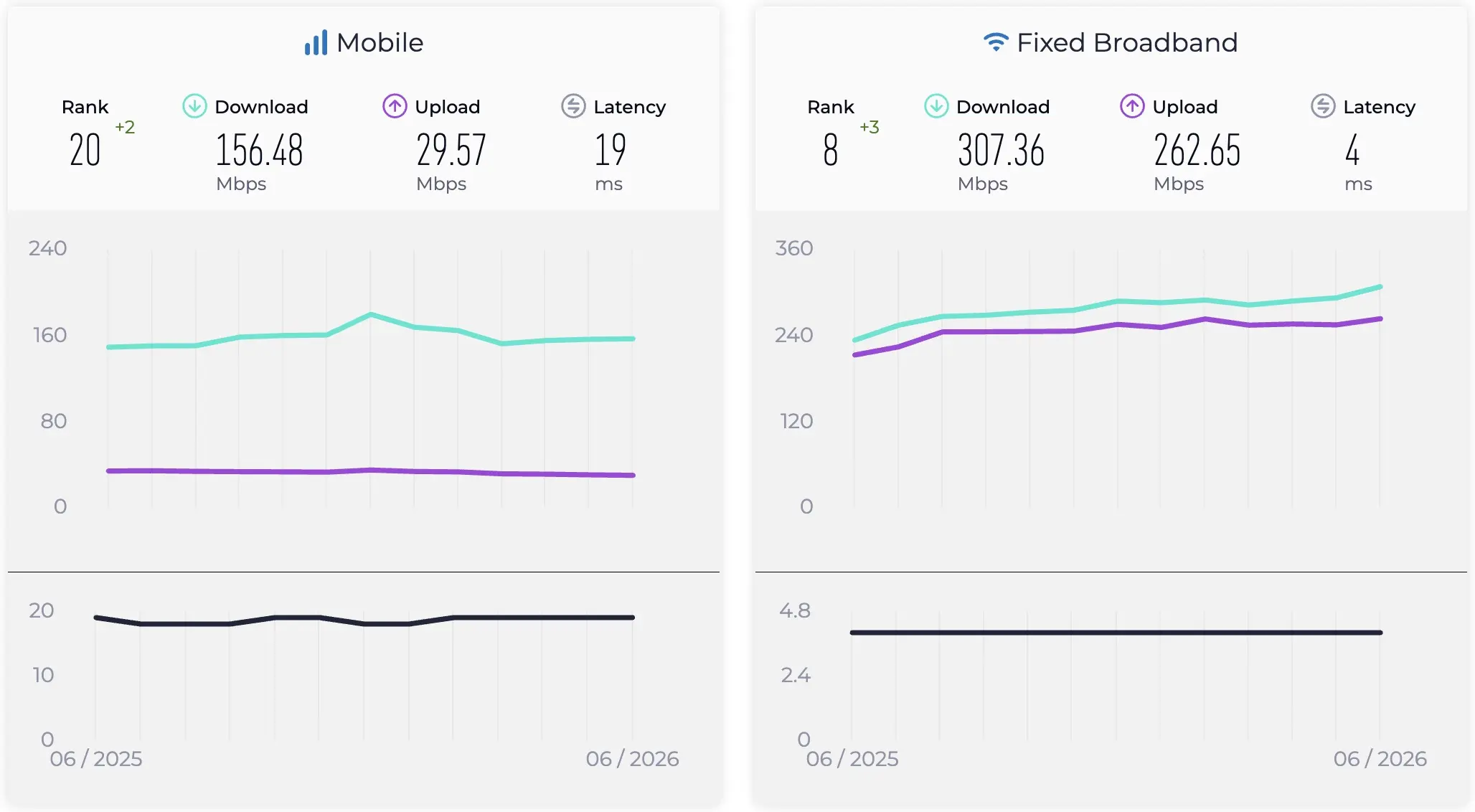
Before selecting a carrier, you should consider how reliable the connectivity is when traveling. In June 2026, Vietnam ranked 20th for mobile speed in the Speedtest Global Index.
According to this data, the median mobile download speed was 156.48 Mbps, with a latency of 19 ms.
Mobile speeds in Vietnam have risen fast since commercial 5G launched in late 2024. In July 2026, Vietnam moved up 10 places to 10th in the Speedtest Global Index, with a median mobile download speed of 205.58 Mbps (as reported by Tuoi Tre News).
In Hanoi, Ho Chi Minh City, Da Nang, and other large cities, 4G coverage is available almost everywhere. 5G is available in major cities and is expanding; coverage varies by operator. The speed is sufficient for Zoom calls and watching YouTube in HD.
The situation depends on the operator in rural areas. Viettel traditionally has the widest coverage, even in the mountains and on the islands. VinaPhone and MobiFone work well in cities and popular tourist regions. Vietnamobile has a smaller network, and coverage outside urban areas can be a bit hit or miss.
Buying a SIM card
One of the most common questions tourists ask is where and how to buy a SIM card. It’s actually very simple.

- The airport is a convenient option. You will find kiosks with SIM cards from the major carriers. Prices can be higher than in the city, but the process is quick. Show your passport, choose a tariff, and receive an activated card.
- There are even more options in the cities. SIM cards are sold at branded outlets, electronics stores, and supermarkets. It is worth checking whether the card is activated, and be sure to register it with your passport — this is a mandatory requirement of the government.
Advantages of eSIM
eSIM is an easy way to get mobile internet abroad. It is installed online via a QR code, so you can install it over Wi-Fi before your trip and connect to a local network after you arrive in Vietnam. No need to look for a SIM kiosk at the airport.
A prepaid travel eSIM also helps you avoid unexpected roaming charges from your home provider. Ohayu has plans for Vietnam and a Global eSIM that covers 120+ countries and automatically switches to the supported network when you cross borders.
Before purchasing, we recommend checking your device’s compatibility. You can check this in a few clicks by following this link.
Top Vietnam mobile operators
Here are the four main operators, among which it is easy to select the best option for traveling.
Viettel
Viettel is the largest carrier in Vietnam, owned by the country’s Ministry of Defense. It is a good choice for tourists who plan to travel all over Vietnam, from megacities to mountain villages. Viettel has wide coverage, with 4G even in remote provinces.
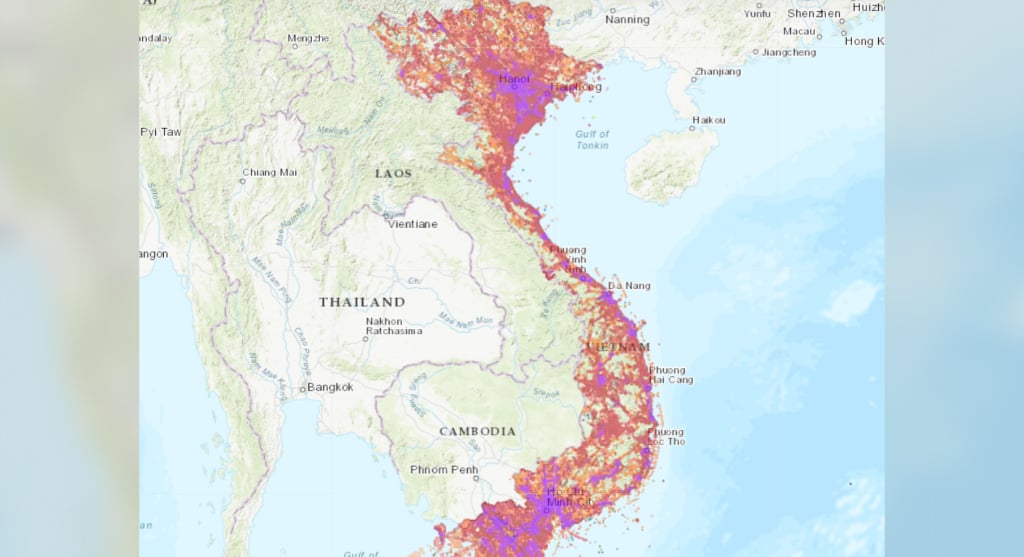
SIM cards can be easily purchased at airports, supermarkets, kiosks, or through official partners. For tourists, there are packages with internet and calls.
Activation is simple: all you need is a passport. If you want a stable connection in the mountains, on the islands, or while traveling around the country, Viettel is a good option.
VinaPhone
VinaPhone by VNPT (Vietnam Posts and Telecommunications Group) is another major player in the local market, but its coverage is lower than that of its competitor Viettel. The VinaPhone network covers major cities, resorts, and popular islands such as Phu Quoc, Cat Ba, Con Dao. If the main part of the trip is planned in resort areas, VinaPhone is a good choice.
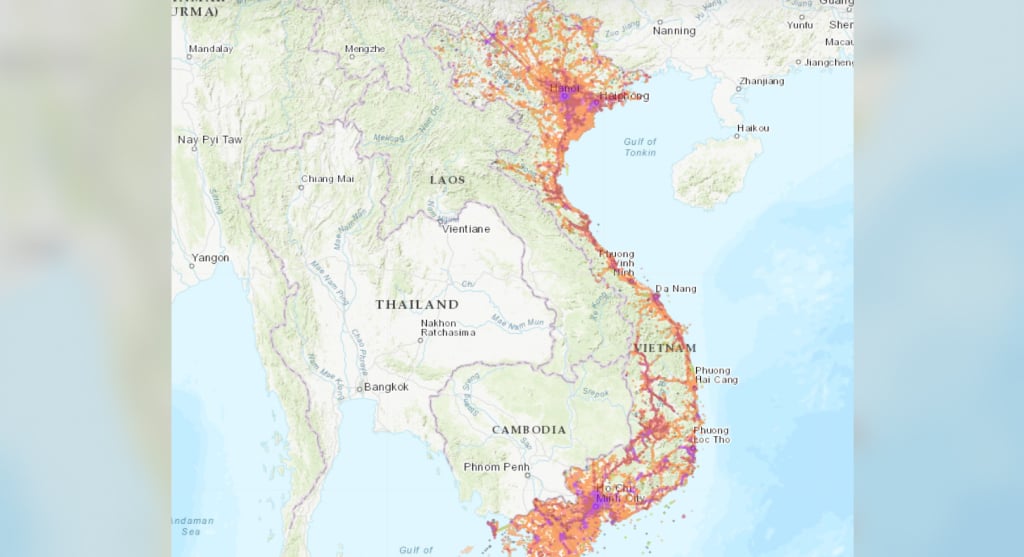
For tourists, the company offers prepaid packages with mobile internet and calls.
MobiFone
MobiFone is one of the oldest providers in Vietnam. It provides stable service in cities, suburbs, and many tourist areas, although the connection in remote areas is weaker than Viettel’s.
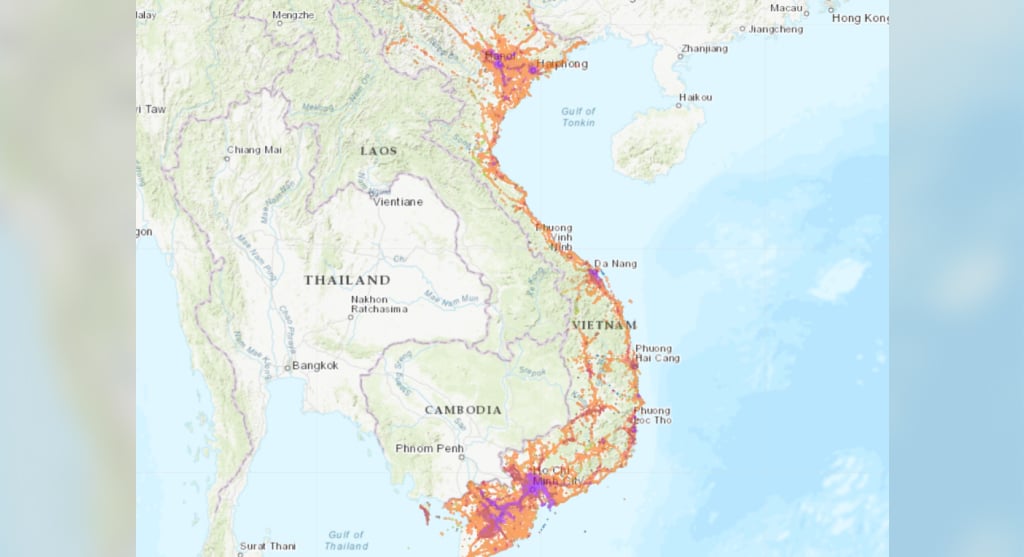
Prepaid plans are available for tourists.
Vietnamobile
Vietnamobile is a smaller carrier focused on budget mobile internet. Its service is aimed mainly at cities, especially Hanoi, Ho Chi Minh City, and tourist centers along the coast.
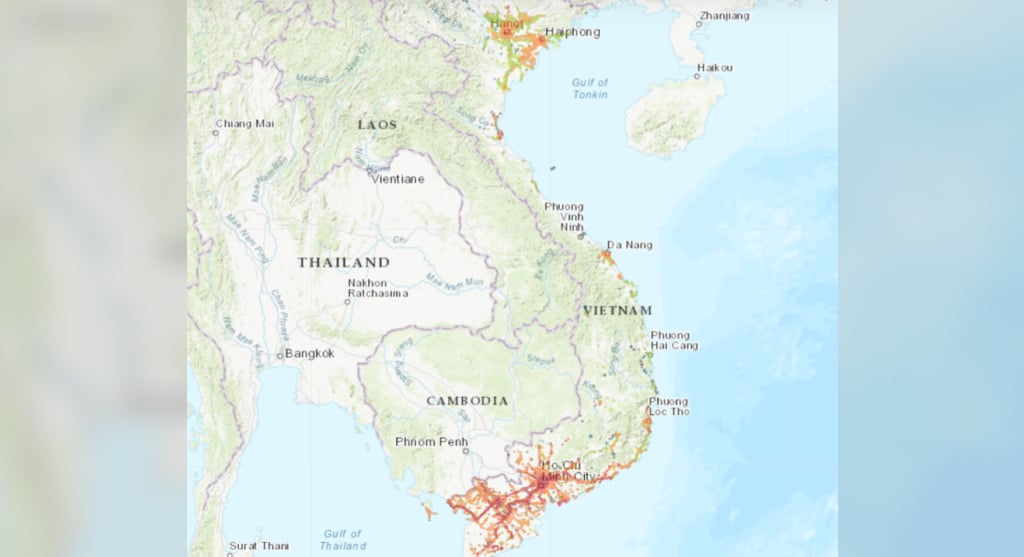
But it is worth considering: Vietnamobile’s network is limited, and in the mountains, provinces, and remote islands, the signal may be weak or nonexistent.
Who is the true leader among Vietnam mobile operators?
Opensignal’s report from September 2025 (data from June to August 2025) sheds light on the state of mobile communications in Vietnam. The market picture is multifaceted: MobiFone and Viettel won in different categories.
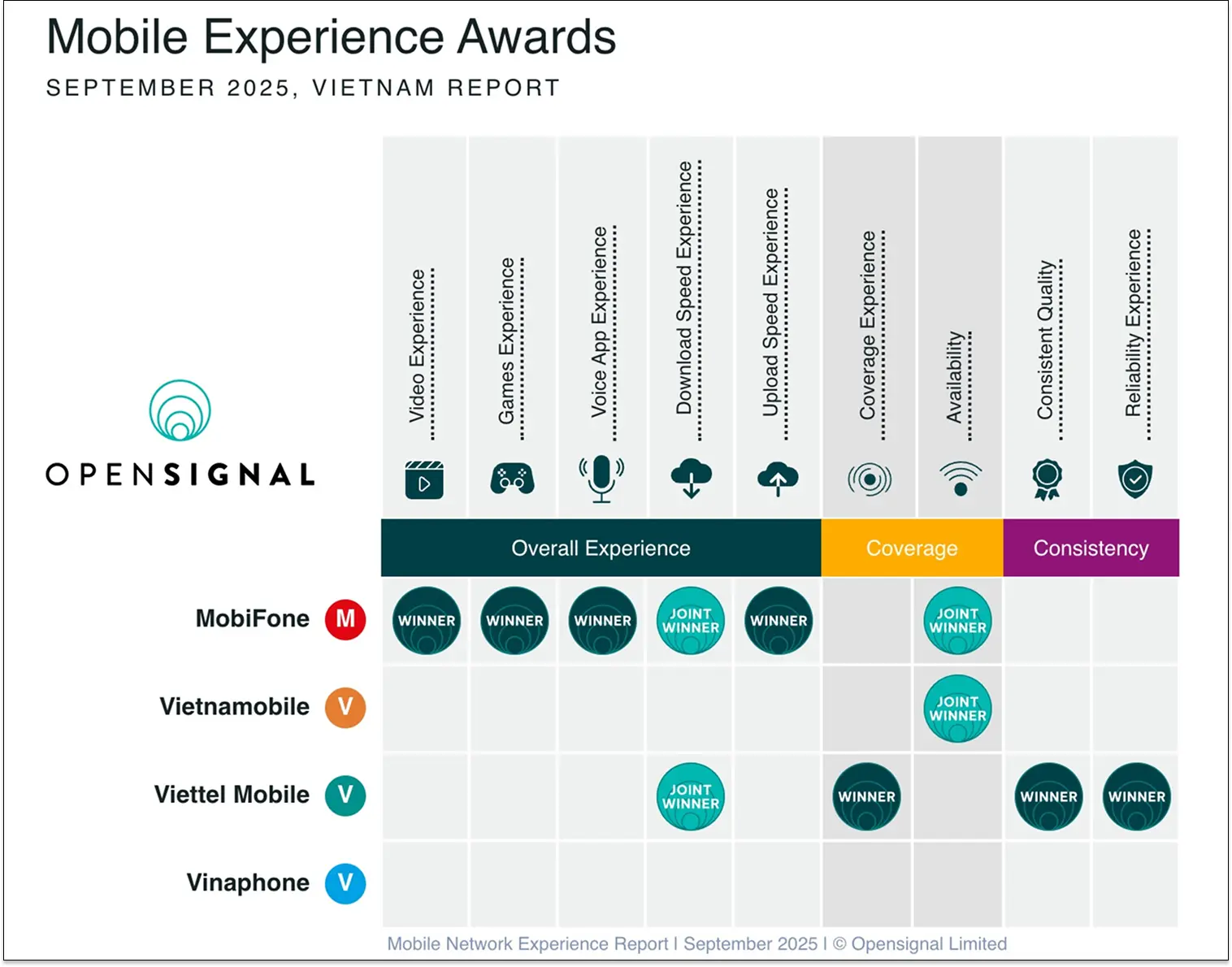
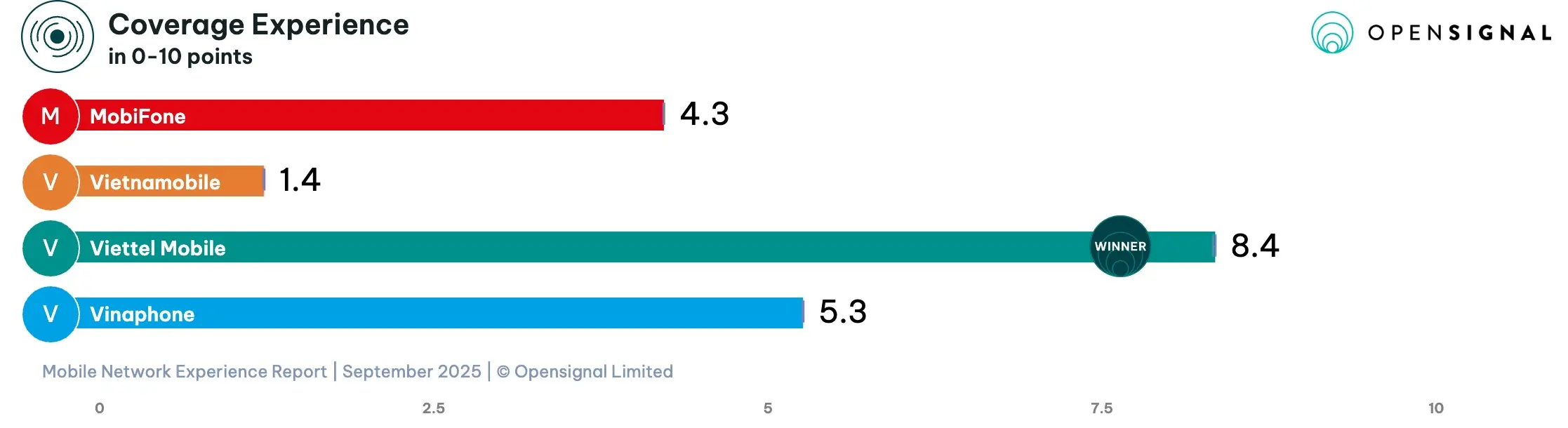
MobiFone led on speed: it won Download Speed Experience (as a joint winner) and Upload Speed Experience. In the Coverage Experience category, Viettel received the highest score of 8.4 on a 10-point scale.
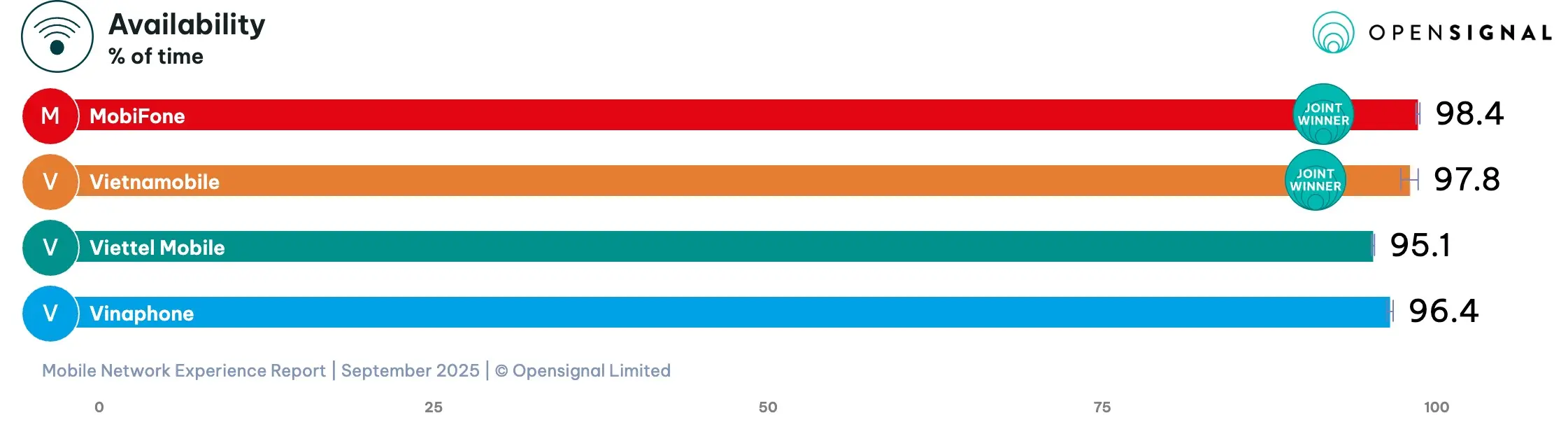
MobiFone shares the Availability category with Vietnamobile. It scored 98.4% of the time, ahead of Viettel by 3.3 percentage points. VinaPhone and Viettel showed decent results too, just slightly behind.
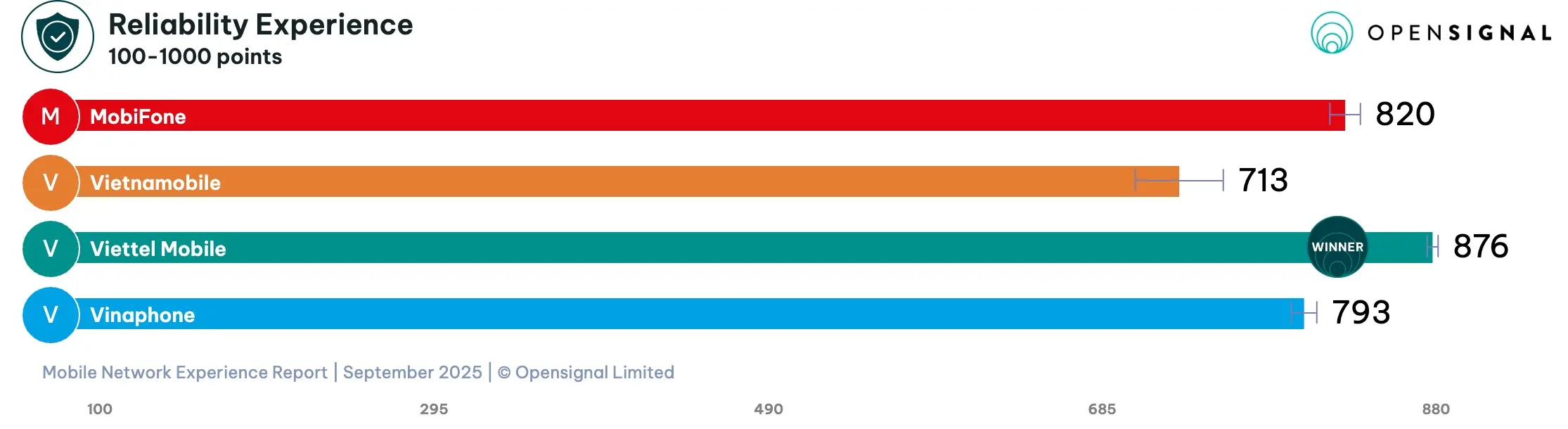
It is worth noting that VinaPhone showed quite good results in the Reliability Experience category – 793 points, the third after Viettel (Winner) and MobiFone.
VinaPhone also scored 96.4% in terms of availability, which matters for users in remote or rural areas.
Vietnamobile jointly won the Availability category with MobiFone but didn’t win in any of the other categories.
In this report, MobiFone and Viettel won most of the categories. In Opensignal’s newer August 2026 report (data from April to June 2026), Viettel won the most awards, with MobiFone close behind.
MVNOs in Vietnam: alternatives to large Vietnam mobile operators
MVNOs are an alternative to traditional carriers.
MVNOs (Mobile Virtual Network Operators) don’t own the tower and base station infrastructure. Instead, they lease the network from large carriers (for example, Viettel or VNPT) and deliver the service packages. They create tariffs, promotions, and extra services targeting specific user groups.
Why do tourists benefit from MVNOs?
- MVNOs can offer packages that are cheaper than those of traditional carriers.
- Some short-term packages suit trips of a few days or weeks.
- MVNOs use the infrastructure of the large carriers, so coverage follows the host network.
- Some MVNOs work through apps and have a simple registration process.
Let’s summarize
So, which carrier to choose for a successful trip to Vietnam? It all depends on your route. Viettel is great for traveling all over the country, including villages, mountains, and islands. VinaPhone is a good option for the city rhythm with stable connection speeds. MobiFone is a cross between Viettel and VinaPhone and a good choice for short trips. Vietnamobile is a budget option for cities, but its signal can be weak in rural areas.
But to be connected as soon as you arrive, without looking for a SIM kiosk, consider an eSIM from Ohayu. You can install it before the trip, and the Global plan even extends across borders.