

The leading Singapore mobile networks are SIMBA (formerly TPG Telecom), M1 (MobileOne), StarHub, and Singtel. In this article, you will learn about their rates, coverage, and speeds. And we’ll help you pick the best one for your needs.
Overview of Singapore mobile networks
For many years, 4G has been the standard. However, the major carriers have made a significant leap forward. They not only fully embraced 5G technology but also officially shut down all 3G networks. Consequently, this move allowed mobile operators to use radio frequencies for the newer, faster 4G and 5G.
This means:
- Fast responses are normal: With so much focus on new technology, lightning-speed internet is the standard these days. Almost everywhere in Singapore, downloads are quick.
- Focus on 4G and 5G: For the most part, you will encounter only fourth- and fifth-generation cellular network technology here. This means that if your phone is an older model and only supports 3G, you will not be able to make calls, send texts, or use data.
- Widespread 5G: Wherever you go, there is ample connectivity, even in underground MRT tunnels. In other words, users with 5G-supported smartphones will experience less latency and faster speeds.
Power of 5G standalone
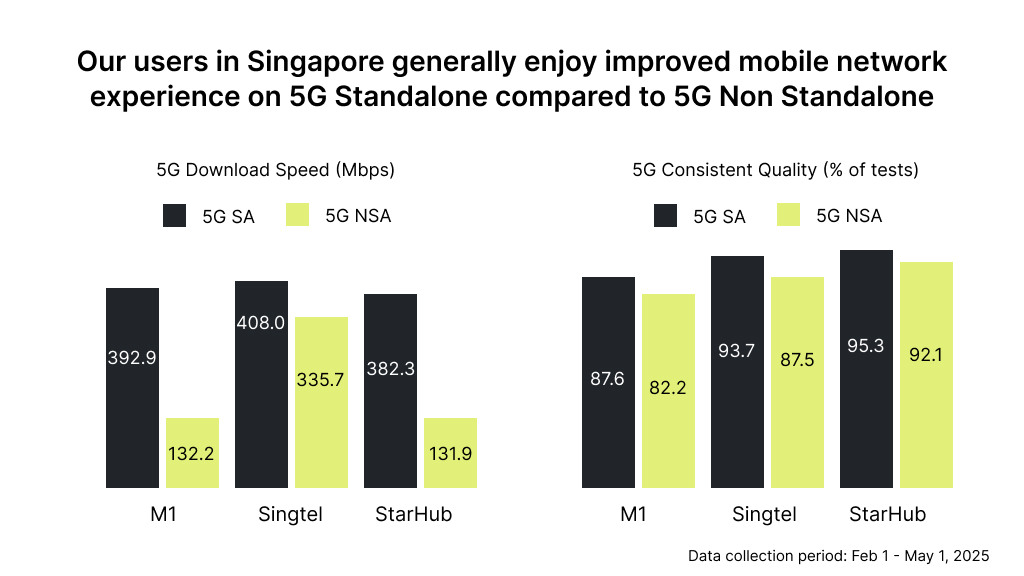
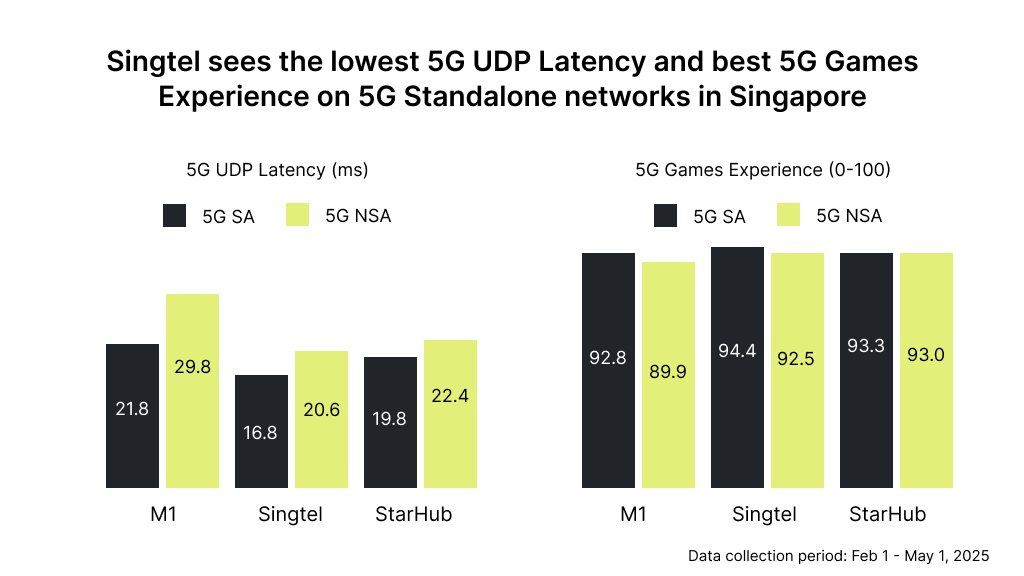
Singapore is an early adopter of 5G Standalone (5GSA) infrastructure. Unlike the previous “non-standalone” version (still using 4G), 5GSA runs on an entirely new, standalone core network that is stronger and more stable. That means you’re less likely to experience slowdowns, especially in busy areas.
What’s more, according to Opensignal’s June 2025 report, Singaporean subscribers enjoy faster download speeds and a better gaming experience when using 5GSA.
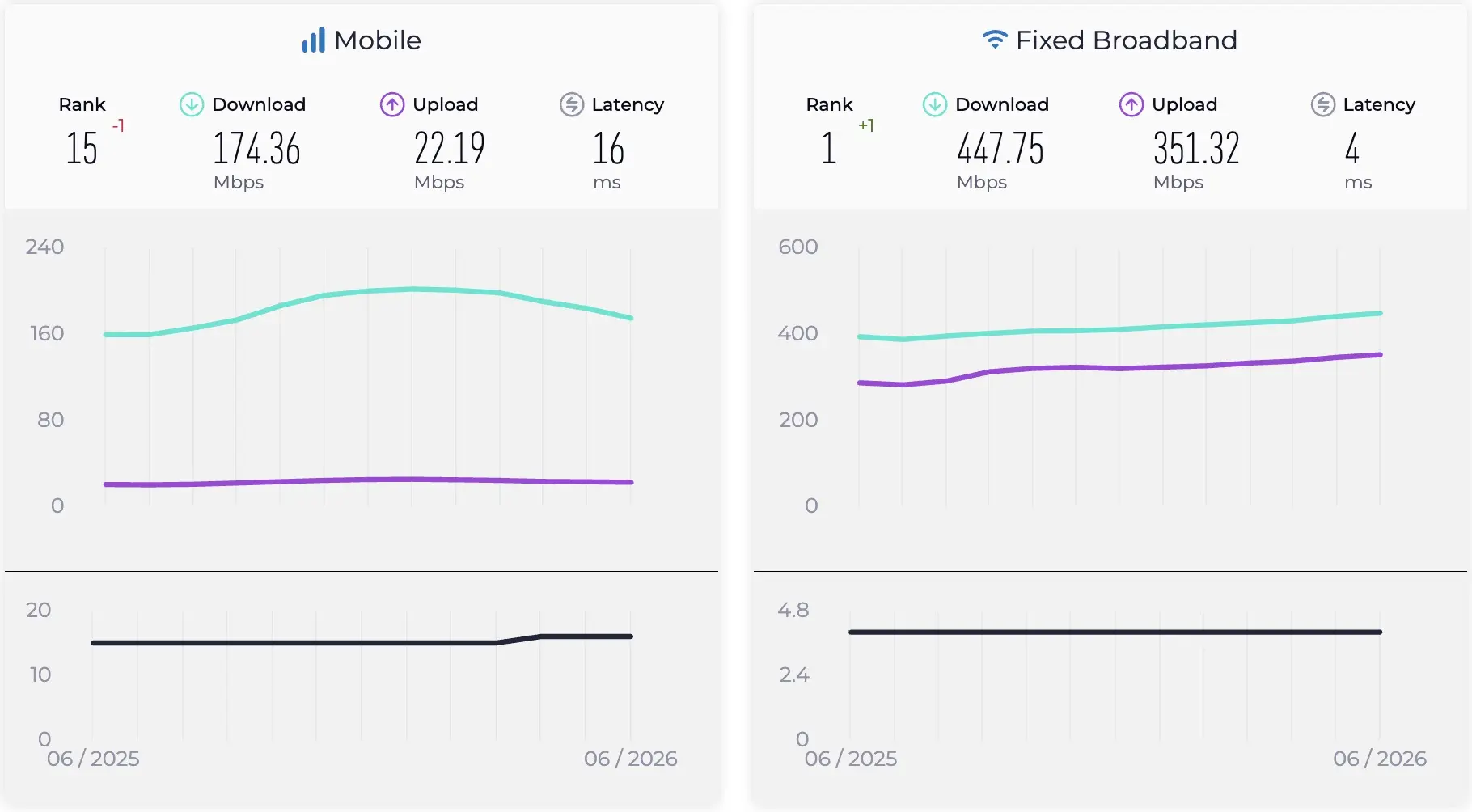
Singapore also ranks 15th in the world for mobile (July 2026 Speedtest Global Index). It boasts very fast downloads of 174.36 Mbps on average. It also has good uploads of 22.19 Mbps and low latency of 16 ms. This all adds up to a strong and efficient cellular infrastructure that can support most needs on the go.
Challenges and problems
Despite the progress, users occasionally encounter some “black hole” areas where they regularly lose signal, even in open or less crowded areas. In fact, these can be highly localized and vary from operator to operator.
Poor signals and “dead zones” in certain underground parts of the MRT or thick-walled buildings remain an issue raised by some users on Reddit. Similarly, newer estates (e.g., Tengah) have also faced initial signal issues due to challenges with placing base stations for cell connectivity.
Sometimes problems occur when the device is not optimized for Singapore networks at all, or is a very old model that doesn’t have the latest technology. Note that the complete phasing out of 3G means that very old 3G-only devices will not be able to connect to the network.
Major Singapore mobile operators
The mobile industry here is active and competitive. There are four key players on the market, each with its own infrastructure. Most notably, they offer prepaid plans specifically for tourists, and their SIM cards can be purchased at Changi Airport, at kiosks around town, or from official websites online.
Singtel
Coverage
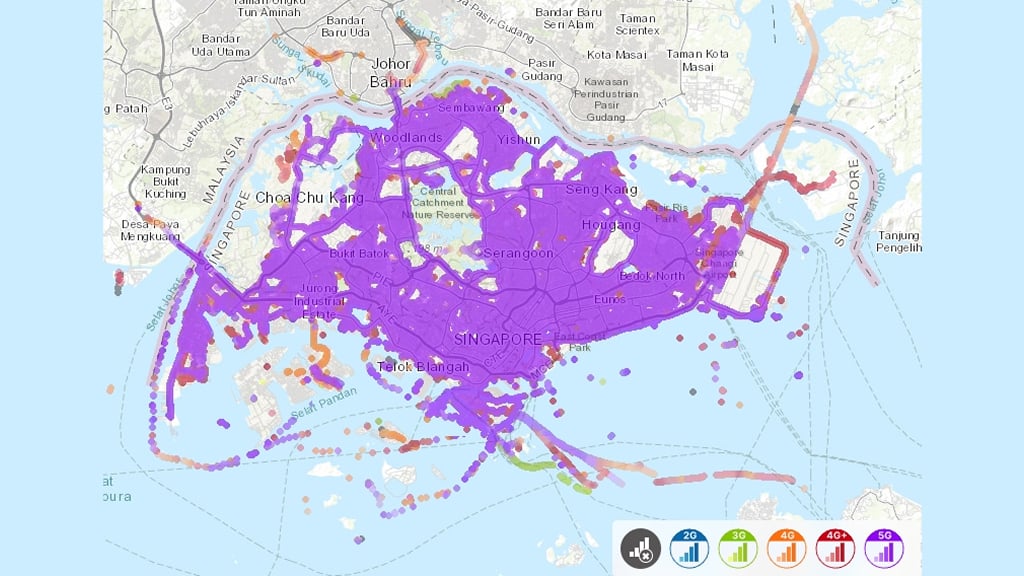
The provider is known for its extensive reach across the island and has a very robust cell footprint. It was the first to roll out nationwide 5GSA service in 2022, years ahead of schedule.
More recently, in February 2025, the company was the first to deploy the 700 MHz band. As a result, the lower frequency band now has a much stronger signal, up to 40% stronger, under ‘challenging’ locations such as high-rise buildings, indoors, and even underground.
Performance
With their 5G+ services, the carrier guarantees improved speeds and very low latency. They’ve also added “network slicing” capabilities for users. This means that bandwidth-intensive applications, like streaming or gaming, get a dedicated “lane” on the network. That way, they can perform at peak times or during live events.
Prices
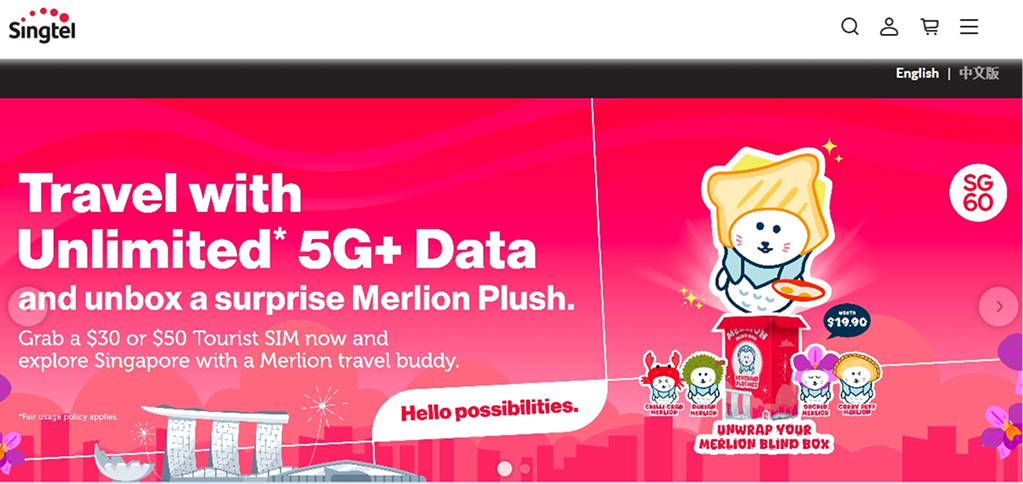
The carrier keeps you connected with Hi! Tourist plans. You can manage and top up your balance through the hi!App. The $18 plan, among others, comes with a transit card to simplify public transportation usage.
| Plan | Days Validity | Data | Mins | SMS | IDD Mins | Roaming |
| $50 Tourist | 30 | Unlimited | Unlimited | 90 | 10 GB | |
| $30 Tourist | 5 GB | |||||
| $15 Tourist + Transport Card | 100 GB | 500 | 100 | 30 | 3 GB | |
| $10 Tourist | 7 | |||||
StarHub
Coverage
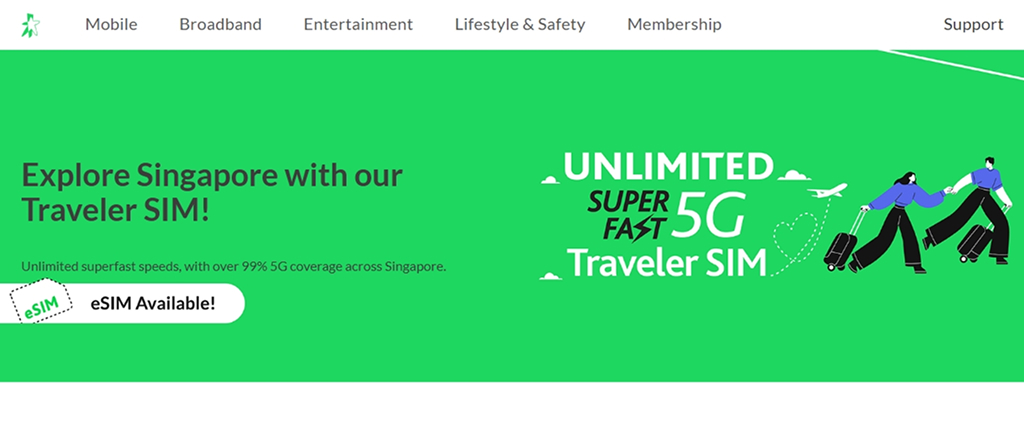
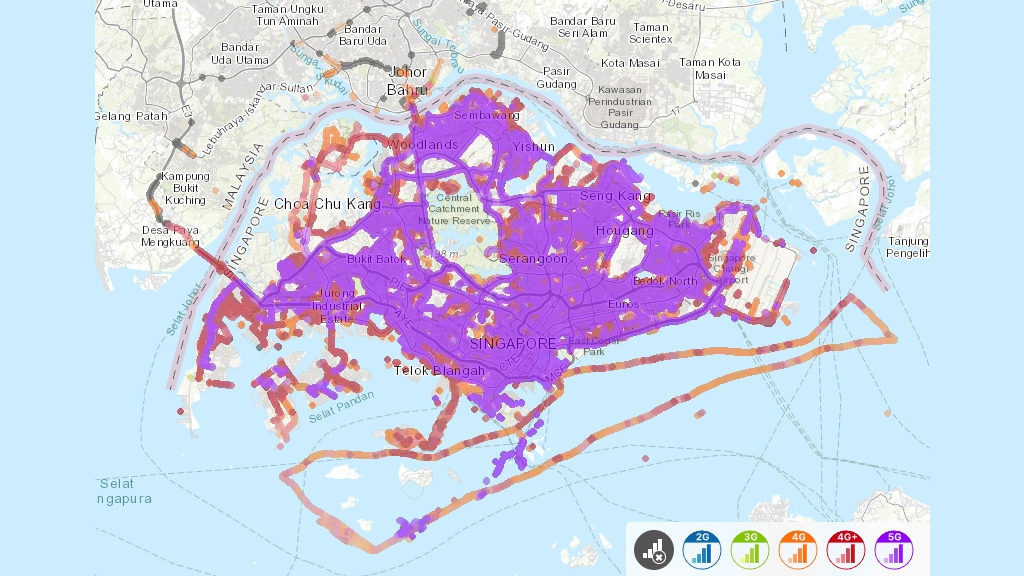
This company now has more than 99% 5G accessibility. It means that customers can experience smooth and fast internet almost everywhere outdoors. Meanwhile, they are covering more indoor buildings and subway stations. Their 4G service is also excellent.
Performance
The operator is excellent at providing fast upload and download speeds. They are developing a new product called “Cloud Infinity” to take their services a step further. This program will make their services more reliable, particularly for cloud gaming.
Prices
Tourist SIMs are available for half-month and month-long stays. In addition to local call minutes and SMS, international call minutes are also included.
| Plan | Price | Days Validity | Data | Mins | SMS | IDD Mins | Roaming & Destinations |
| Traveler | $12 | 14 | 100 GB | 500 | 100 | 30 | 3 GB |
| Traveler + | $30 | 28 | Unlimited | 3000 | 300 | 90 | 5 GB |
| Traveler ++ | $50 | 4000 | 500 | 200 | 10 GB |
M1 (MobileOne)
Coverage
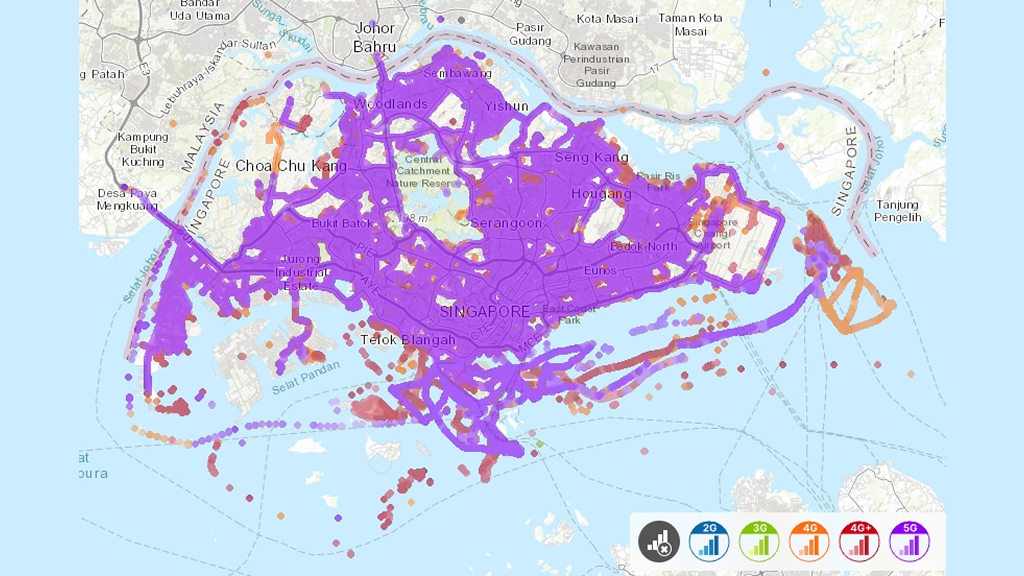
This carrier is widely 5GSA-covered and features 5G readiness across more than 99% of the island. This carrier also created a solution called RedCap to facilitate business IoT adoption.
While overall quality remains acceptable, in 2023, users experienced some weak 4G signals in some buildings and on the lines of the MRT. However, the company continues to grow and aims to improve connectivity for business and individual customers.
Performance
The carrier has come a long way and has significantly improved 5G availability today. Their “True5G” is up to 10 times quicker and twice as responsive as 4G. This allows for cloud gaming, real-time video, and virtual reality.
Prices
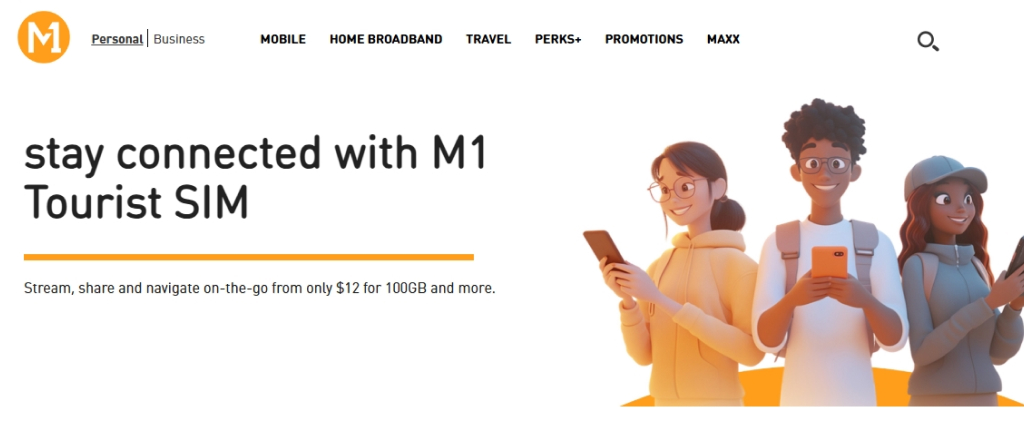
SIM plans for travelers vary in length of visit and data needs. Even the cheaper ones have adequate local data limits and features. Moreover, tourists can easily travel between South Asian countries.
| Plan | Days Validity | Data | Mins | SMS | IDD Mins | Roaming |
| SGD12 | 15 | 100 GB | 500 | 100 | 30 | 3 GB |
| SGD14 | 30 | 1000 | 500 | 20 | ||
| SGD25 | 28 | 168 GB | 5000 | 400 | 200 | |
| SGD30 | 30 | 150 GB | 3000 | 1000 | 90 | 5 GB |
SIMBA
Coverage
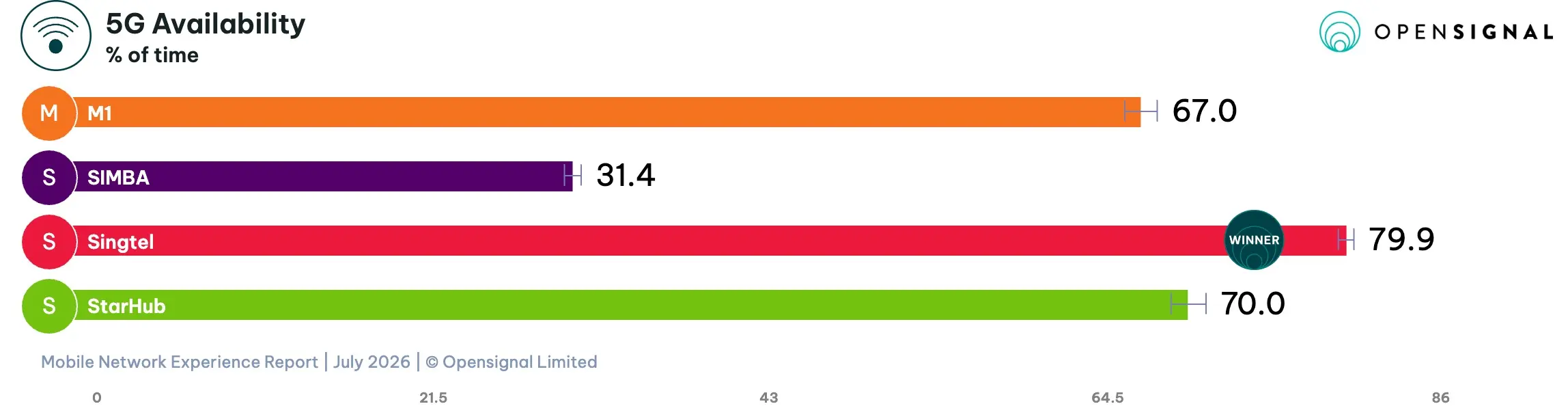
SIMBA has expanded its 5G coverage. In the most recent Opensignal report, it scored 8.9 out of 10 for 5G Coverage Experience. It is well-positioned to meet the IMDA’s next requirement (must be completed by December 2026). It has upgraded almost all but a small percentage of its base stations and achieved more than 90% outdoor visibility. But its 5G Availability was estimated at 31.4%.
Initial complaints during the first period sometimes described localized inconsistencies, especially indoors or in certain areas. However, later complaints describe better consistency and reliability of their mobile services.

Performance
SIMBA has still seen improvements in its reliability experience and consistent quality. Its average download and upload speeds are lower than those of others. However, they provide heavy data allowance for streaming, browsing, and more.
Prices
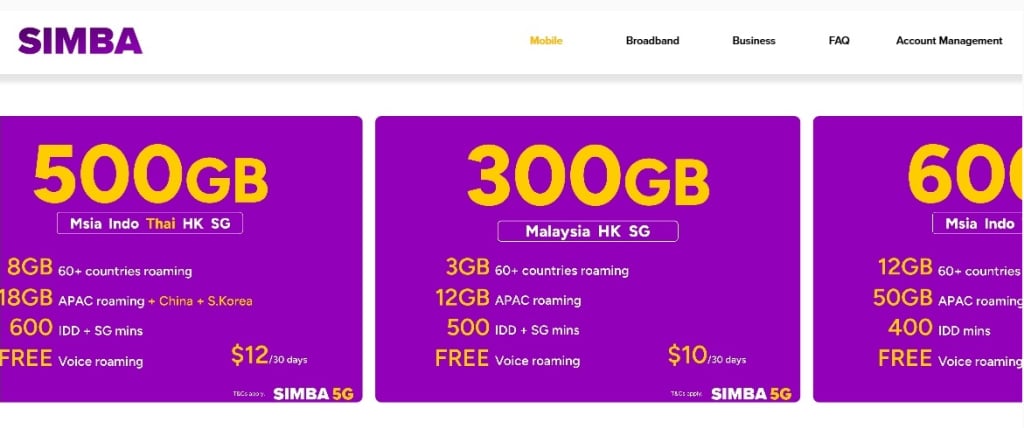
The mobile provider’s strategy is clear: lots of data at disruptive prices. They are known for offering affordable plans with hundreds of gigabytes.
Their “SuperRoam” options stand out, with generous roaming allowances (more than 60 destinations) included directly in the base plan.
They typically include unlimited calls to local mobile numbers and free SMS to other in-network subscribers. They also include free IDD minutes.
| Plan | Price (SGD) | Days | Data | Mins | IDD Mins | SMS | Roaming |
| Seniors | 5 | 150 GB | 400 | 100 | 30 | 3 GB | |
| SuperRoam 10 | 10 | 30 | 300 GB | 500 | |||
| SuperRoam 12 | 12 | 500 GB | 600 | 100 | 8 GB | ||
| SuperRoam 13 | 13 | 700 | |||||
| SuperRoam 18 | 18 | 800 | 400 | 10 GB | |||
| SuperRoam 20 | 20 | 600 GB | 12 GB | ||||
| SuperRoam 25 | 25 | 700 GB | 15 GB | ||||
| SIM-Only | 10.50 | 200 GB | 300 | 100 | 30 | 1 GB | |
Mobile virtual network operators
MVNOs use the infrastructure of the leading Singapore mobile networks, but have their own rates and customer support. This makes them a good choice for special services or promotions.
Among the most well-known MVNOs are:
- Circles.Life;
- GOMO;
- VIVIFI;
- giga!;
- Maxx;
- MyRepublic Mobile.
Singapore mobile networks – detailed comparison analysis
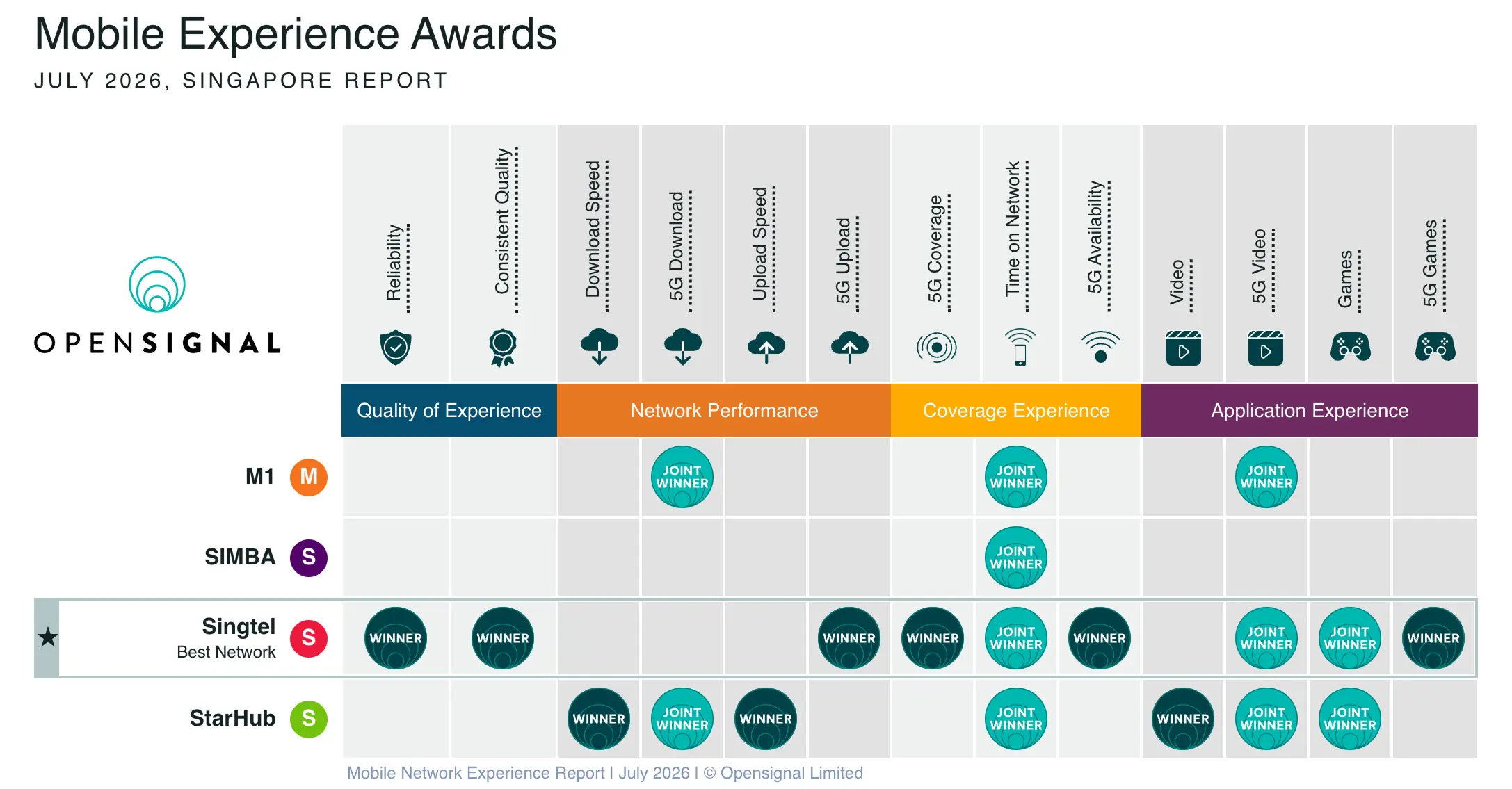
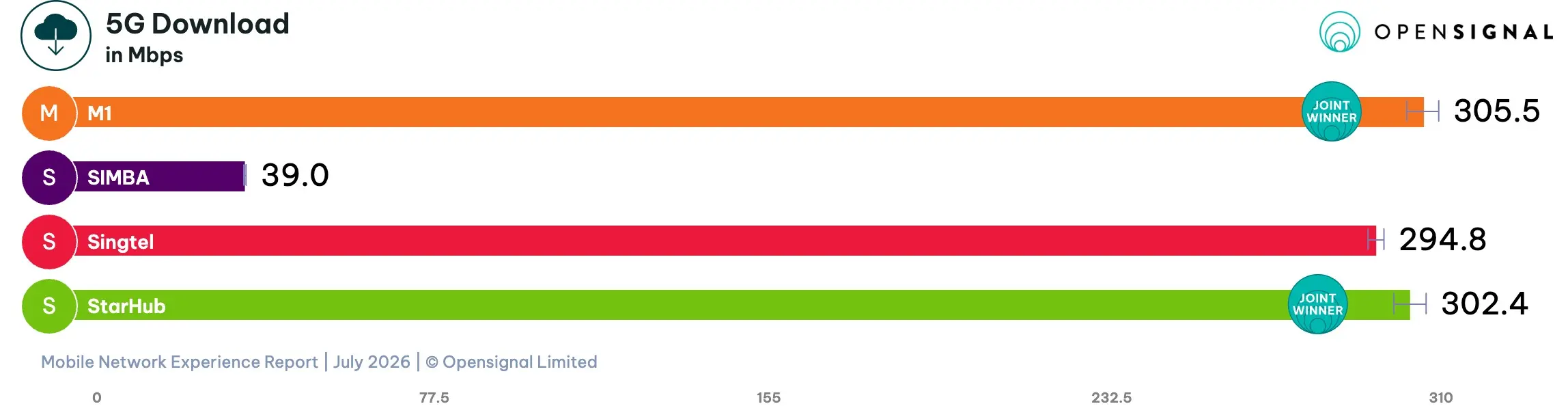
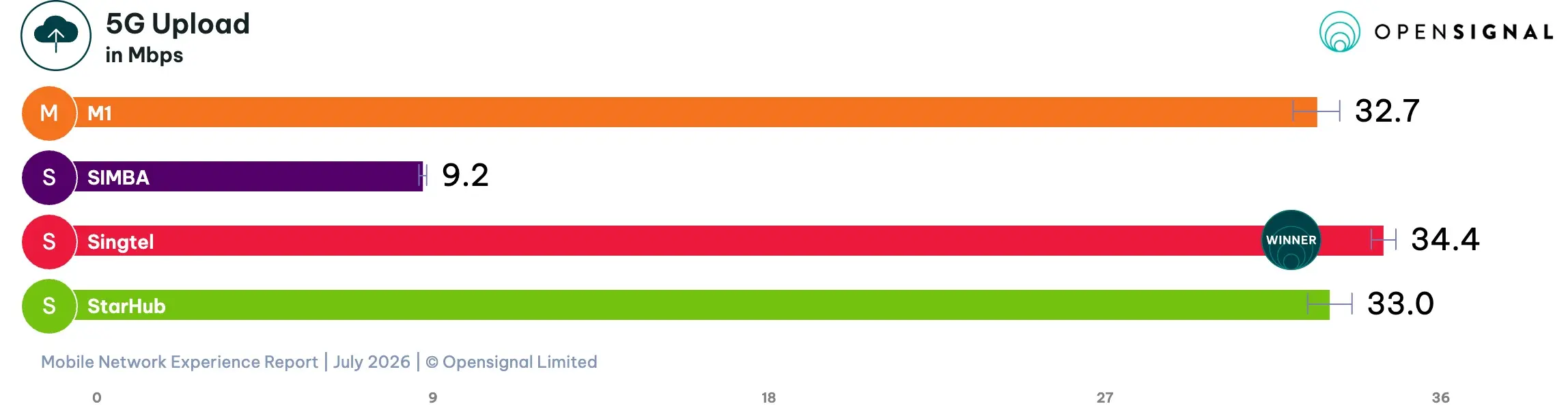
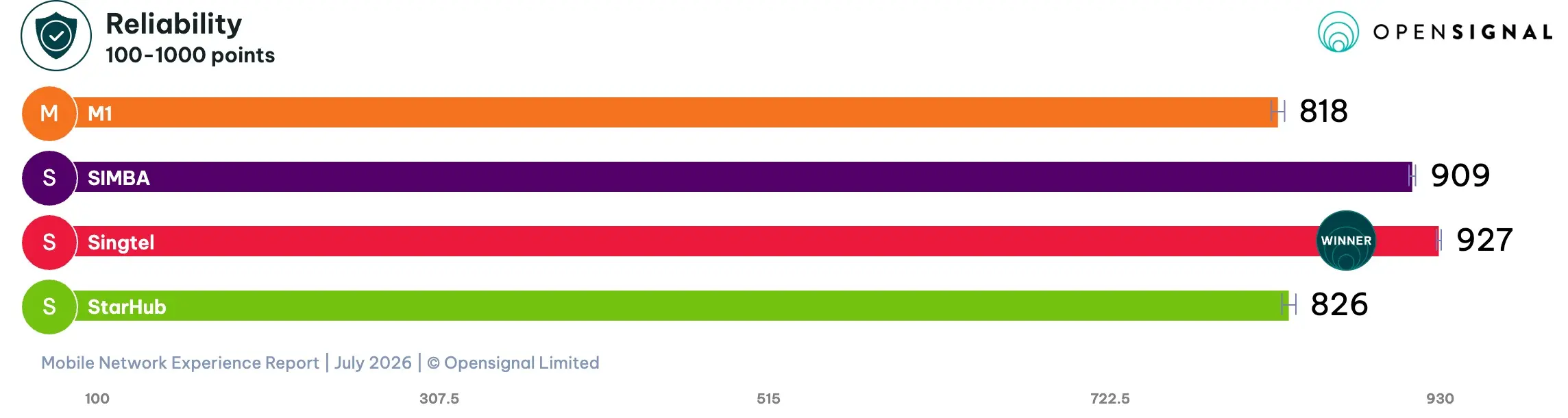
The Opensignal report reflects a competitive market. Singtel demonstrates broad market leadership, while StarHub leads in overall download and upload speeds, M1 shares the 5G Download Speed award with StarHub, and SIMBA ranks second in Reliability Experience.
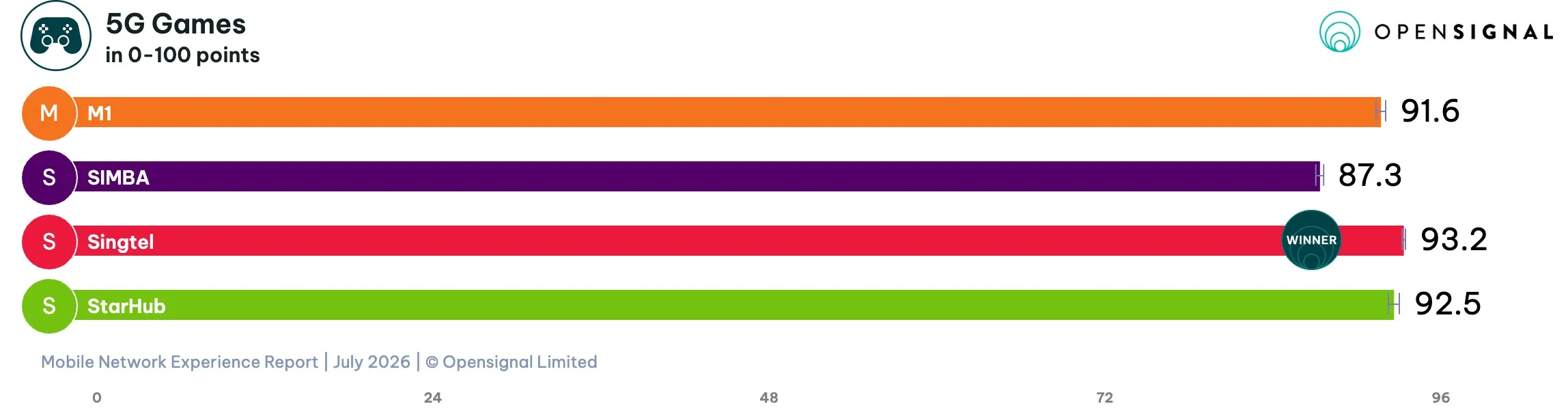
Games experience
Singtel is in first place here. StarHub and M1 are very close.
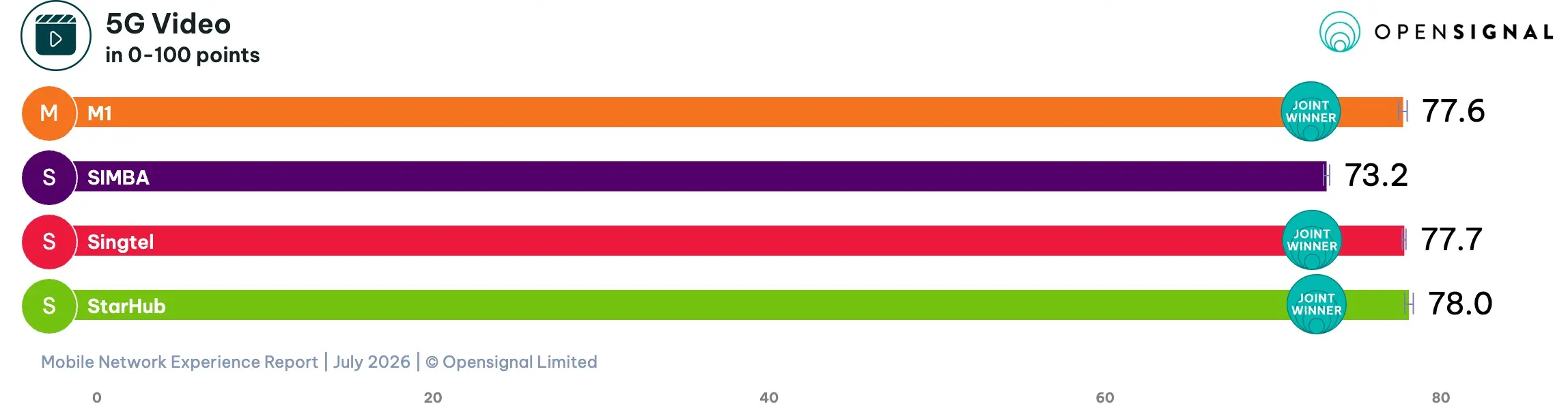
Video experience
M1, Singtel and StarHub are the joint winners here. SIMBA’s performance is acceptable, but it is rated one category lower than the rest.
Download speed
M1 has the fastest download times. StarHub is close behind, followed by Singtel. Conversely, SIMBA is far behind the others.
Upload speed
Singtel is the leader in the 5G upload category. M1 and Singtel follow closely with superb performance, while SIMBA is much slower than the others.
Availability
Singtel consumers spend the most time on 5G. Next in line is StarHub as the second most available.
Reliability experience
Here, all four operators are close to each other. Singtel has the most reliable network service. Second in reliability is SIMBA.
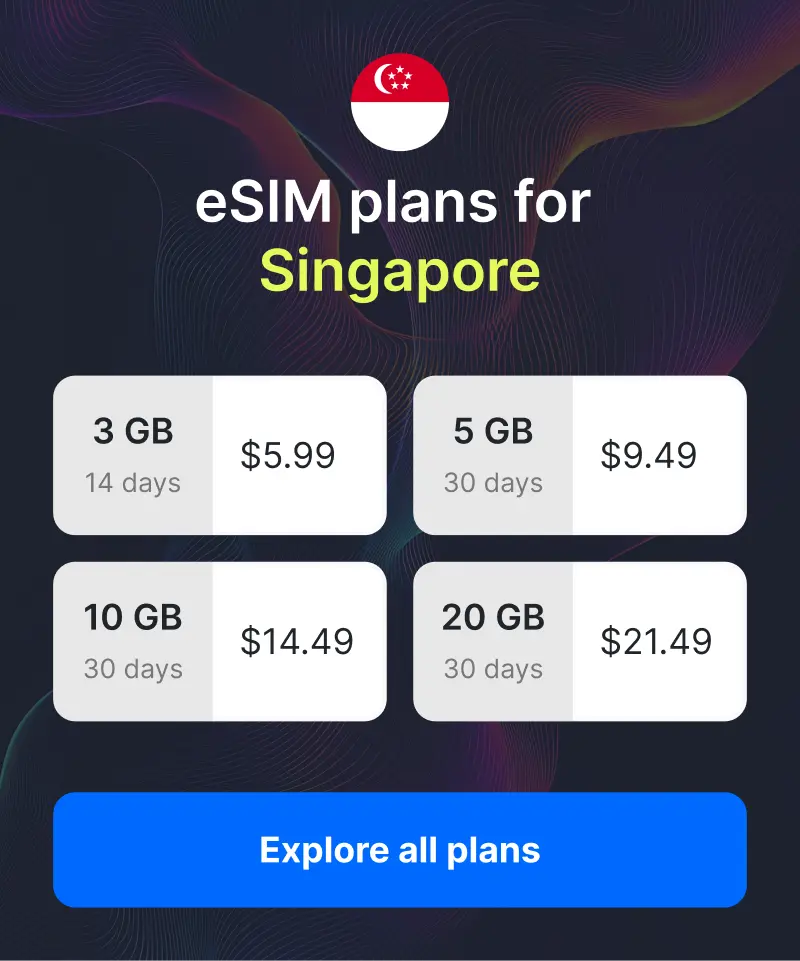
Singapore eSIM
Thanks to the country’s technologically advanced infrastructure, Singapore mobile networks are fast and reliable. Each has something special to offer.
In particular, Singtel and StarHub have wide coverage and reliable connections. M1 leads in flexible pricing, while SIMBA has cheap plans with plenty of gigabytes.
For travel internet convenience, consider an eSIM by Ohayu. It’s a local SIM card alternative that is digitally installed on the supported phones. A travel eSIM might help you avoid roaming charges from your home provider and save time because it’s available online, so you don’t need to look for a physical store to get connected.
We hope this guide helps you choose the right operator for your time in the Lion City!