

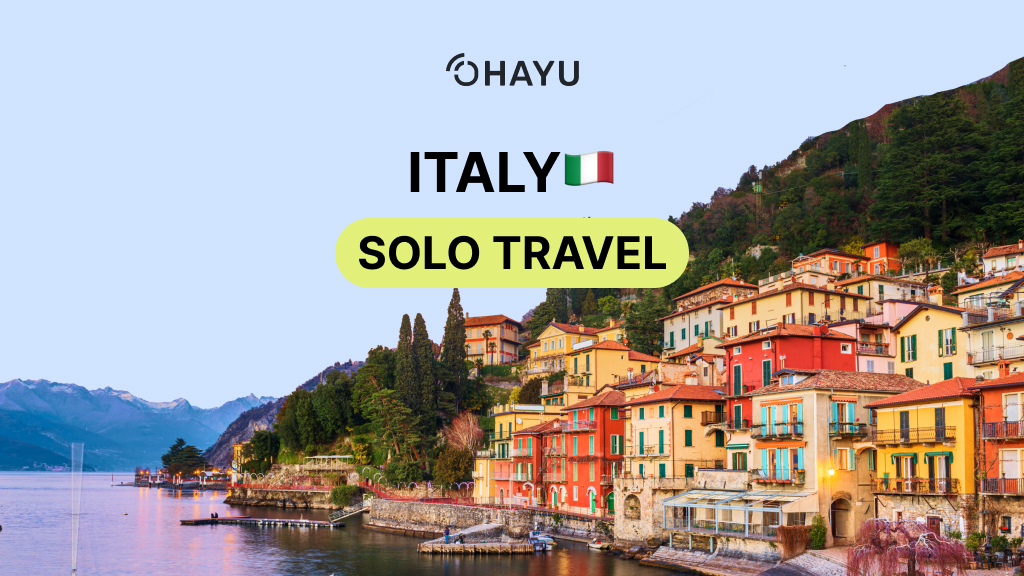
Ciao! Italy is a welcoming country for tourists. In this guide, I will share my experience of solo travelling in Italy across cities like Rome, Florence, Milan, and Venice, as well as tips on how to get around, where to rest, and what to eat.
Must-visit places in Italy
Let’s start with the places I’ve toured and challenge you to do the same. If you’re still unsure when to visit Italy, I’ve already mentioned it in this post.
Rome
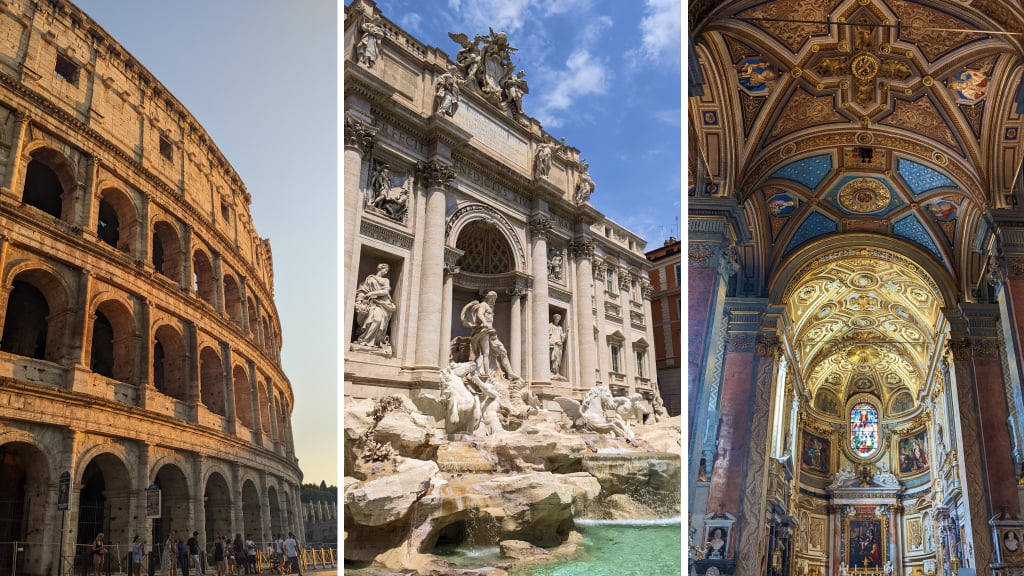
Rome is a perfect starting point for your trip to Italy because of super-cheap flight prices to multiple destinations. If it’s your first visit, go see the Colosseum and the Roman Forum; it’s better to let someone explain their history with a guided tour. Photos near the Colosseum are best at golden hour.
Another day, I advise you to stop by Vatican City and see St. Peter’s Basilica (super long line because of free entrance, but it’s absolutely worth the wait) and visit the Vatican Museum with the Sistine Chapel. Just remember to dress modestly (cover your shoulders and knees), and book it in advance. The cheapest available tickets are available on their official website. The museum can take a whole day, so I recommend wearing comfortable shoes and getting a refillable water bottle (there are public drinking fountains called “nasoni” with clean water everywhere).
Vatican Museum hint! Get the earliest entry time you can, and you won’t regret it. The crowds in the Sistine Chapel are huge, however, if you go early, you can see Sistine Chapel before it gets packed. Last time I booked a 7.45 AM ticket with breakfast at the Vatican Gardens included, and it was just amazing.
Spend another day exploring in the city center. Toss a coin into the Trevi Fountain. This year, Trevi is fenced off after noon, so it is better to plan an early-morning visit (yes, 6-7 AM is the best). Visit the Pantheon with its Oculus. It will not take much of your time, as both of them are located close together. Then head to the Spanish Steps for some great photos and continue your city walk from there.
Food tips in Rome
If you’ve got a sweet tooth, Two Sizes in Rome serves one of the best tiramisus in the city. It’s a small place, but the name says it all – they offer two portion sizes, and the taste is unforgettable. Definitely worth a detour.
For dinner, I advise eating at Trastevere, they serve the most authentic Roman food. This is where locals actually eat, and you’ll avoid the tourist-trap menus. My top picks are Tonnarello and Nannarella, both of which have very generous portions. Pasta Fresca is great for handmade pasta dishes that taste like something out of a home kitchen. Osteria da Fortunata – fresh pasta made right in front of you. Their cacio e pepe and carbonara are as traditional as it gets. There’s often a line, but it moves fast.
Trastevere in the evening is a mix of good food and relaxed atmosphere. After dinner, walk the cobbled streets or grab a gelato nearby.
Btw, if gastronomy is your passion, I can recommend this food tourism guide by OriginalTravel. It contains insights on locations, customs and etiquette, sustainability, and the best local dishes to try by country and city.
Expect your Rome tour to take 3-4 days.
Florence
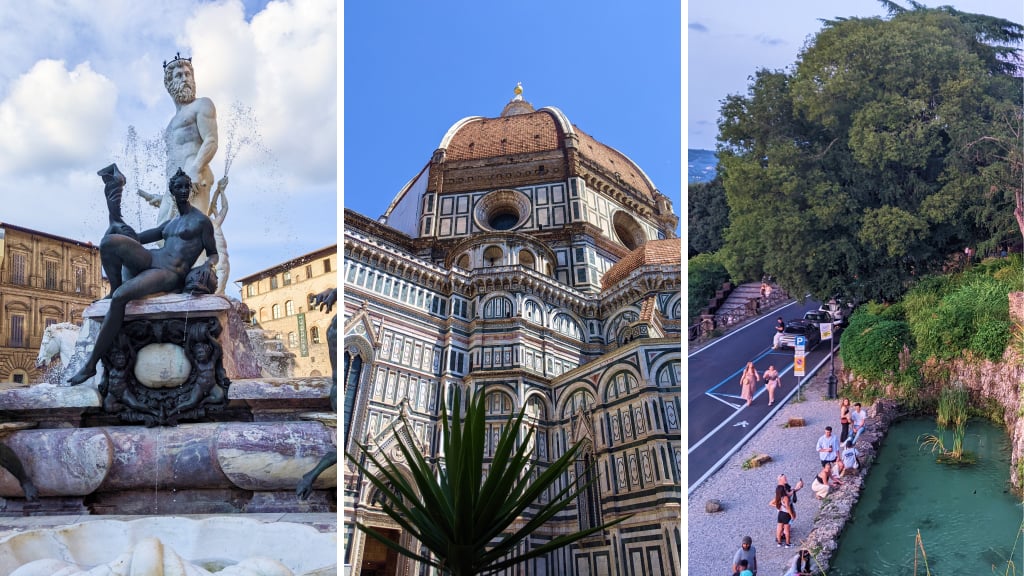
Florence is steeped in Renaissance history. See the works of Botticelli and Leonardo da Vinci at the Uffizi Gallery. And walk the historic Ponte Vecchio bridge. And don’t miss Florence’s cathedral.
If you’re feeling adventurous, climb Brunelleschi’s dome for some great photos (book tickets in advance to avoid queues). If you still have time, a day trip into the Tuscan countryside to explore the vineyards and picturesque medieval San Gimignano or Siena is well worth it.
This tour of Florence will last 2 to 3 days.
Venice
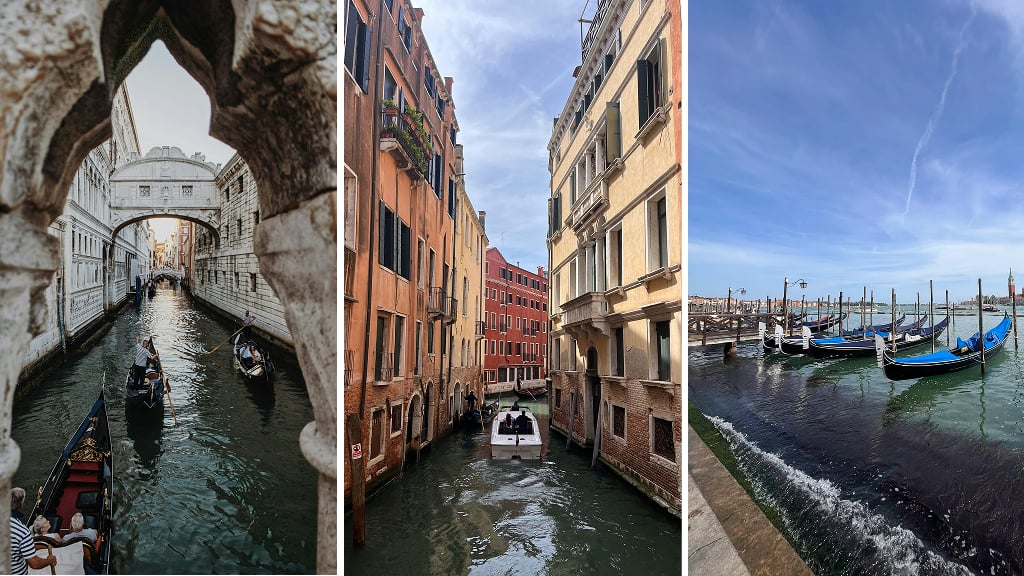
Start your Venetian experience in St. Mark’s Square to see St. Mark’s Basilica and enjoy the panoramic views from the Campanile. Explore the Doge’s Palace. And of course, take the vaporetto to Murano (the so-called glass island) and Burano with its colorful houses. Walk the back canals and find hidden bridges and small squares.
Set aside 2 days for the Venice adventure.
Milan
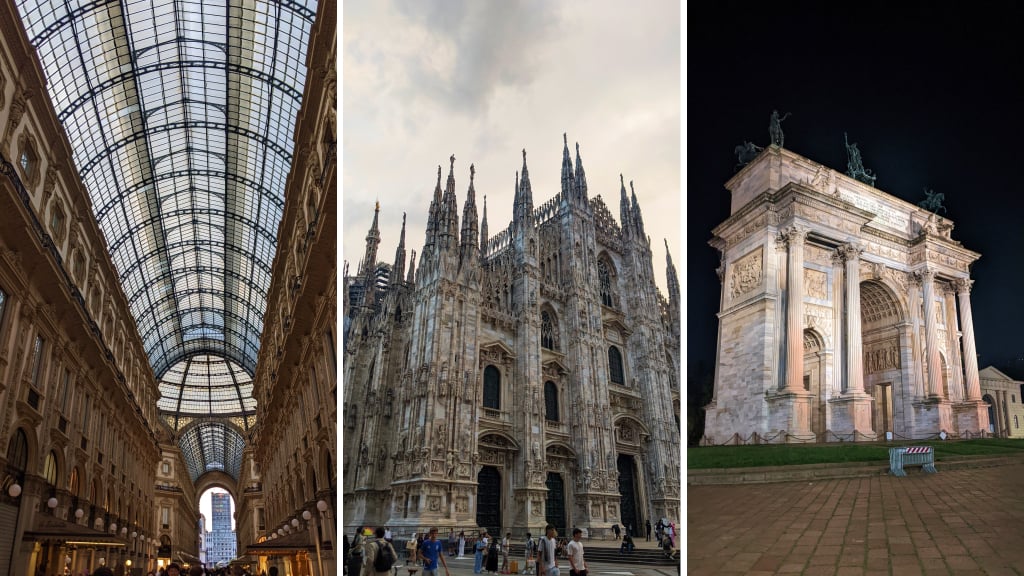
Milan has a cosmopolitan flavor and atmosphere, different from the old-world elegance of other Italian locations. First, visit the Duomo (Milan Cathedral), whose Gothic splendor is breathtaking. Then stroll through the Galleria Vittorio Emanuele II, a chic 19th-century shopping gallery with high-end shops and cafes. If opera is your thing, visiting La Scala is a must, and attending a show there would be fantastic.
In the evening, go to the Navigli district, famous for its fashionable bars and nightlife (have a drink and experience the buzz). Be sure to visit the Brera district. It’s home to the Pinacoteca di Brera art museum, which contains incredible paintings.
Exploring Milan will take 1 to 2 days.
Transportation
Rome’s underground is suitable for long distances, with Line A (orange) and Line B (blue) being the most used by tourists. Line C (green) is newer and may be of value depending on your accommodation. Everything is generally within walking distance, but the metro and buses are convenient for solo travel from neighborhood to neighborhood. However, if you want to visit multiple museums and use public transport regularly, choose the Roma Pass for free admission to the sites and free transportation.
The historic center of Florence is a small one that is better seen on foot (I recommend taking your time to enjoy the beautiful streets). The bus station is easily accessible for traveling further from the center. Consider even riding a bike to tour Italy along the Arno River.
Venice‘s main public transportation is the vaporetto, a network of water buses. Familiarize yourself with the lines and use a pass for frequent use. Navigating on foot is challenging with winding alleys and bridges, so grab an offline map and plan to get a little lost (it’s all worth it!) A Venice transit pass is more economical than buying individual tickets if you plan to use the vaporetto frequently.
Milan has a clean and efficient metro system that makes it easy to get around and navigate the city. Be sure to learn about the lines. Milan also boasts old trams that provide a pleasant ride. Two main airports, Malpensa (MXP) and Linate (LIN), for air travel, offer good public transport connections to the heart of the city.
Inter-City Transportation
A train ride is convenient, especially for solo travel Italy and visitors who do not feel like driving.
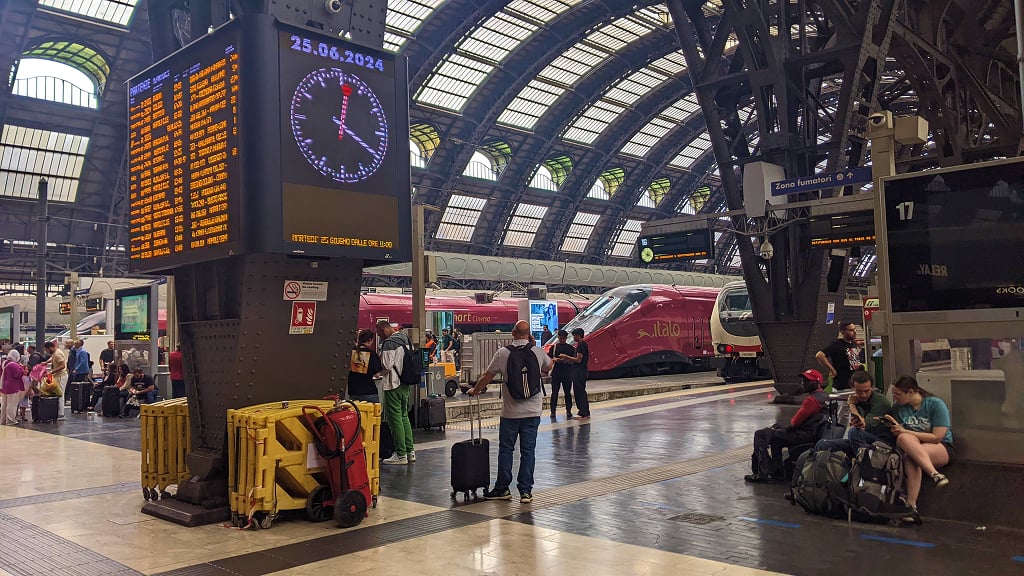
- High-speed trains: The leading high-speed rail companies, Trenitalia (Frecciarossa, Frecciargento, Frecciabianca) and Italo, offer easy and comfortable rides between major cities. It is preferable to book your tickets in advance for longer journeys.
- Regional trains: If you are just jumping between cities or making a short trip, regional trains are also a good idea. Plus, they’re inexpensive.
- Rail pass: For extensive tourism, I recommend purchasing an Eurail or Interrail Pass – it is often cheaper.
💡 Tip: Single traveler status allows you to set your itinerary and catch off-peak times when trains are less crowded and fares are lower. So be sure to check the train companies’ websites for special offers. And if you need to work or eat lunch en route, look for seats with tables.
Trains are mostly preferred for solo travel Italy, but other modes of transportation include the following.
- Domestic flights for longer trips.
- Bus operators such as FlixBus.
- Car rentals.
The latter is easy for self-driving through the countryside or along the Amalfi Coast, but can cause problems such as unmapped routes, parking, and additional expenses. For independent tours, a car is not ideal for solo travelers because of the twists and turns of the roads and the jitters.
Where and what to eat
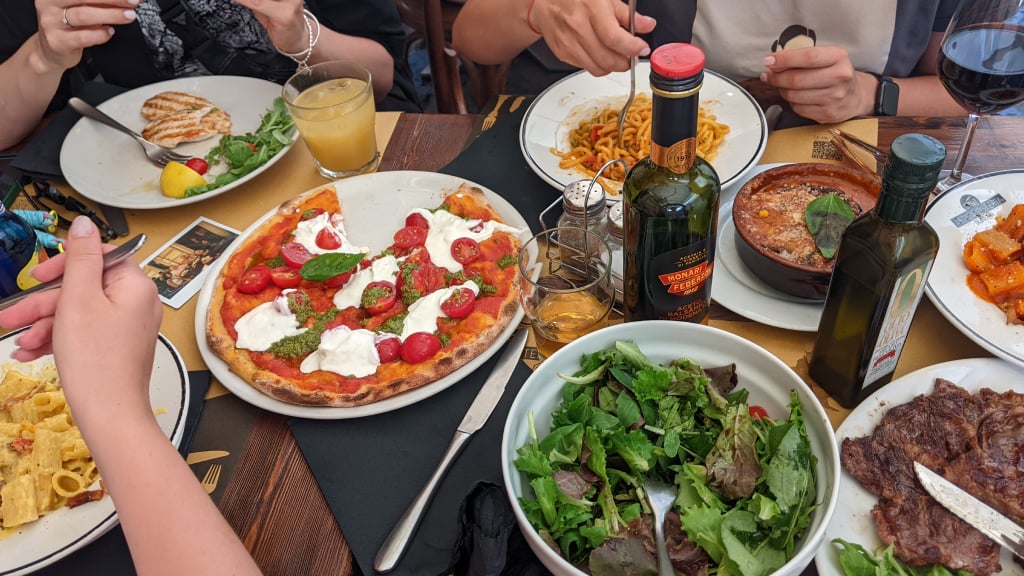
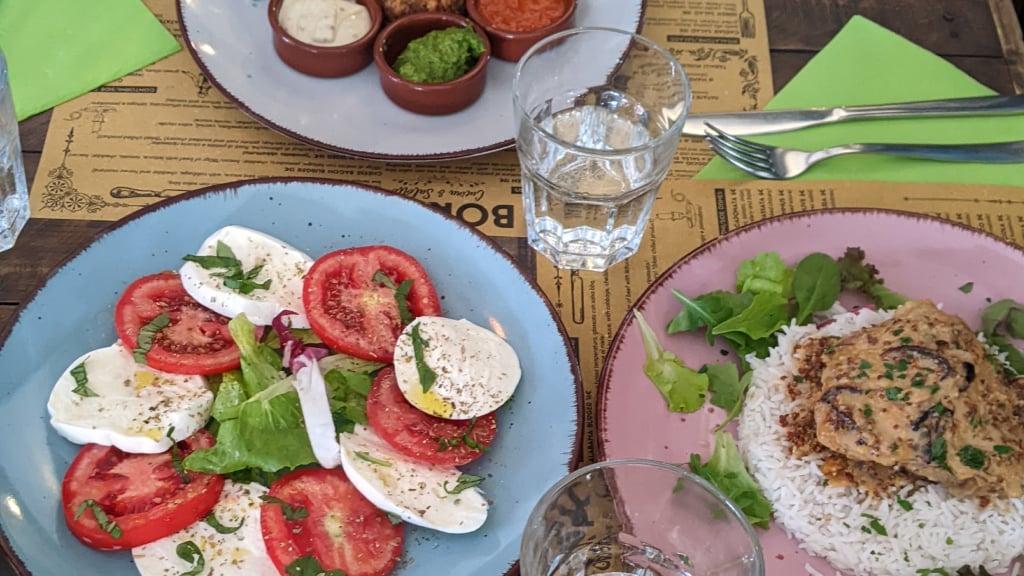
In Rome, dine at classic trattorias in the less touristy areas for an authentic experience. Look for places filled with locals and avoid restaurants near landmarks with pushy staff. Eating alone is perfectly acceptable in Italy, and most places have small tables for one. Meanwhile, try Roman classics like Cacio e Pepe, carbonara, and pizza, and for dessert, try tiramisu or gelato.
In Florence, the Central Market‘s ground floor offers local fresh ingredients, while the upper floor (vibrant food hall) is filled with every kind of Florentine specialty. In addition, visit a wine bar in the evening and have some Tuscan wine and small bites. Be sure to try Bistecca alla Fiorentina (that big steak), Ribollita (the soup of vegetables), and cantuccini (almond biscotti) dipped in Vin Santo.
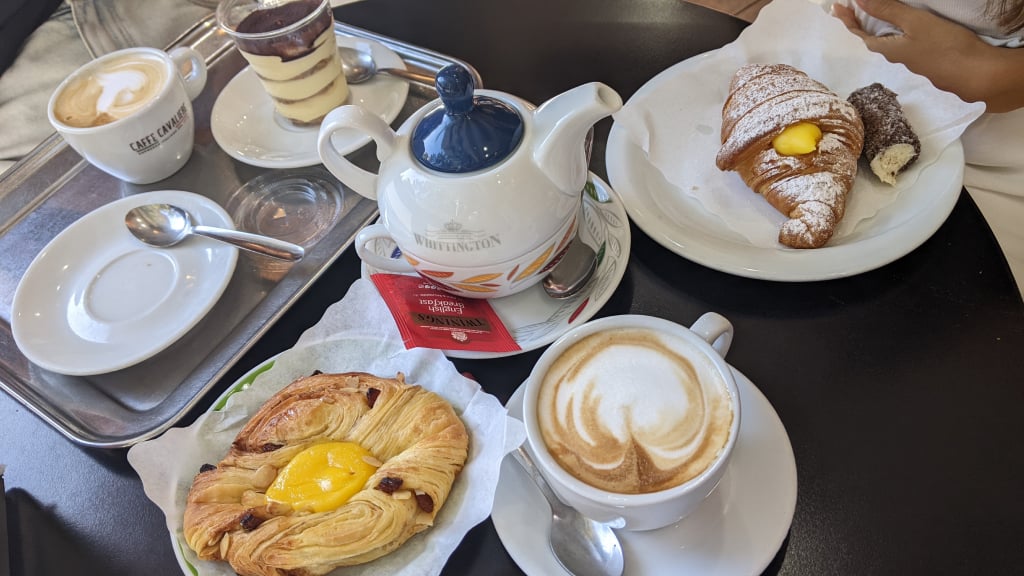
In Venice, visit the bacari (wine bars) and order cicchetti with local wines. Try seafood such as Risotto al Nero di Seppia and grilled fish. Do not visit the tourist traps around St. Mark’s Square or the Rialto Bridge – they are not worth it and expensive. Get a little lost in the crowd to get better ones.
In Milan, indulge in snacks called aperitivo. Feel free to enjoy delicious Italian food with creative interpretations of authentic dishes. Some cafes invite you to dine alone, serving traditional Milanese risotto or breaded veal cutlet (Cotoletta alla Milanese). Such cafes are charming for relaxing over coffee and pastries while exploring the city.
Key aspects for solo travel Italy – summary
| Rome | Florence | Venice | Milan | |
| Attractions | Colosseum & Roman Forum, Vatican City, Trevi Fountain & Pantheon, Trastevere | Uffizi Gallery & Ponte Vecchio, Duomo & climb, Oltrarno, Tuscan countryside (day trip) | St. Mark’s Square & Basilica, Doge’s Palace, Murano & Burano islands, Back canals | Duomo & Galleria Vittorio Emanuele II, La Scala, Navigli district, Brera |
| Transportation | Metro (A, B, C), Walking, Roma Pass | Walkable center, Bus system, Bike rentals | Vaporetto system, Walking, Transport passes | Metro, Trams, Airport connections |
| Dining | Trattorias (avoiding tourist traps), Solo dining etiquette, Cacio e Pepe, Carbonara, Amatriciana, Supplì | Central Market food scene, Wine bars & aperitivo, Bistecca alla Fiorentina, Ribollita, Pappa al Pomodoro, Cantuccio | Bacari (wine bars) culture, Seafood specialties (Squid ink risotto, Sarde in Saor), Avoid tourist traps | Aperitivo culture, Solo-friendly spots, Risotto alla Milanese, Cotoletta alla Milanese |
Solo travel Italy accommodation strategies
- Accommodation type: Hotels are hygienic and private, but can be expensive for one person. Hostels are cheap and social-friendly (you can meet other travelers). For more privacy, look for hostels with private rooms. By the way, Airbnb allows you to stay in neighborhoods like a local and usually has a kitchen for cooking meals.
- Booking time and strategies: It is better to book in advance, especially during high season. Additionally, read reviews of other backpackers (such as those on TripAdvisor) for safety advice and how to be treated well as a solo traveler.
- What to look for: Consider accommodations with good security and public areas. Single rooms in smaller hotels are also inexpensive, and having breakfast included will save you time and money each day.
Communication essentials
Effective communication goes a long way in making solo travel Italy good. Therefore, having basic language skills and cultural communication is a big plus.
Language basics
Although locals speak some English, they also welcome tourists who try to communicate with them in their language.
Here are some key phrases.
- Greetings: Master the greetings “Ciao” (hello/goodbye), “Buongiorno” (good morning), “Buonasera” (good evening), “Grazie” (thank you), and “Prego” (you’re welcome). Remember also to say “Scusi” (excuse me) and “Arrivederci” (goodbye).
- Dining and staying: If you go to a restaurant, ask for “Un tavolo per uno, per favore” or (A table for one, please) and “Il conto, per favore” (The bill, please). You can also order “Acqua naturale” (still water) or “Vino rosso” (red wine). In hotels, use “Una camera singola” (A single room) and “Ho una prenotazione a nome di. (I have a reservation under the name of).
- Emergencies: Words and phrases like “Aiuto! (Help!), “Non capisco” (I don’t understand), and “Parla inglese?” (Do you speak English?) are a must. Know “Polizia” (police) and “Ambulanza” (ambulance) in case of emergency.
- Directions: Learn some basic navigation-related words such as “Destra” (right), “Sinistra” (left), “Dritto” (straight), and “Dove?” (Where is?).
Trust me, speaking even a little Italian will earn you a smile and gratitude from the locals!
Cultural communication
And now some solo travel Italy tips that I found helpful to have a good time on my trip.
- Communication: Italians use expressive hand gestures when communicating. You do not need to learn all of them, but by paying attention, you will be able to understand what is being communicated.
- Dining etiquette: In local restaurants, I always wait to be seated and greet everyone else with a “Buon appetito,” wishing them a good meal. When you are finished, you may ask for the check.
- Tipping: Tipping is unnecessary as the service charge is included, but you can leave some change for excellent service, especially in pubs.
- Social norms: Italians are polite, so do not hesitate to ask for advice. I would also recommend dressing modestly in churches and respecting your surroundings.
Practical solo travel tips: safety considerations
The solo tourist must be very vigilant. Here are some tips that I found helpful to make me feel calm and relaxed.
General safety:
- Follow your instincts, avoid unusual situations.
- Stay out of dark alleys late at night.
- Secure valuables and take precautions in crowded areas such as train stations and bazaars.
City-specific tips:
- Pickpockets are common in tourist areas, so keep your bags closed and in front of you.
- Watch for narrow, busy streets.
Scam awareness:
- Be aware of typical scams, such as overly friendly locals. Politely say no and walk away if you are unsure.
- Additionally, be cautious of unlicensed taxi drivers.
Emergency contacts:
- Remember local emergency numbers: Police (113), Ambulance (118), Fire (115).
- Store these in your phone, share your itinerary with someone at home, and consider informing a trusted friend or family member of your location.
By the way, I just compiled a list of the safest spots for females to explore – check it out.
Solo travel apps
- Language: Overcome language barriers using DeepL, a text and voice translator. Just ensure you download the Italian language pack to use it offline.
- Navigation: I always download maps of my destinations with Google Maps to navigate offline.
- Public transportation: Get real-time bus and train information with apps like Moovit or specific ones like ATAC in Rome and ATM in Milan.
- Booking: Search for places to stay on Booking.com or Airbnb, and find restaurants to book on TheFork or OpenTable.
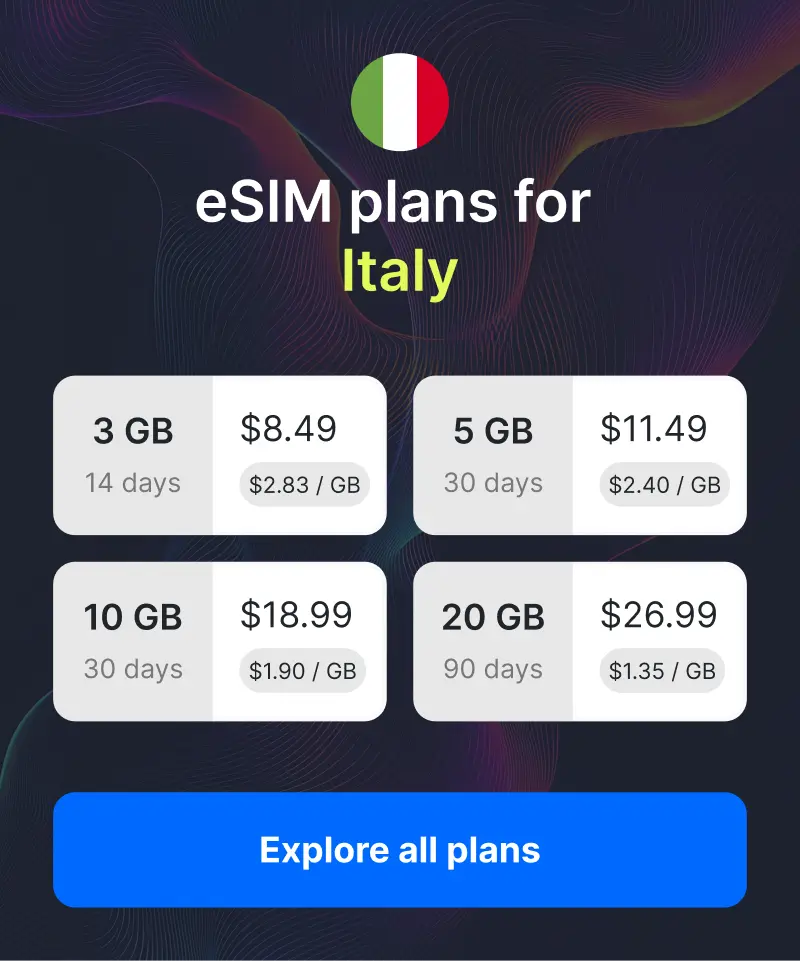
- eSIM: Finally, get an eSIM by Ohayu to stay connected in Italy. eSIM is usually easier than getting a local SIM card and can be less expensive than roaming fees with your home carrier, so it’s at the top of our list for today’s travelers.
Check out my post on the 40+ best travel apps for more tips and popular app suggestions.
Conclusion
Traveling alone in Italy is a great way to learn more about yourself. Meanwhile, you absorb the fantastic culture, history, and scenery in your own way.
So go ahead and leap into solo travel in Italy – believe in yourself and don’t doubt trying it. There is so much excitement waiting for you in this country, and who knows what interesting things you might discover about yourself along the way?
For more advice and planning tips, remember to check out travel-related blogs, guidebooks, and government tourism websites for wherever you want to go. Buon viaggio!