

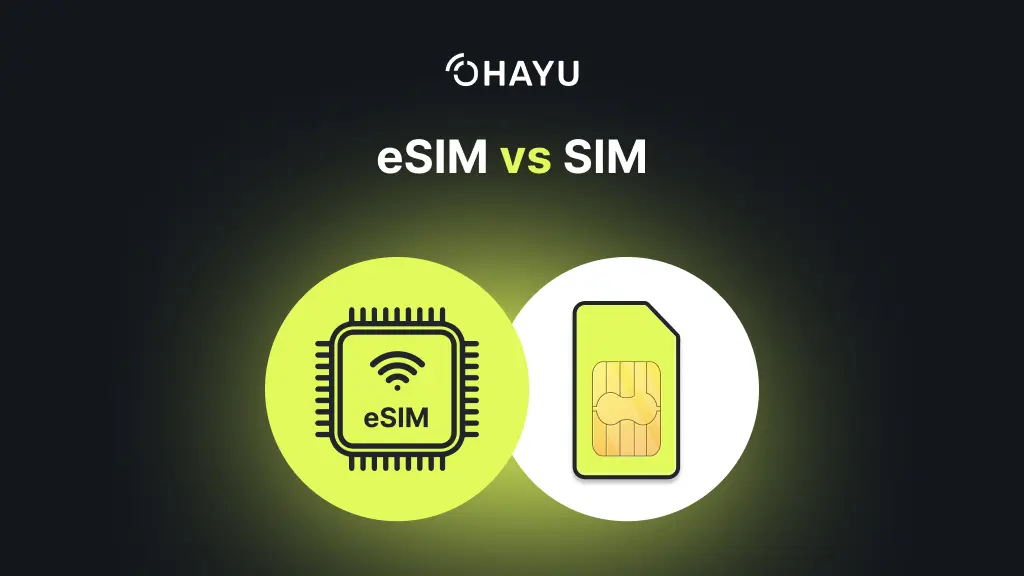
A physical SIM card is a small chip requiring a special slot in the phone, which can connect you to the operator’s network (usually 1 operator). eSIM is its built-in digital version that can store multiple operator profiles. In this article, we will analyze the pros and cons of both technologies.
Imagine: you’re at the airport in Bangkok, and your phone shows ‘No network’. Sound familiar? In the past, you would have had to find a SIM card kiosk and pick through the tray with a needle. But today, things are changing. In 1991, the first SIM card was the size of a credit card, and now we’re moving to embedded chips – eSIMs. The technology is already in iPhones, Samsung, Pixel, and even smartwatches, which are convenient, but who wins the eSIM vs physical SIM competition, and is it worth giving up the traditional option?
What is a physical SIM (traditional SIM card)?
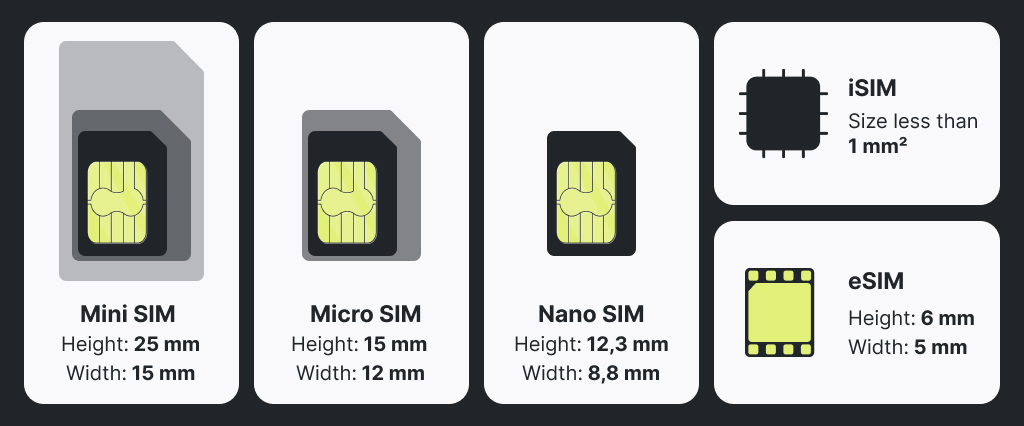
SIM (Subscriber Identity Module) is the fingernail-sized chip that stores your operator’s data. This small plastic card turns your phone into a personal communication tool. Since 1991, it has gone from a ‘credit card size’ to a tiny nano-format.
How does it work?
The SIM card is the key to the mobile network. The built-in microprocessor stores a unique identifier (IMSI), which identifies you to the operator’s network. Want to change plans or operators – physically replace the chip. It’s simple, but not always convenient: you need a tray, a needle, and care – drop the card, and you’ll have to crawl around the floor looking for it.
Pros:
- Compatibility: Works on most devices, from a button phone to a budget smartphone.
- Control: Can be quickly reinserted into another device if yours runs out of battery or breaks.
- Availability: Sold in most telecom shops.
Cons:
- Risk of loss: Its small size makes it easy to lose.
- Vulnerability: Fraudsters can take over your number through SIM swap fraud (e.g., by impersonating you at your operator’s store). This also works for eSIM lines. We’ll talk more about this later.
- Discomfort: When traveling, you have to search for local SIMs and fumble with replacements.
What is an eSIM?
The eSIM is a tiny built-in module that cannot be lost like a removable card. Technically, it behaves like a physical SIM card, but it’s ‘virtual’ – the mobile carrier profile is downloaded via the Internet, like an app on your smartphone.
How does it work?
The eSIM is a chip soldered to the device’s motherboard. Modern phones can store several operator profiles at a time (how many depends on the device). Thus, if you want to change your connection plan, scan a QR code from a new operator, and in a few minutes, you already have a different number or data package.
This is especially convenient when traveling: instead of searching for a local SIM card at the airport, you can buy a plan through an online service like Ohayu and activate it after you arrive in the destination country.
Pros:
- Space saving: Manufacturers can use the freed-up space to increase the battery or improve water resistance.
- Security: An eSIM can’t be pulled out of a stolen phone, but SIM swap fraud (tricking your operator into moving your number) works for both SIM and eSIM, so protect your operator account with a PIN or 2FA.
- Flexibility: Several numbers (e.g., personal, work, and travel) can be stored on the same device and switched as needed.
Cons:
- Operator dependency: Not all network carriers support eSIM. Before buying an eSIM, check if your phone is carrier-locked.
- Difficulties when changing devices: Moving an eSIM to a new phone usually requires your provider to transfer or reissue it, not just moving the card. Contact support before switching phones.
eSIM vs physical SIM – comparison table
A physical SIM is a removable plastic-based chip that is vulnerable to damage (scratches, moisture, and bending). An eSIM is a microchip soldered into the device’s circuit board. It has no tray or removable parts, which reduces the risk of breakage and makes it easier to seal the phone against dust and water.
| Physical SIM | eSIM vs physical SIM criterion | eSIM |
| 1991 | Year introduced | 2013 (IoT), 2016 (consumer devices) |
| Subscriber identification and authentication | Initial purpose | IoT device management (e.g., vending machines) |
| Removable plastic chip | Physical form | Embedded chip in the device (separate module) |
| Risk of loss/theft; removable if phone is stolen | Security | Cannot be removed from the phone |
| 1 | Number of profiles | Several (depends on the device) |
| Yes | Carrier dependency | Yes |
| Possible | Network lock | Possible |
| High (shipping, packaging, storage) | Logistics costs | Low (digital activation) |
| Mobile phones | Use cases | Smartwatches, phones, cars, IoT devices |
| Requires SIM swap | Travel convenience | Activation via QR code or app |
Activation and control
- SIM: Requires physical replacement. Operator change requires access to the tray, tool (paper clip/needle), and a new card.
- eSIM: Activation via QR code or operator app. Profiles are downloaded via the GSMA RSP (Remote SIM Provisioning) standard, allowing you to switch between tariffs in minutes.
Compatibility
Traditional SIMs work in almost any phone with a SIM slot, including old button phones. eSIM is supported only by newer devices.
Security
Vulnerabilities of physical SIM
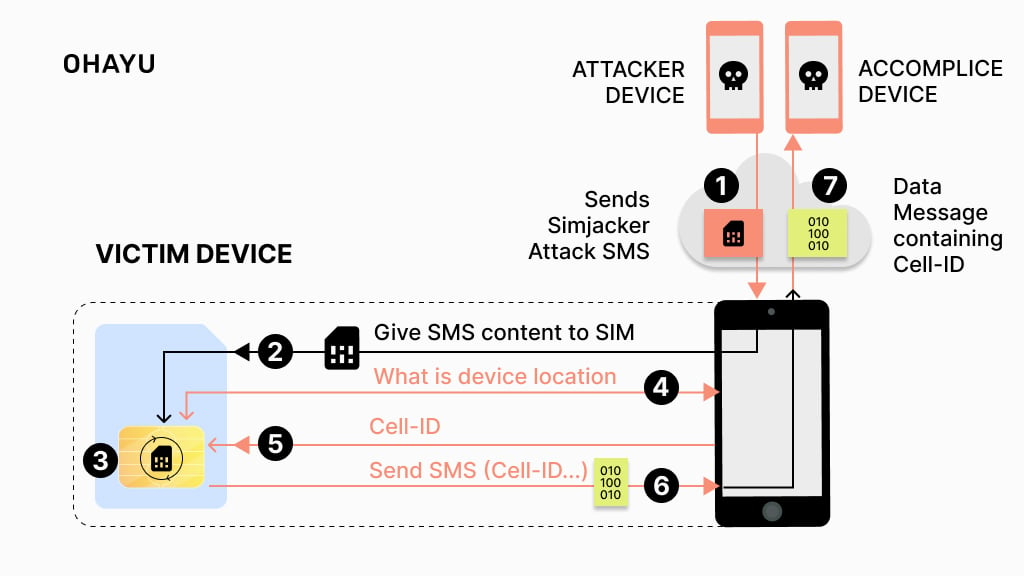
- SIM swap: Attackers can take over your number by tricking or hacking the operator into moving it to a SIM they control. The same fraud works against eSIM lines.
- Physical access: A stolen SIM can be inserted into another device to access SMS/2FA.
eSIM protection
- Hardware isolation: The eSIM is integrated into the Secure Element (SE), a separate secure chip isolated from the main OS. Data is encrypted with ECC (Elliptic Curve Cryptography) algorithms.
- Remote Lock: If the phone is lost, the operator can block the line (same as a SIM), and you can erase the phone remotely.
Risks of eSIM
- Targeted infrastructure attacks: A security flaw in operator or eSIM provisioning systems could expose many profiles at once.
- Limited migration: Transferring an eSIM to a new device requires your operator or provider to transfer or reissue it, which complicates the process if the gadget is lost/broken.
User experience
Convenience
- eSIM: Switch between operators while roaming without replacing the chip.
- SIM: Does not require digital literacy – suitable for older users or regions with weak internet.
Device design
Removing the SIM tray frees space for a bigger battery or better water sealing (e.g., eSIM-only iPhones).
Multi-SIM functionality
A phone with eSIM can store several profiles (device-dependent), whereas using two physical SIMs requires a dual-SIM tray.
Economic factors
Cost to the user
eSIM: No plastic manufacturing/delivery costs, but some operators charge an activation fee. When traveling, a travel eSIM can cost less than your home operator’s roaming.
SIM: Usually cheap to get, but roaming on your home SIM can be expensive when traveling.
Operator market
eSIM makes switching easier: users can connect to other providers, including international ones, without visiting a store.
Environment
Moving away from plastic SIMs reduces plastic waste.
eSIM vs physical SIM adoption and availability
Unfortunately, eSIM use worldwide is patchy. In Europe and North America, almost all premium phones support eSIM, in the US recent iPhones and Pixel phones are eSIM-only, and operators such as Deutsche Telekom and Verizon retail eSIM even for prepaid plans. In India, the major operators (Jio, Airtel, Vi) offer eSIM.
Carriers support
Major players are actively promoting eSIM:
- Vodafone lets customers in some markets activate an eSIM profile via its app.
- However, physical SIMs still dominate in Africa and Latin America, mostly because many budget phones don’t support eSIM.
Devices and IoT
Gadget makers are divided: Apple has dropped the SIM tray from iPhones sold in the US, but many iPhones sold elsewhere still have one, and in China eSIM for phones was only approved in late 2025. In the IoT segment, eSIMs are common:
- Smart watches (Garmin, Apple Watch) use eSIMs for autonomous communication;
- Automakers (Tesla, BMW) are deploying them for telematics and over-the-air updates.
eSIM vs physical SIM future
More smartphones are likely to be released without a SIM tray. But this does not mean that plastic chips will disappear – in regions where many people use basic button phones, traditional SIMs are likely to remain common for years.
Technological breakthrough
eSIMs can connect more and more IoT devices: imagine a smart refrigerator that orders milk itself via an embedded chip or drones with eSIMs for autonomous delivery to remote areas. Many connected cars already use embedded SIMs to download software updates in the background without a visit to a service center.
Paradigm shift
Traditional SIMs may follow the path of CDs and become a niche product, while for many users eSIM may become as familiar as cloud services. The main question is whether operators will be able to adapt.
To sum up
eSIM is not just technology; it’s freedom from searching for a SIM card store at airports, from overpaying for roaming, and the risk of losing a tiny piece of plastic. Physical SIMs are still good for old-fashioned phones, but eSIMs are the future: they save time and make gadgets more compact.
If you’re ready to try eSIM for international traveling, take a look at services like Ohayu – its travel plans cover many destinations, and activation can take minutes. No need to go anywhere: install the eSIM in the app or by scanning the QR code (this needs an internet connection), activate it in the destination country, and get connected to the supported local mobile networks.
Most importantly, choose what works for you, whether it’s a nostalgic SIM card from the 2000s or a digital chip that won’t get lost even in the jungle. Technology should serve, not complicate.