

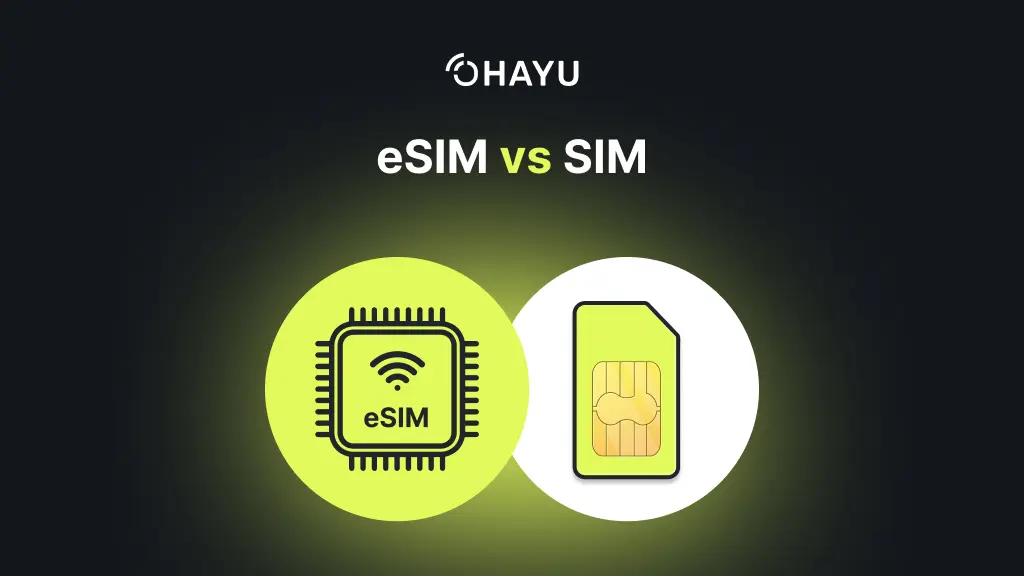
A physical SIM card is a small chip requiring a special slot in the phone, which can connect you to the operator’s network (usually 1 operator). eSIM is its built-in digital version that can store multiple operator profiles. In this article, we will analyze the pros and cons of both technologies.
Imagine: you’re at the airport in Bangkok, and your phone shows ‘No network’. Sound familiar? In the past, you would have had to find a SIM card kiosk and pick through the tray with a needle. But today, things are changing. In 1991, the first SIM card was the size of a credit card, and now we’re moving to virtual chips – eSIMs. The technology is already in iPhones, Samsung, Pixel, and even smartwatches, which are convenient, but who wins the eSIM vs physical SIM competition, and is it worth giving up the traditional option?
What is a physical SIM (traditional SIM card)?
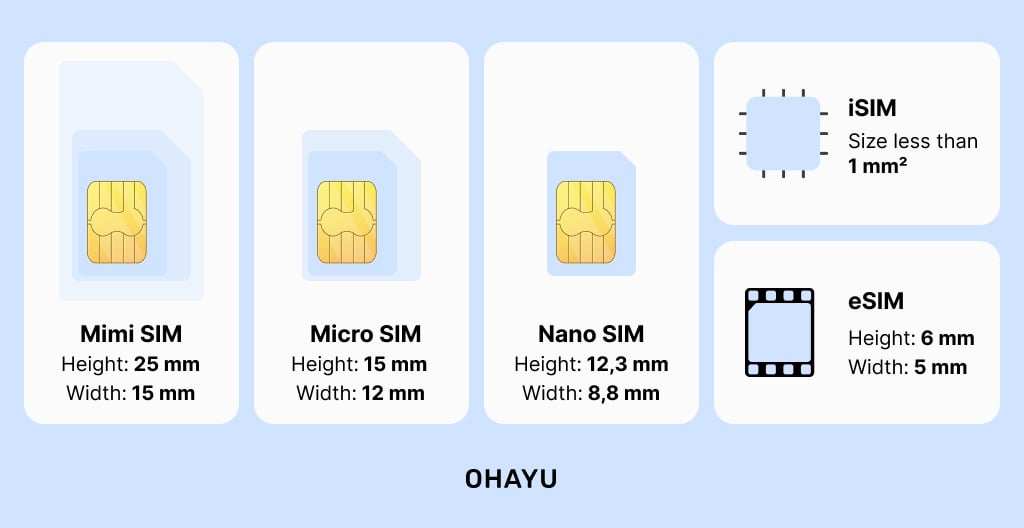
SIM (Subscriber Identity Module) is the fingernail-sized chip that stores your operator’s data. This small plastic card turns your phone into a personal communication tool. Since 1991, it has gone from a ‘credit card size’ to a tiny nano-format.
How does it work?
The SIM card is the key to the mobile network. The built-in microprocessor stores a unique identifier (IMSI), which familiarizes the phone with the operator’s tower. Want to change plans or operators – physically replace the chip. It’s simple, but not always convenient: you need a tray, a needle, and care – drop the card, and you’ll have to crawl around the floor looking for it.
Pros:
- Compatibility: Works on most devices, from a button phone to a budget smartphone.
- Control: Can be quickly reinserted into another device if yours runs out of battery or breaks.
- Availability: Sold in every telecom shop.
Cons:
- Risk of loss: Its small size makes it easy to lose.
- Vulnerability: Fraudsters can clone SIMs through social engineering (e.g., by impersonating you at the operator’s showroom). We’ll talk more about this later.
- Discomfort: When traveling, you have to search for local SIMs and fumble with replacements.
What is an eSIM?
The eSIM is a microscopic module that cannot be lost or broken. Technically, it behaves like a physical SIM card, but it’s ‘virtual’ – the mobile carrier profile is downloaded via the Internet, like an app on your smartphone.
How does it work?
The eSIM is a chip soldered to the device’s motherboard. Modern phones can store 5-10 operator profiles at a time. Thus, if you want to change your connection plan, scan a QR code from a new operator, and in 2 minutes, you already have a different number or data package.
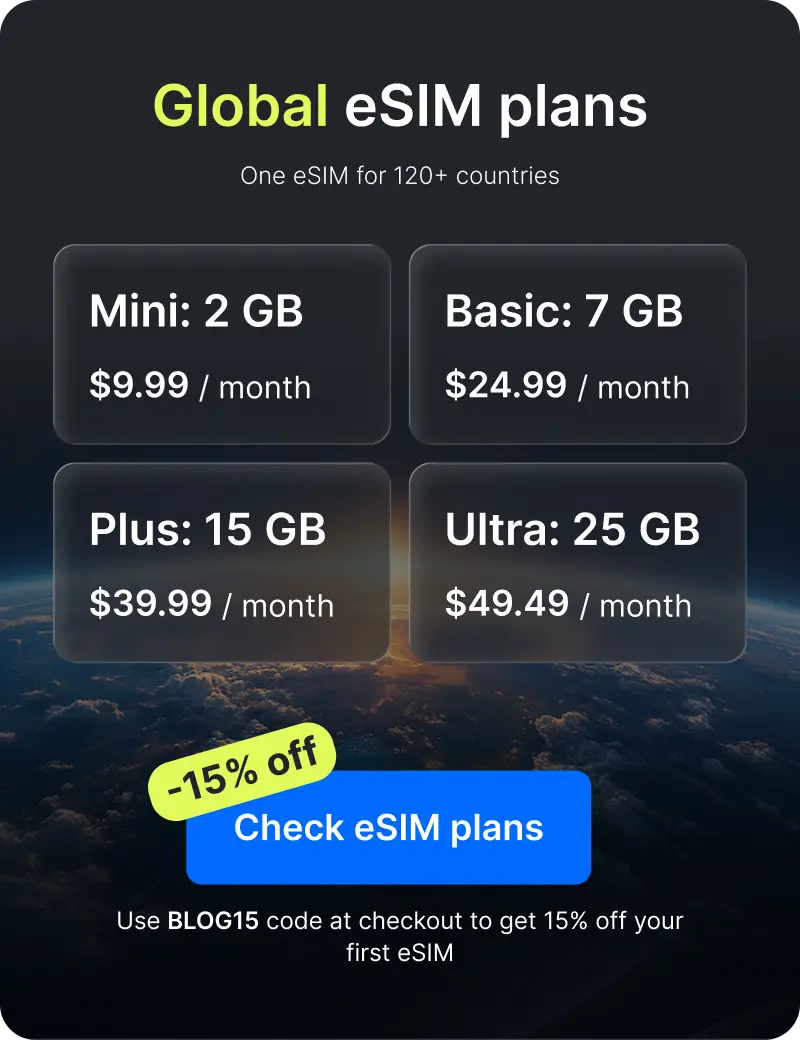
This is especially convenient when traveling: instead of searching for a local SIM card at the airport, you can buy a plan through an online service like Ohayu and activate it after you arrive in the destination country.
Pros:
- Space saving: Manufacturers use the freed-up space to increase the battery or improve water resistance.
- Security: The eSIM cannot be physically stolen or cloned through social engineering – the profile is tied to the device.
- Flexibility: Several numbers (e.g., personal, work, and travel) can be used simultaneously on the same device.
Cons:
- Operator dependency: Not all network carriers support eSIM, and some block profile changes while roaming. Before buying an eSIM, check if your phone is carrier-locked.
- Difficulties when changing devices: Transferring an eSIM to a new phone requires changing settings and a digital eSIM transfer (you might need to save the QR code from your provider to install the eSIM on a new device), not just moving the card.
eSIM vs physical SIM – comparison table
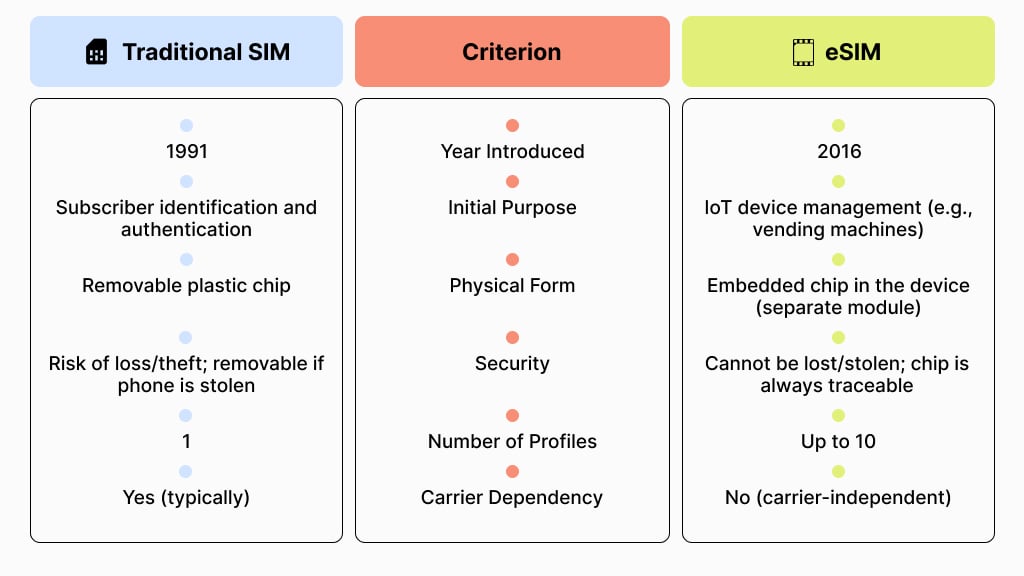
A physical SIM is a removable plastic-based chip that is vulnerable to damage (scratches, moisture, and bending). An eSIM is a microchip soldered into the device’s circuit board. It has no moving parts, which reduces the risk of breakage and increases resistance to dust/water (IP68 standard).
| Physical SIM | eSIM vs physical SIM criterion | eSIM |
| 1991 | Year introduced | 2016 |
| Subscriber identification and authentication | Initial purpose | IoT device management (e.g., vending machines) |
| Removable plastic chip | Physical form | Embedded chip in the device (separate module) |
| Risk of loss/theft; removable if phone is stolen | Security | Cannot be lost/stolen; chip is always traceable |
| 1 | Number of profiles | Up to 10 |
| Yes (typically) | Carrier dependency | No (carrier-independent) |
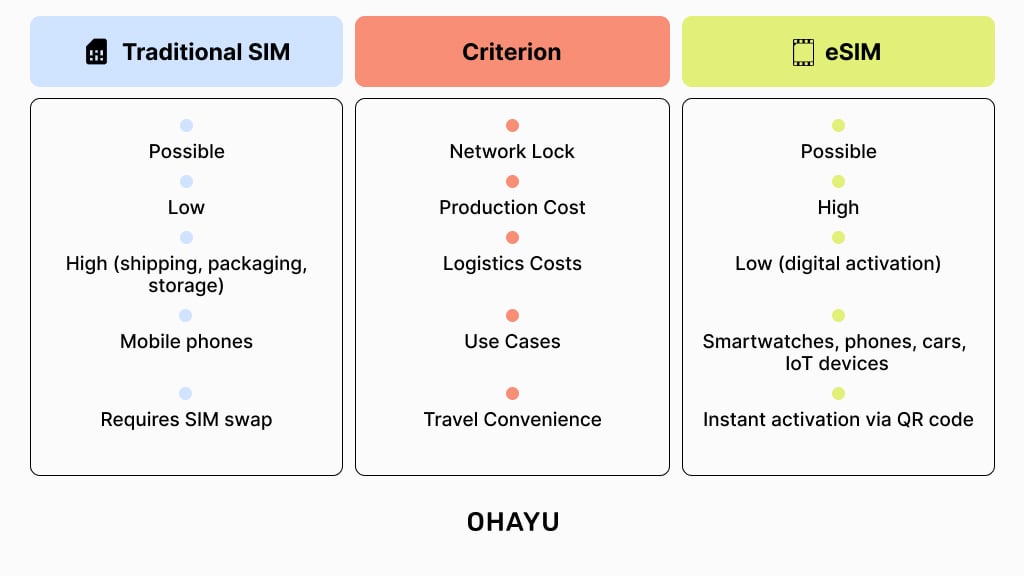
| Possible | Network lock | Possible |
| Low | Production cost | High |
| High (shipping, packaging, storage) | Logistics costs | Low (digital activation) |
| Mobile phones | Use cases | Smartwatches, phones, cars, IoT devices |
| Requires SIM swap | Travel convenience | Instant activation via QR code |
Activation and control
- SIM: Requires physical replacement. Operator change requires access to the tray, tool (paper clip/needle), and a new card.
- eSIM: Activation via encrypted QR code or operator app. Profiles are downloaded via the GSMA RSP (Remote SIM Provisioning) standard, allowing you to switch between tariffs in minutes.
Compatibility
Traditional SIMs are universal: they work in 99% of devices, including old button phones. eSIM is supported only by modern gadgets.
Security
Vulnerabilities of physical SIM
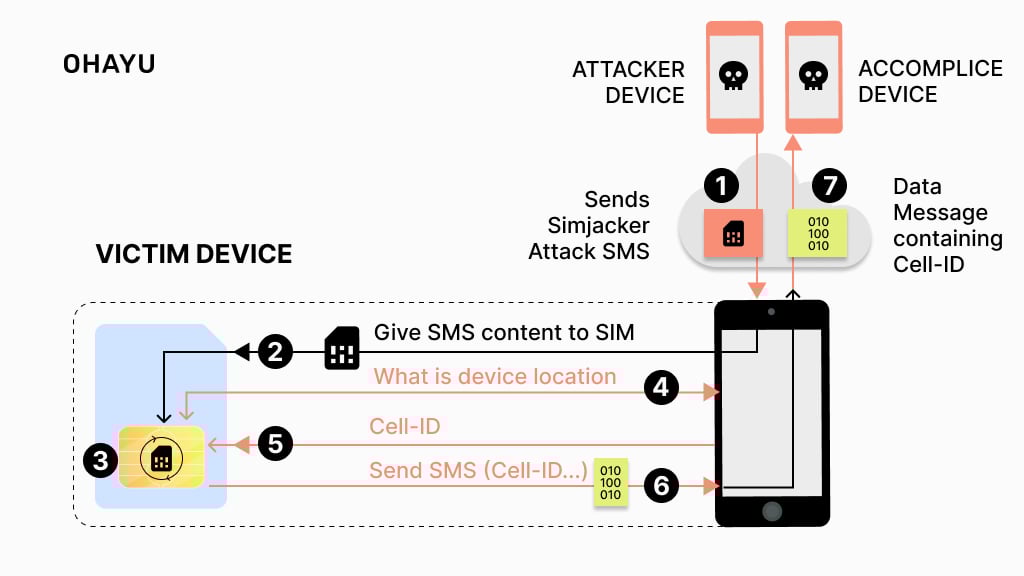
- Cloning: Attackers can duplicate a SIM through SIM-swap attacks, using social engineering or hacking into operator databases.
- Physical access: A stolen SIM can be inserted into another device to access SMS/2FA.
eSIM protection
- Hardware isolation: The eSIM is integrated into the Secure Element (SE), a separate secure chip isolated from the main OS. Data is encrypted with ECC (Elliptic Curve Cryptography) algorithms.
- Biometric Authentication: Face ID, Touch ID, or PIN is required to activate a profile.
- Remote Lock: If the device is lost, the operator can remotely deactivate the eSIM via SM-DP+.
Risks of eSIM
- Targeted infrastructure attacks: Hacking into operator servers (e.g., via vulnerabilities in GSMA RSPs) can lead to mass compromise of profiles.
- Limited migration: Transferring an eSIM to a new device requires manual authorization, which complicates the process if the gadget is lost/broken.
User experience
Convenience
- eSIM: Switch between operators while roaming without replacing the chip.
- SIM: Does not require digital literacy – suitable for older users or regions with weak internet.
Device design
Moving away from the SIM tray allows manufacturers to increase battery (up to 5-7% capacity) or add additional sensors (e.g., improved accelerometer in Apple Watch).
Multi-SIM functionality
The eSIM supports 5-10 profiles simultaneously (device-dependent), whereas traditional SIMs require a dual-SIM tray.
Economic factors
Cost to the user
eSIM: No plastic manufacturing/delivery costs, but operators often impose activation fees ($5-10). Better in the long run due to cheap local roaming rates.
SIM: Cheap activation, but when traveling, you have to overpay for international packages.
Operator market
eSIM breaks the monopoly of local operators: users can instantly connect to global providers. This forces companies to lower prices and improve service.
Environment
Moving away from plastic SIMs will reduce annual waste by 20,000 tons (GSMA 2023 data), but increased production of eSIM devices will increase pressure on rare earth metals.
eSIM vs physical SIM adoption and availability
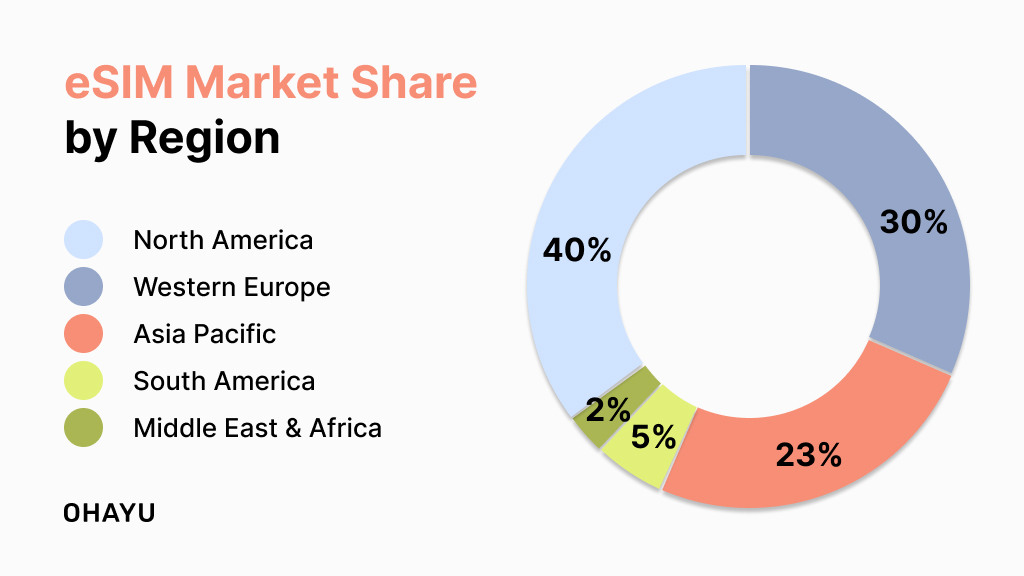
Unfortunately, eSIM use worldwide is patchy. In Europe and North America, the technology pervades: 85% of premium phones are SIM-less, and operators such as Deutsche Telekom and Verizon retail eSIM even for prepaid plans. In Asia, however, the scene is varied: in Japan, 70% of the market is served by eSIM, while in India, only 20% of carriers (Airtel, Jio) have virtual chips available because of regulatory limitations.
Carriers support
Major players are actively promoting eSIM:
- Vodafone allows you to activate a profile via an app in 3 minutes;
- T-Mobile USA offers “digital roaming” with automatic selection of the local operator.
- However, traditional SIMs dominate in Africa and Latin America: local operators (MTN, Claro) are not ready to upgrade their infrastructure for eSIMs, and users are more likely to buy low-cost button phones.
Devices and IoT
Gadget makers are divided: Apple has completely abandoned physical SIMs in the US, but left a tray in the same iPhones for China, where eSIMs are banned for residents. In the IoT segment, eSIMs are leading the way:
- Smart watches (Garmin, Apple Watch) use eSIMs for autonomous communication;
- Automakers (Tesla, BMW) are deploying them for telematics and over-the-air updates.
eSIM vs physical SIM future
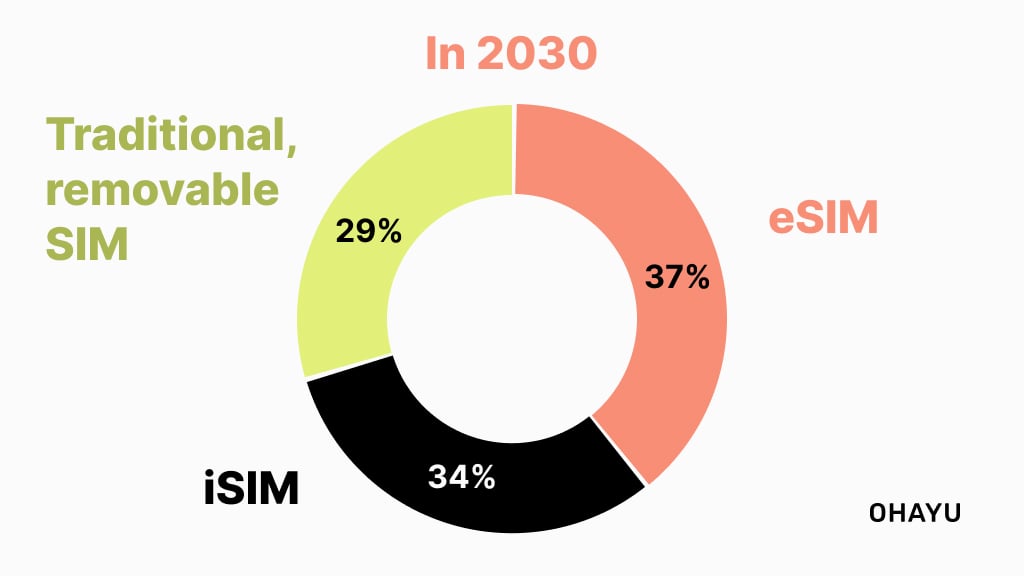
In the near future, most smartphones will be released without a SIM tray. But this does not mean that plastic chips will disappear – they will gain a foothold in niche segments. For example, in Africa, where 40% of the population still uses button phones, traditional SIMs will remain the backbone of communications until the 2030s.
Technological breakthrough
eSIMs will be the brains behind the IoT: imagine a smart refrigerator that orders milk itself via an embedded chip or drones with eSIMs for autonomous delivery to remote areas. Companies like Tesla are already testing eSIMs for cars that update software in the background without visiting a service.
Paradigm shift
Traditional SIMs will repeat the fate of CDs: they will be used by enthusiasts and specific industries (e.g., military communications). But for the majority, eSIM will become as familiar as cloud services. The main question is whether operators will be able to adapt. While Orange and Tele2 are reorganizing their business models for subscriptions, small providers risk repeating the fate of video rentals.
To sum up
eSIM is not just technology; it’s freedom from searching for a SIM card store at airports, from overpaying for roaming, and the risk of losing a tiny piece of plastic. Physical SIMs are still good for old-fashioned phones, but eSIMs are the future: they save time, protect data, and make gadgets more compact.
If you’re ready to try eSIM for international traveling, take a look at services like Ohayu – its travel plans cover 170+ destinations, and activation can take minutes. No need to go anywhere: download a profile, scan the QR code, activate in the destination country, and get connected to the supported local mobile networks.
Most importantly, choose what works for you, whether it’s a nostalgic SIM card from the 2000s or a digital chip that won’t get lost even in the jungle. Technology should serve, not complicate.