

Mobile networks in Africa vary widely from region to region, and South Africa is one of the continent’s most developed mobile markets. Despite economic and logistical obstacles, operators like MTN and Vodacom continue to roll out new services, including 5G in major cities. These companies serve millions of users across the continent and are investing in infrastructure development.
Travel eSIMs, like Ohayu, are also popular because they allow visitors to connect to the supported local mobile networks in many African countries (including South Africa, Kenya, Morocco, and Togo) and get mobile internet without a local SIM card.
Let’s look at mobile coverage in Africa’s regions and then compare the main mobile carriers in South Africa.
Africa mobile networks comparison by regions
In 2025, 5G networks covered only 12% of the population in Africa, according to the International Telecommunication Union (ITU) (Facts and Figures 2025). However, some urban areas already have 5G.
South Africa – strong mobile internet performance
Thanks to the significant investments in technology, the country has some of the best mobile performance among African countries. 4G coverage reaches virtually all cities and most rural areas, although in some remote locations, the connection can be weak. According to the Speedtest Global Index, the median mobile download speed in South Africa was 69.57 Mbps in August 2026 (65th of 149 countries). The screenshot below shows March 2025, when it was 61.95 Mbps with a latency of 23 ms.
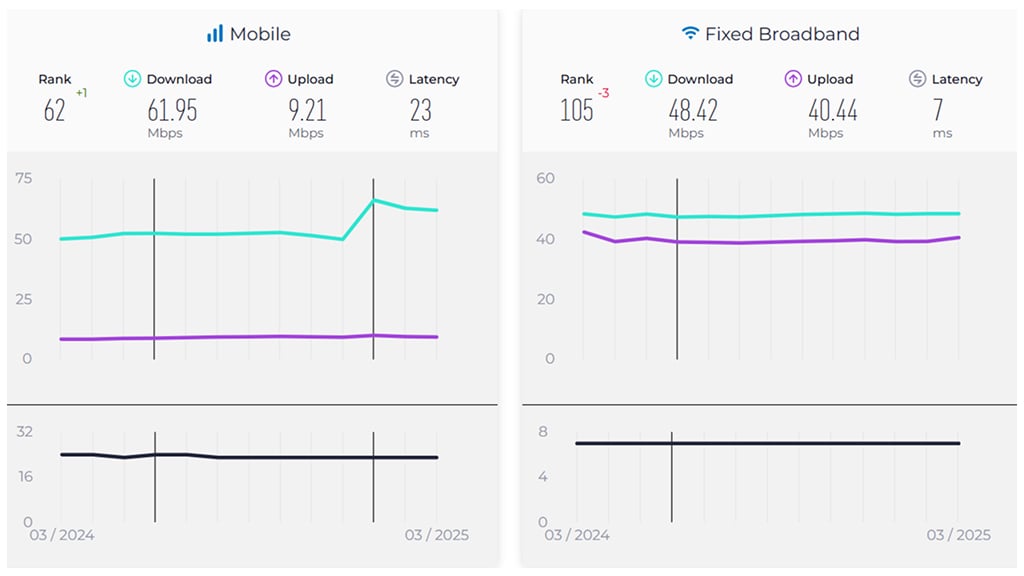
The largest players in the mobile services market are MTN Group and Vodacom, both of which are actively developing 4G and 5G networks. South Africa was one of the first countries on the continent to get access to 5G.
East Africa – 4G rollouts
Kenya is known for its mobile money service M-Pesa. Coverage in Nairobi and Mombasa is quite good, and 4G is available across most of the country.
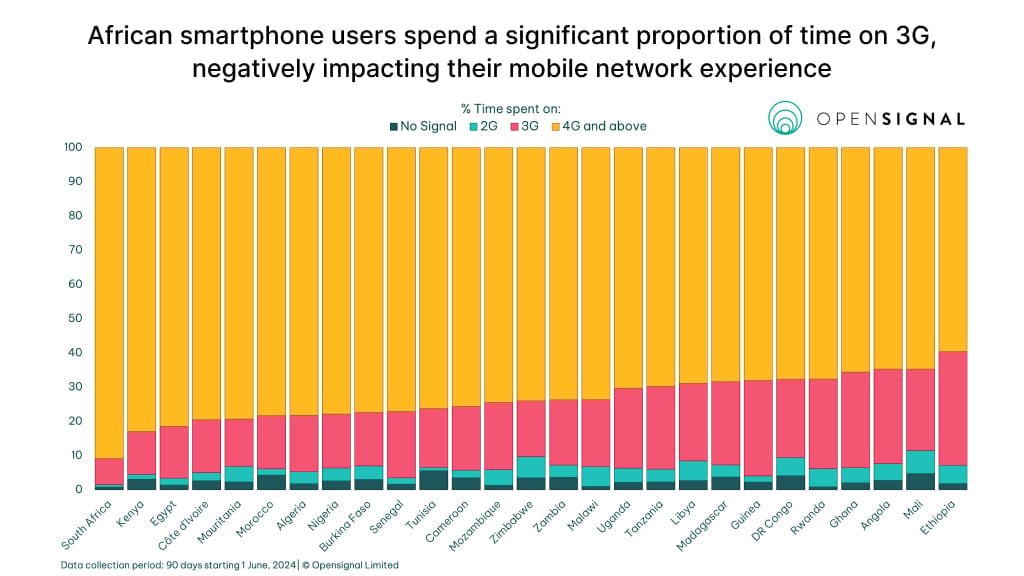
In neighboring Tanzania and Uganda, the situation is similar. Cities have good 3G and 4G coverage, but rural coverage is less reliable. Operators such as Vodacom Tanzania and MTN Uganda continue to invest in facilities to improve the situation.
West Africa – urban 4G vs rural weak spots
In Nigeria, the main cities, Lagos and Abuja, have well-developed 4G coverage, but rural areas remain without stable connectivity. The country is dominated by MTN Nigeria, Airtel Nigeria, and Glo, which are actively working to improve their networks.
Central Africa – lags in 3G and 4G
The central part faces serious difficulties. In the Democratic Republic of Congo, 4G is available in the main cities, but rural coverage is sparse, and the connection isn’t always stable. Operators such as Vodacom Congo, Orange RDC, and Airtel are expanding their networks, but this will require extensive investments.
North Africa – expanding mobile networks
In North African countries such as Egypt and Tunisia, the situation is much better. In Egypt, which has major operators such as Vodafone Egypt, Orange Egypt, e& Egypt, and WE, 4G coverage is available in most cities. Tunisia also has a strong network and a high level of 3G/4G, with Tunisie Telecom, Ooredoo Tunisia, and Orange Tunisia as the main operators.
4 main South African mobile networks
MTN, Cell C, Telkom, and Vodacom are the main mobile network operators in South Africa. Let’s take a closer look at each player.
MTN Group
MTN Group is Africa’s largest mobile operator by subscribers. The company was founded in 1994 in South Africa and grew into a pan-African group.
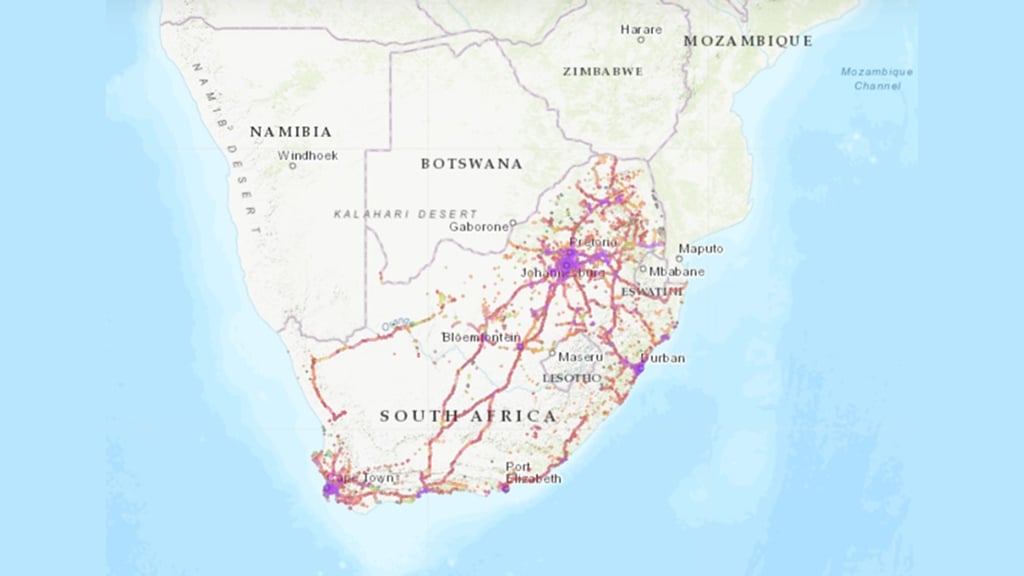
Specific features and strengths:
- MTN operates in large African economies such as South Africa, Nigeria, and Ghana.
- The provider is investing in the development of 4G and 5G networks, including in rural areas.
- Through its MoMo (Mobile Money) platform, available in many of its markets, MTN enables people to make transfers, pay bills, and even get microloans without the need for banks.
- The company actively supports projects in education, healthcare, and entrepreneurship.
- This supplier suits those looking for stability, wide coverage, and access to modern digital services.
Cell C
Cell C, founded in 2001, has long been considered a third force in the competition with giants like Vodacom and MTN. However, its desire to change the market has made it an important figure among South Africa’s mobile networks.
Specific features and strengths:
- The carrier regularly launches special promotional deals for calls, SMS, and mobile Internet.
- Cell C provides flexible options for customizing services through apps. The customer chooses the amount of data, minutes, and SMS.
- The carrier actively cooperates with other companies to share the network. For example, agreements with MTN help Cell C maintain high-quality coverage without huge infrastructure costs.
- It focuses on youth by introducing favorable Internet packages, entertainment services, and special student programs.
Telkom
Telkom is an operator with a rich history. Starting as a state-owned monopoly in the fixed-line telecommunications sector, the company has successfully adapted to the new realities of the mobile era. It now provides a full range of telecom services.
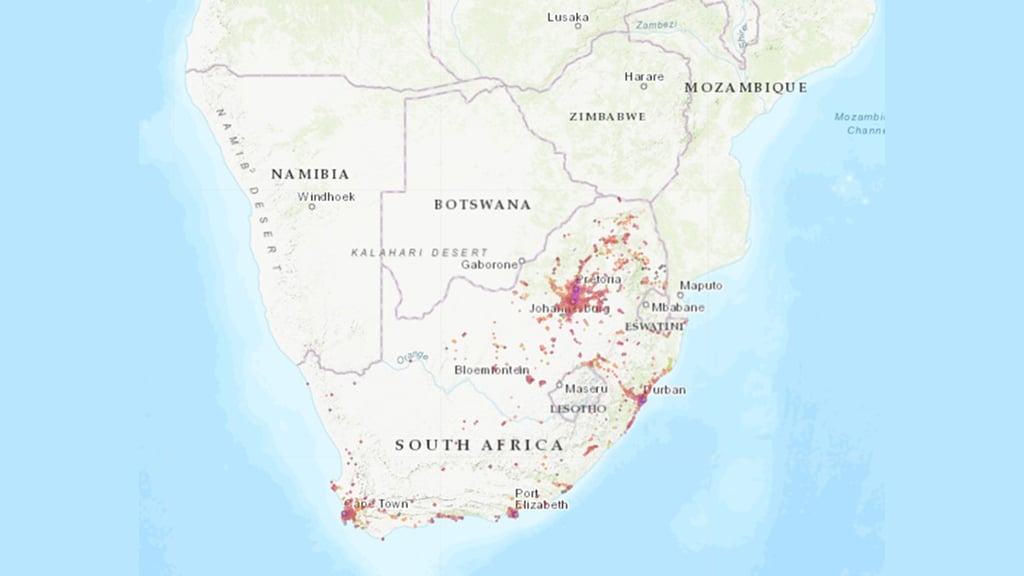
Specific features and strengths:
- One of Telkom’s main advantages is the ability to combine fixed-line Internet, mobile communications, and corporate solutions in one contract. This is especially beneficial for small and medium-sized businesses.
- Telkom is actively rolling out LTE networks in areas where it isn’t economically feasible to lay cables. This allows the company to capture markets in small towns and rural communities.
- The carrier also provides cloud storage, data management, and corporate Internet services for large enterprises.
Vodacom
Vodacom is a major mobile operator in South Africa and several other African countries.
Specific features and strengths:
- Vodacom launched South Africa’s first mobile 5G network in May 2020.
- Vodacom Group offers the M-Pesa mobile money service in several of its African markets. It allows making payments and transfers even without a bank account, which is critical for millions of people.
- The provider actively supports education, healthcare, and digital literacy programs.
South Africa mobile networks – leaderboard analysis
Opensignal’s August 2024 South Africa report identified the carriers that performed best in various aspects of the mobile user experience. In Opensignal’s newer August 2025 report, MTN won 11 of 15 awards, Telkom again won Availability, and Vodacom won both coverage awards. The charts and figures below are from the August 2024 report.
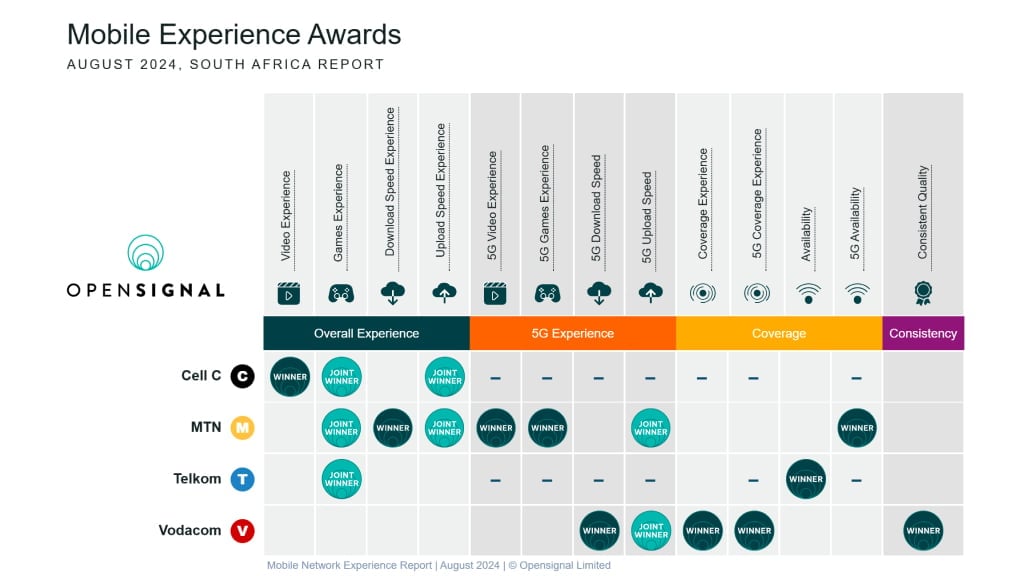
Cell C won the Video Experience category with 67.2 points on a 100-point scale. The carrier also shared the top spot in the Games Experience category with MTN and Telkom.
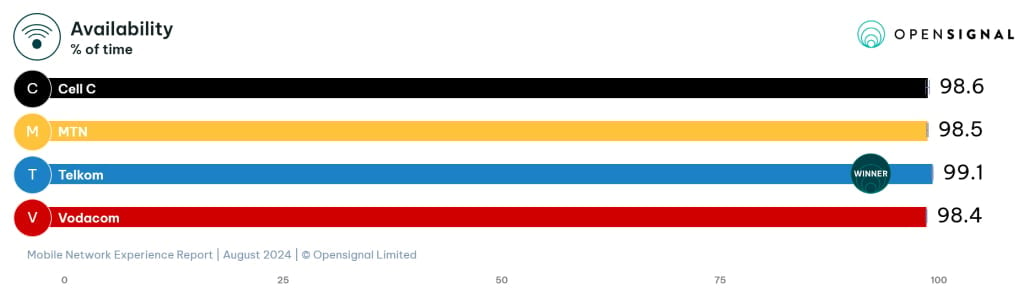
Telkom won the Availability category: its users had a network connection 99.1% of the time. Please note that this doesn’t mean that you will have a connection throughout the country.
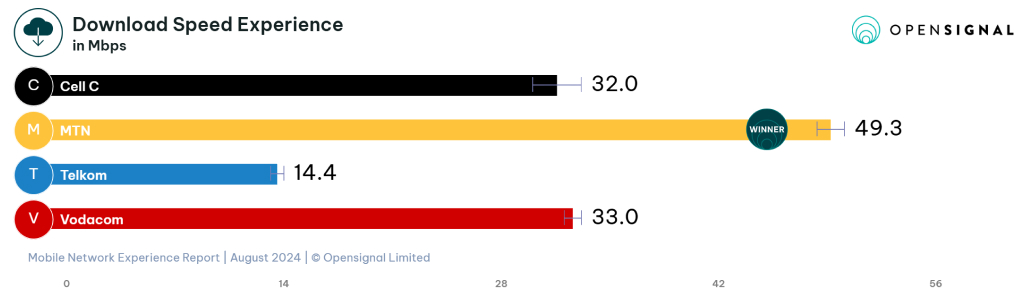
MTN won the Download Speed Experience award with 49.3 Mbps and shared the top spot in the Upload Speed Experience with Cell C, at 7.9 Mbps. MTN also won 5G Video Experience, 5G Games Experience, and 5G Availability, and shared 5G Upload Speed with Vodacom.
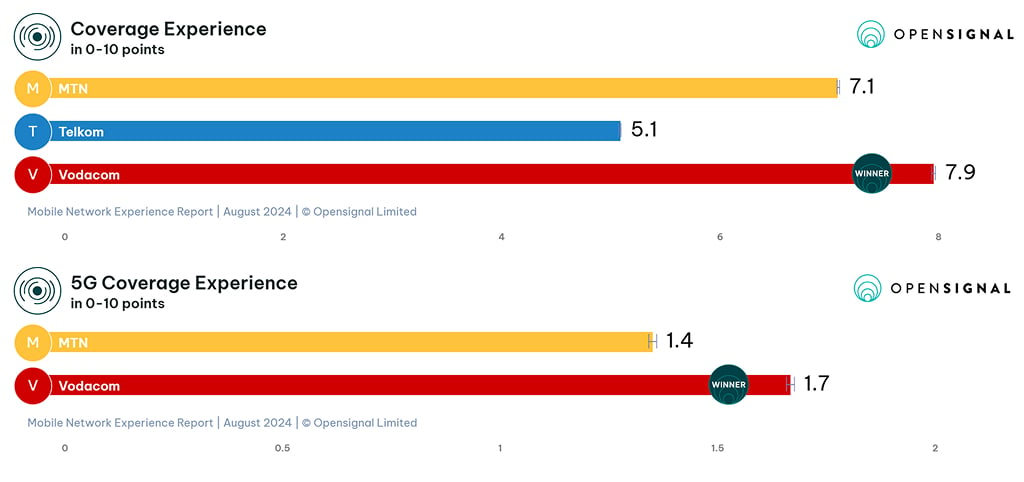
Vodacom won both Coverage Experience and 5G Coverage Experience, as well as 5G Download Speed. Vodacom also won the Consistent Quality award, indicating the high stability of its connection.
To summarize
In the South African mobile market, each carrier brings distinctive features and strengths. Cell C has long been established as an operator offering affordable tariff plans and attractive conditions for users looking for budget solutions. MTN has traditionally been considered one of the most powerful players, providing high Internet speeds, wide geographical coverage, and active 5G development. Telkom targets consumers who want favorable mobile packages along with fixed-line Internet services, offering interesting combinations to save money. Vodacom remains a trusted player, known for service stability, extensive coverage, and continuous innovation in mobile communications.
In a world where quality connectivity is key for work, travel, and communication, people are looking for convenient eSIM solutions. Ohayu eSIM connects to the supported local carriers and offers country eSIMs and a Global plan for multi-country trips. It’s an alternative for travelers who want to get mobile internet after arrival without looking for local SIM cards.