


Costa Rica was a trip I still think about often. This flavorful country amazes tourists with its tropical forests, warm Caribbean waters, fascinating volcanoes, and most importantly, its hospitality. It did not leave me indifferent either. My Costa Rica solo travel recommendations are: visit in dry season, carry cash, pay in colónes, watch for theft in San José, join tours in Arenal or Monteverde to meet others, and stay safe. Now let’s jump right into the guide.
What do you need to know about Costa Rica?
Costa Rica is a small country in Central America, between Nicaragua and Panama, with access to the Pacific Ocean and the Caribbean Sea. Despite its compact size, it has an extraordinary natural diversity with active volcanoes, tropical forests, mountain ranges, lakes, waterfalls, and black and white sand beaches.
It is one of the most popular locations for ecotourism. National parks and reserves cover more than 25% of the territory. It is home to unique species of animals and birds, and nature is preserved in its most pristine form.
The country will be interesting for those who love outdoor activities such as surfing, hiking, and scuba diving, and appreciate tranquility, nature, and cultural attractions. The area has colonial cities, ancient temples, museums, and local traditions. If you are one of them, it is a must-visit location.
Best time to visit Costa Rica
The country has a tropical climate with two main seasons: dry (November-April) and rainy (May-October). The best time to travel is from mid-November to mid-April. I traveled in March, and it was ideal. Consider the off-season (May-June or September-October) if you want to save money. Just ensure to bring a raincoat as the rain may be heavy.
Currency
Costa Rica has a Costa Rican Colon (CRC) currency, but US dollars are accepted almost everywhere. However, the exchange rate when paying in dollars is less favorable. In big cities, you may pay with a card without any problems, but in small villages or on islands, you need cash.
Safety
It is one of the safest countries in Central America, so I felt comfortable traveling alone. However, I would advise you to be careful, as petty theft is common in tourist areas and on public transportation.
Prices
My trip was not as cheap. I paid about $30-50 for a night in an inexpensive hotel. Lunch in a restaurant costs an average of $10-15, but in local cafes, you have a full meal for $4-6. Entrance to national parks is $10-20, while excursions are even more expensive. For example, a tour to a volcano cost me $30.
Language
The official language is Spanish. In tourist areas, such as La Fortuna or Tamarindo, people understand English. However, in remote areas, English is a bit difficult. I learned a few basic phrases, and it helped a lot.
Guide on popular places for Costa Rica solo travel
I’ve been lucky enough to visit many places, so I say with confidence that there is something to see for every taste.
San José
The capital, San Jose, is located in the Central Valley, among the green mountains. To be honest, I didn’t expect San José to feel this chaotic. Would I do it again? Definitely. On the one hand, there are modern glass offices, and on the other – narrow streets and colorful markets.
San Jose does not convey the true Costa Rican vibe for me. There are often traffic jams here, the architecture is not so impressive, and it is not so safe. Nevertheless, if you stay here for a day or two, there are several places worth your attention.
Plaza de la Cultura
The first place to go is the central square, which unites the main cultural attractions of the capital. Here are the National Theater, the Gold Museum with a collection of pre-Hispanic artifacts, and the Jade Museum, where you can see unique jewelry from Indian tribes.
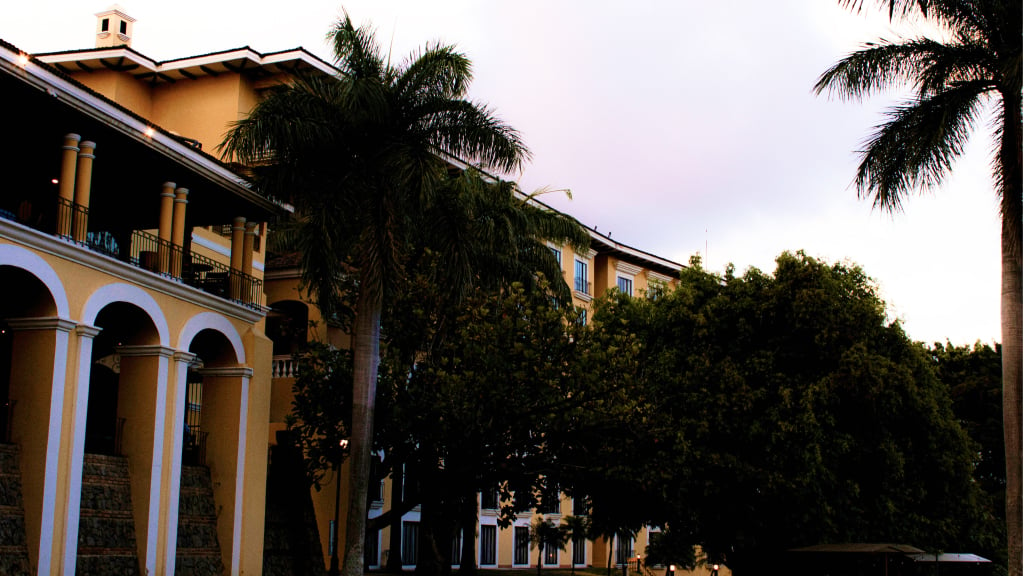
At night, the club life here is in full swing, so if you like to party, go there. However, take care of your safety, because it is easy to come across pickpockets in large crowds of people.
Simón Bolívar Zoo
Despite its small area, this zoo performs an important social function. Animals that have been rescued from captivity, injuries, or confiscations from poachers end up here. Here, I got acquainted with sloths, monkeys, jaguars, and reptiles that live only in Central America. The place is compact, so an hour and a half will be enough for a visit.
Central Market (Mercado Central)
It is an old market that has existed since the 1880s. It is easy to get lost in the narrow aisles between the stalls with local fruits, spices, coffee, souvenirs, herbal infusions, fish, and cheeses. By the way, I had a classic Casado lunch here. It’s a dish of rice, beans, meat, and salad. It’s delicious and authentic, so don’t miss this place.

La Paz Waterfall Gardens Natural Park
One of the most famous eco-parks is located an hour’s drive from San Jose. Convenient trails lead through the rainforest to five picturesque waterfalls. I saw a blue morpho butterfly the size of my hand while hiking. There were even snakes! Here I took some cool photos for my Instagram.
Poas Volcano
If you want magical views, head to the volcano. Poas is an active volcano with one of the largest craters in the world, filled with a turquoise acid lake. In good weather, the observation deck offers a spectacular view. The park is equipped with wide paths, so even tourists with limited mobility can get there.
Explore the jungle in La Fortuna
The small town of La Fortuna is located at the foot of the Arenal Volcano, one of the symbols of Costa Rica. Thanks to this volcano, the region has become an epicenter of adventure and nature tourism. The area is covered with dense tropical forests, rich in flora and fauna. This is one of my favorite places.
What to do in this area? There are so many options! Here are a few of my favorites.
La Fortuna Waterfall
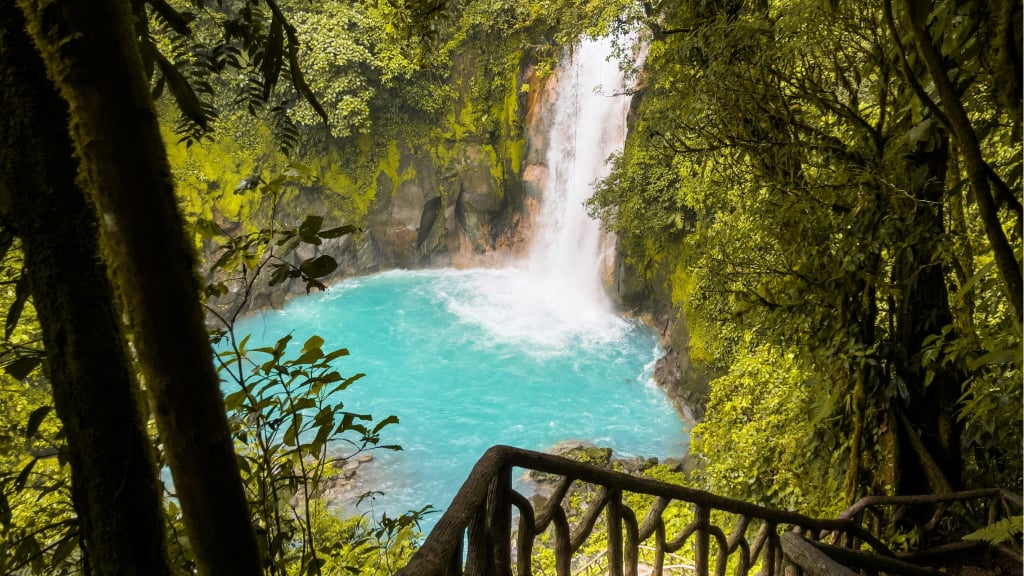
This is one of the most famous waterfalls, cascading over 230 feet into an emerald lake. I had to climb some steps to get there (about 500)! However, the view is worth the effort. I swam in the cool water at the bottom and just enjoyed the views against the backdrop of greenery.
Arenal jungle hike
The national park around the volcano has several trails of varying difficulty. You walk along trails through lava fields and open meadows with views of the volcano itself. Wildlife is common here, so I recommend bringing binoculars or a zoom camera. Hiking trails take between 1 and 3 hours.
Sky Trek zip-line
You should definitely ride the steepest zipline in the region. It allows you to fly over the treetops at speeds of up to 70 km/h. These are seven long lines that pass over the rainforest and offer fantastic views of the Arenal volcano and the lake.
Canyoning
In La Fortuna, I got a real adrenaline rush. And it was canyoning. This is a rope descent along waterfalls in narrow jungle gorges. They put a helmet and a special system on me, gave me some instructions, and then I slid right down the wet rocks. It was scary but really fun!
Costa Rica solo travel to the Central Pacific
This region is a real concentration of everything that make people go to Costa Rica: wild jungles, palm-fringed beaches, and adventures. I arrived here after a few days in the capital and immediately felt the difference. What struck me most was how easy it is to take a walk in the forest in the morning, have lunch by the ocean, and drink passion fruit juice in the evening! Here is an overview of my top locations.
Quepos
This is a small coastal town with a relaxed atmosphere. One of the main marinas in the region is located here – Marina Pez Vela. The town is popular with travelers planning to visit Manuel Antonio National Park. In the center is a market with fruits, souvenirs, and local delicacies. In the evening, I recommend visiting one of the fish restaurants on the promenade. I was in Agua Azul and tried authentic Snapper. Really delicious!

Dominical
This is the place where I first tried surfing. This village has a hippie vibe: there are many campsites, yoga centers, and organic cafes. The waves here are strong, so this is not a place for swimming, but for surfing it is one of the best in the region. There are also impressive waterfalls and wild tropical landscapes nearby.
Monteverde & Cloud Forests
Monteverde is a world above the clouds. It is one of the most famous cloud forests in the world, located at an altitude of about 1,400 meters above sea level. This region is ideal for those looking for silence and a real wild jungle that has hardly changed since before the appearance of man.
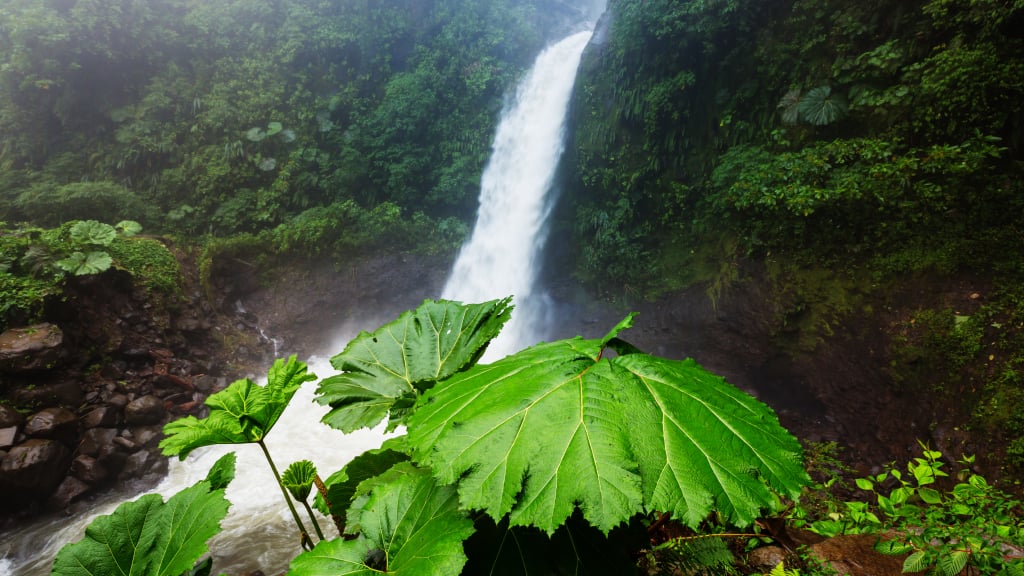
I spent only two days in Monteverde, but these were some of the most atmospheric moments of the trip. Already on the road to the town, which leads up the serpentines, views of valleys covered with clouds opened up. The forest itself seemed to me like something out of a fairy tale: cool air, the sound of drops, and soft light breaking through the green thicket. By the way, I saw a quetzal (a bird with a long green tail) for the first time in my life. If you are going to this region, here are some tips to keep in mind:
- The temperature here is much lower than on the coast (daytime +18–22°C), so be sure to bring a jacket and pants.
- Rain is possible in any season, a raincoat will come in handy.
- The most convenient way to get there is from La Fortuna or San José, but the road is winding and bumpy. If you get motion sickness, don’t forget to buy some pills before the trip.
Monteverde Cloud Forest
The reserve has several routes of varying lengths and difficulty, leading through a dense rainforest with epic trees, epiphytes, and bridges over cliffs. During the walk, I heard the sounds of birds and saw exotic butterflies and lizards. The best time for birdwatching is in the morning.
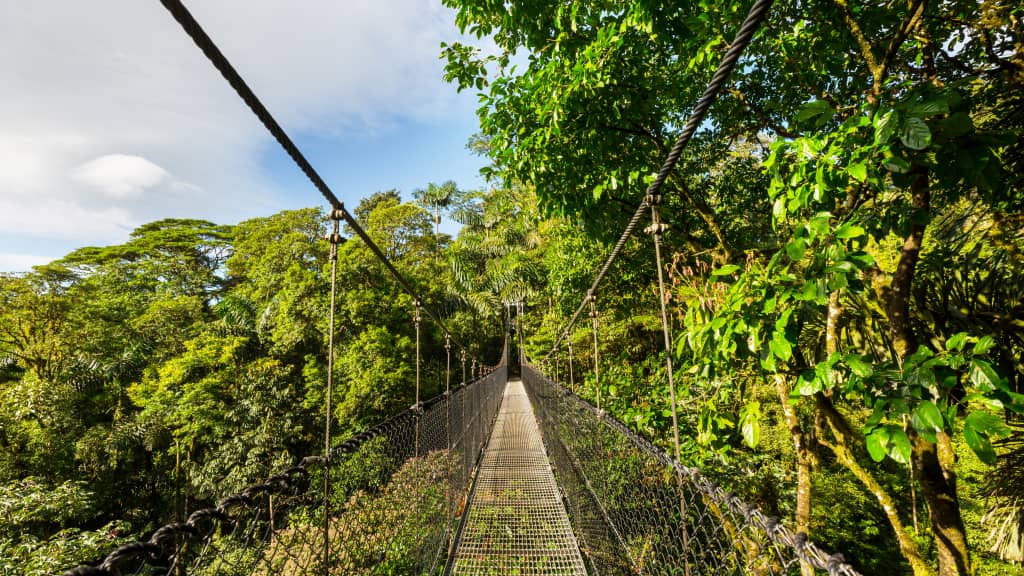
Taste local cheese and coffee
Monteverde was founded by Quakers – a religious community from the United States, who arrived here in the middle of the 20th century. They have developed a dairy industry, so you can taste quality local cheese and ice cream, as well as see how coffee is grown and roasted. A visit to a coffee plantation is one way to feel the spirit of the local culture.
What document do I need for Costa Rica solo travel?
Costa Rica is one of the most tourist-friendly countries in Central America. Visa-free entry is allowed for stays of up to 90 days for tourism, recreation, or transit. However, there are a few important requirements to be aware of before you travel:

Passport
Your passport must be valid for at least 1 day after your planned departure. However, in practice, it is recommended to have at least 3-6 months of validity. It is a common requirement for airlines and customs. Your passport also must be machine-readable (MRZ) and not have any serious damage.
Return or exit ticket
Upon entry, you will be asked to provide proof of your plans to leave the location within 90 days. It may be:
- a return flight ticket;
- a bus/plane ticket to another Central American country;
- a ticket with an open date (but with a specified destination);
If you are traveling flexibly and do not have a clear plan, you can make a “dummy reservation”. It is a temporary ticket that is inexpensive and valid for several days, but is suitable for crossing the border.
Financial guarantees
Sometimes, border guards may ask for proof that you have enough funds to stay in the country. The recommended amount is from 1000 USD per month or about 30 USD per day.
Medical insurance
Although medical insurance is not mandatory, it is vital for Costa Rica solo travel. This is because the health care system is quite expensive for foreigners. That is why I recommend having a policy that will cover inpatient treatment, injuries related to activities (e.g., surfing, hiking, ziplining), and transfer to your country of residence.
Mobile internet in Costa Rica
Before the flight, I installed a Costa Rica eSIM from Ohayu. It is a service for travelers that can connect you to the supported local networks without a physical SIM card. I used a 30-day plan with 10 GB of Internet for $34.49. From my experience, I can say that you may take fewer gigabytes for a normal vacation; I needed to work remotely, so 10GB was just enough. Here is how it works:
- Go to the Ohayu website or apps.
- Choose the country or a Global plan (both cover Costa Rica).
- Receive a QR code and install an eSIM.
- Activate it when you arrive in Costa Rica on Wi-Fi.

I activated it at the San Jose airport using SJO Free WiFi. I turned on the eSIM, selected it as the main one for mobile data, and it connected me right away.
Even in the Monteverde mountains, the connection was stable. I was especially surprised that the Internet did not drop during video calls. For me, this was a priority because I was traveling alone.
The only advice on this issue: check if your phone supports eSIM (iPhone XS and newer, most Android like Samsung and Xiaomi of recent years do).
Final words
In short, Costa Rica is a country that truly changes the rhythm of life. It’s easy to forget about the noise of megacities when you wake up to the sound of birds singing, see a volcano in the fog, or stand on a beach overlooking the Pacific Ocean.
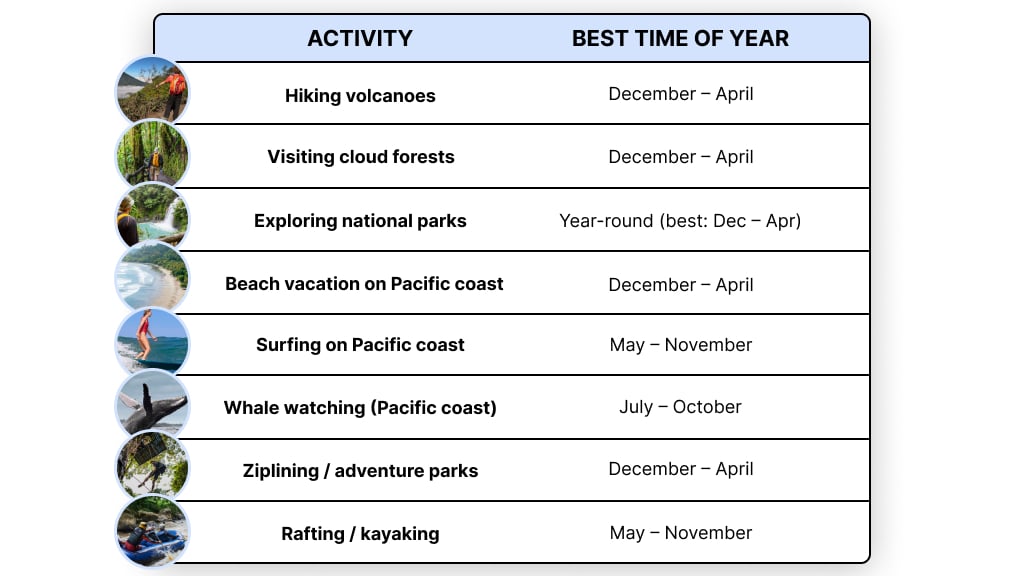
To enjoy your Costa Rica solo travel, here’s a summary of the main tips:
- You don’t have to visit all the tourist spots – it’s better to choose 2–3 regions and spend a few days there.
- eSIM is a must-have. It saved a lot of time and nerves.
- The main thing is to enjoy nature and the local flavor, and you will feel the real vibe of this magical destination.
Get ready for your Costa Rica solo travel and make exciting memories!