

SM-DP+ address (subscription manager data preparation) is a server used in embedded SIM technology to manage digital SIM profiles. It is responsible for generating, encrypting and delivering service provider profiles to devices (smartphones, tablets, IoT devices) via the Internet.
In the last few years, one of the most important innovations in cellular communications has been the advent of eSIM. But that necessitated the creation of new solutions for subscription and profile management. That is how vital infrastructure elements such as SM-DP⁺ have come into being.
Development of eSIM and SM-DP⁺
With increased use of smartphones, tablets and IoT, it is clear that physical SIM cards lack many advantages. Insufficient space on devices nowadays, inconvenience of having to physically change the SIM card while switching carriers, and logistical challenges of handing out plastic cards require more efficient and convenient methods.
The answer in this case was eSIM, a technology that does not require physical installation but can be remotely downloaded and updated, with carrier profiles. This technology enabled the building of integrated subscription management systems, such as the SM-DP⁺ infrastructure.
GSMA’s role in the development of standardization
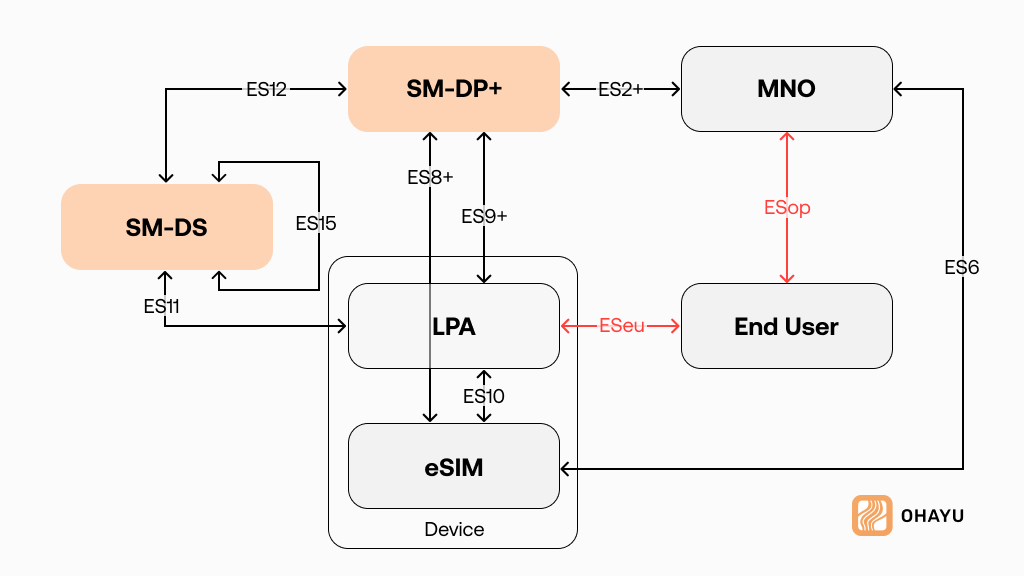
The GSMA, an international mobile network association, was instrumental in standardizing remote profile management. GSMA standards like the “Remote SIM Provisioning Architecture” and associated RSP technical guidelines were the basis for SM-DP⁺ to operate. These specifications defined strict security guidelines, communication protocol, and authentication procedures, leading to a secure and reliable profile management system for eSIM.
How does SM-DP+ address work?
Initializing the request
You scan a QR code or manually enter the activation code. The information that is transferred is the identity of the SM-DP+ server and profile parameters.
Establishing a secure connection
The device communicates with the SM-DP+ server through the Internet using HTTPS and TLS 1.2/1.3 protocols to ensure data security as well as communication safety from interception.
Device authentication
SM-DP+ verifies the legitimacy of the request using two key identifiers:
- EID (Embedded Identity Document) – the unique eSIM number, in the device chip.
- ICCID (Integrated Circuit Card Identifier) – the profile identifier provided by the provider.
The server also checks if the provider is authorized to issue a profile for this device.
Creating an eSIM profile
The SM-DP+ creates a digital profile containing:
- Authentication keys (Ki, OPc) for accessing the operator’s network.
- Network settings: APN, roaming settings, SMS servers.
- Metadata: name, logo, tariff conditions.
This profile is AES-256 or RSA-2048 algorithm encryption protected from hacking.
Delivery via SM-SR
The encrypted profile is transmitted to the device through SM-SR. The server is a proxy and takes care of secure data transfer and profile status handling (active/locked).
Installation and activation
The device decrypts the profile and stores it in the secure area of the eSIM chip. The user then gains access to the operator’s network.
How to find the SM-DP+ address?
You can obtain this unique URL of the operator’s server in several ways:
- QR code from the carrier
When you purchase an eSIM, you receive a QR code containing the SM-DP+ Address, activation code and profile settings.
- Mobile application or website
Many carriers (e.g. Tele2 or Orange) place the SM-DP+ address in the user’s personal profile or in the eSIM support section. For corporate customers, the address may be available through the integration API.
- Device manufacturers
Some brands (Apple, Google Pixel) pre-install the SM-DP+ address in firmware. For example, the iPhone uses the lpa.ds.apple.com address, which is automatically detected when you select a carrier in the eSIM settings.
- Technical documentation
For IoT solution developers, the SM-DP+ address is specified in the eSIM chip specifications (e.g. Thales, Gemalto) or in RSP (Remote SIM Provisioning) integration guides.
Operation details SM-DP+ address
SM-DP+ operates within the GSMA SGP.22 standard, which defines the Remote SIM Provisioning (RSP) architecture. Interaction between the device and the SM-DP+ server is performed via HTTPS RESTful API, where requests are formatted in JSON or XML. Authentication uses the OAuth 2.0 scheme with JWT tokens signed with X.509 certificates.
The address includes parameters:
- Activation Code: 32-character code (e.g., ABC1-D2EF-GHI3-JKL4) linking the profile to the device.
- Matching ID: A unique session ID to prevent repetition of MITM attacks.
The SM-DP+ server generates a profile in GSMA eUICC Profile Package (PP) format that is digitally signed by the carrier. ASN.1 coding with the rules described in ETSI TS 103 383 is used for data transmission. The device processes commands through the LPA (Local Profile Assistant) built into the OS (e.g. iOS LPA.dispatch).
How to set the SM-DP+ address manually?
SM-DP+ set up on iPhone
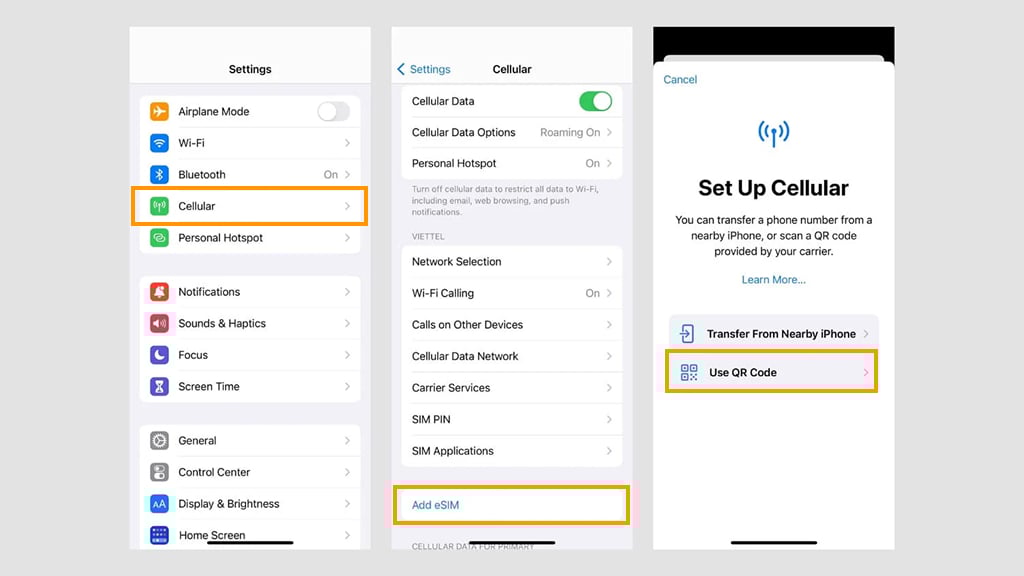
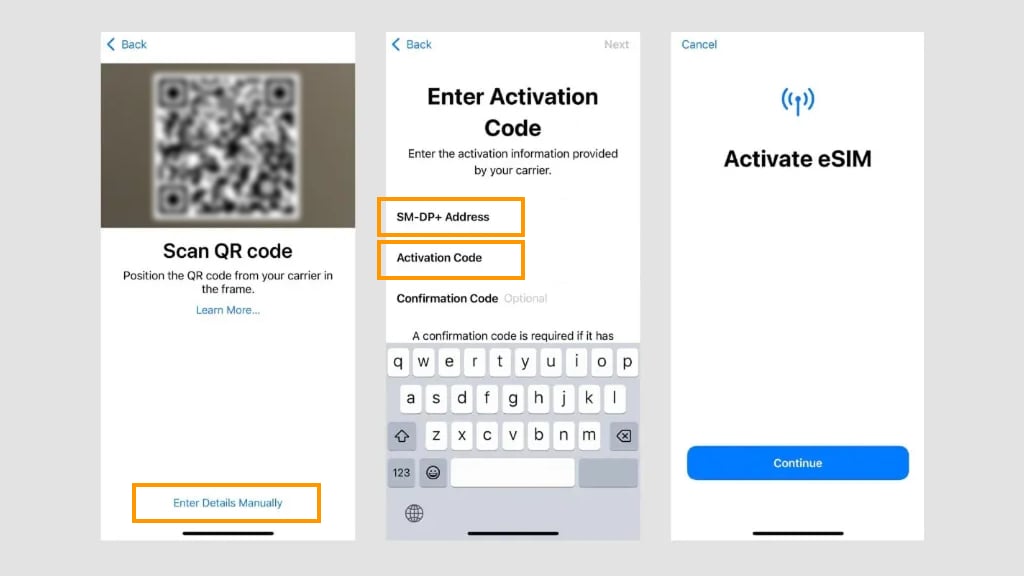
- Open Settings and go to Cellular data
- Tap add eSIM and enter details manually
- Enter the Activation Code (provided by your carrier)
- Confirm and wait for the profile download
- Follow prompts to activate the eSIM
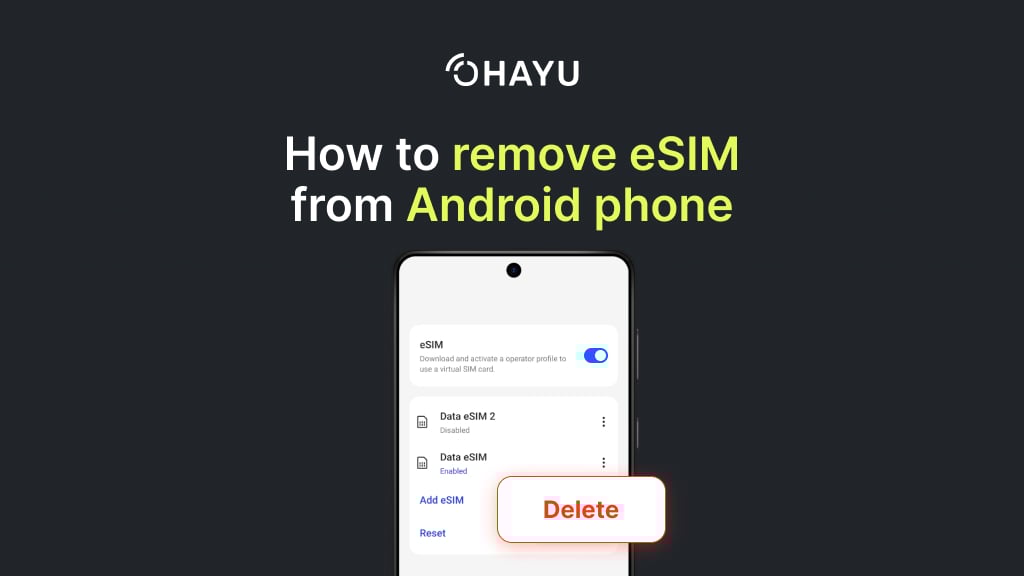
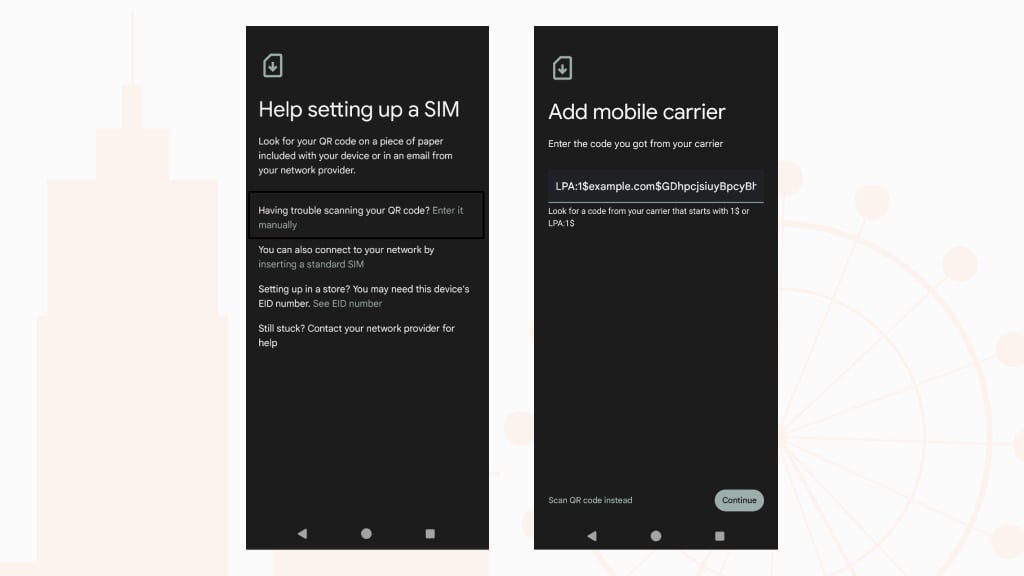
SM-DP+ setup on Android
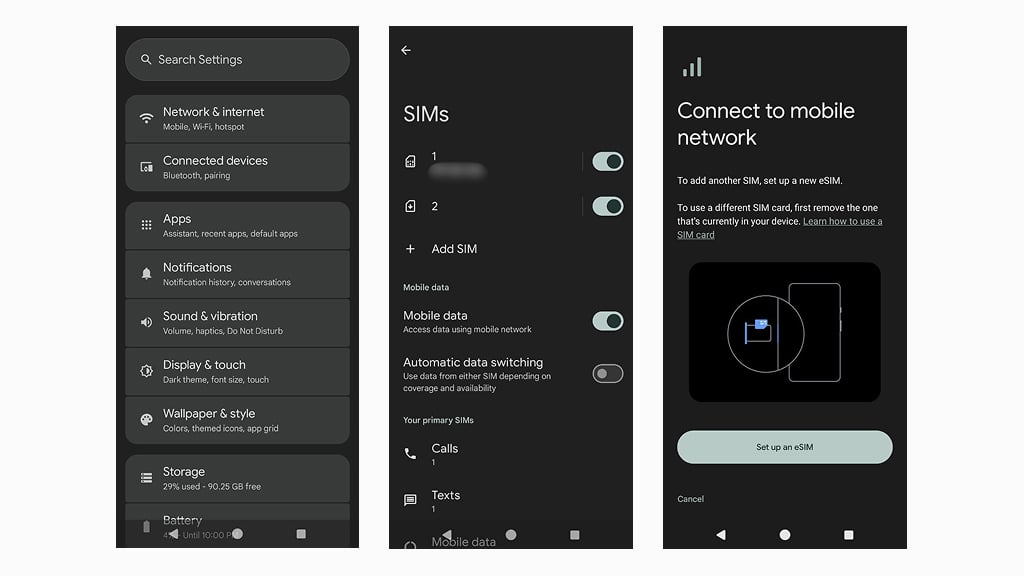
- Go to Settings and Network & Internet
- Then select mobile networks or SIMs
- Tap the add SIM
- Choose to enter details manually
- Input the activation code
- Tap Download and wait for verification.
- Restart the device if needed
Problems and solutions when dealing with SM-DP+
Server connection error
Causes
- Invalid SM-DP+ Address (typo in URL, wrong port).
- Blocked access to the server (firewall, provider restrictions).
- Problems with Internet connection (no network, DNS failures).
Solutions
- Check if the SM-DP+ Address is correct
- Make sure ports 443 or 8443 are open on the network. For public Wi-Fi, disable VPN
- Switch to mobile internet (4G/5G) if Wi-Fi is blocking requests
Invalid activation code
Reasons
- Code entered with errors (character case, extra spaces)
- The code is expired (usually valid for 14-30 days)
- The profile has already been activated on another device
Solutions
- Copy the code from the operator’s email rather than entering it manually
- Request a new code through carrier support. Specify the device EID
- If the code is used, delete the old profile and request reactivation
Error loading profile
Causes
- Incompatibility of the eSIM chip with the provider (e.g. regional restrictions)
- Outdated software version on the device
- Profile conflict (e.g. trying to activate two profiles of the same operator)
Solutions
- Update the OS
- Make sure the device is unlocked for the carrier. For example, an iPhone purchased in the US may not support Asian carriers’ eSIMs
- Delete unused eSIM profiles before activating a new one
Advantages of using SM-DP⁺ address
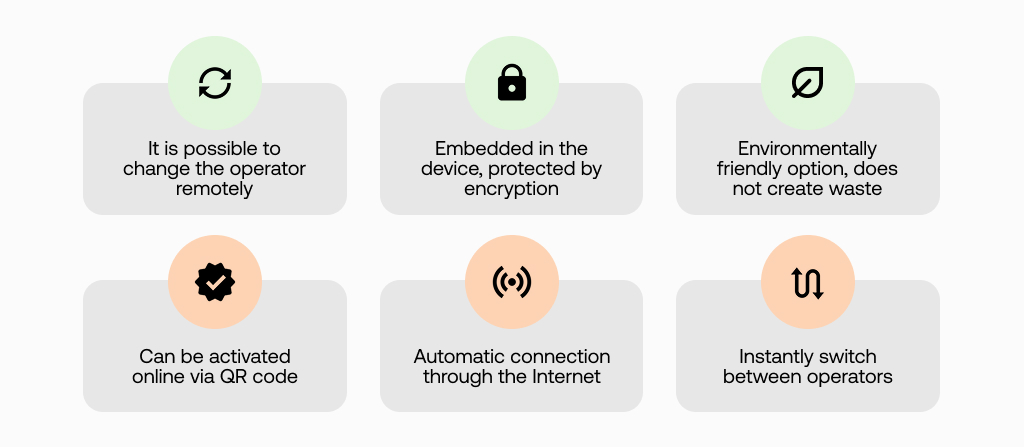
User flexibility
One of the biggest advantages of SM-DP⁺ use is the user flexibility it offers. With this technology, you are able to:
- Switch carriers
No need to switch SIM cards physically – profile switching is remote.
- Use multiple profiles
New eSIM devices have the ability for multiple profiles, which can be used in various regions or for various purposes (e.g. personal and business use).
- Accelerate subscription activation and renewal
Spending a couple of minutes downloading and installing a profile is a massive time benefit compared to other ways.
Economic and operational advantages for operators
- Cost savings
Removal of physical equipment needed to produce and distribute plastic SIM cards saves money considerably.
- Increased flexibility
Centralized profile management enables you to roll out subscription changes and push updates to users in near real time.
- Improved analytics capabilities
Gathering data on profile activation and usage procedures enables operators to tailor their tariff packages as well as customer experience.
The future of SM-DP⁺ technology
Standardization developments
As technology advances and the number of devices using eSIMs grows, we can expect to see further improvements in the standards governing SM-DP⁺ operations. The GSMA continues to work on new specifications that will address the emergence of new cybersecurity threats as well as the needs of users and operators. Future updates may include:
- New security protocols
Development and implementation of enhanced encryption and authentication algorithms to improve data protection.
- Enhanced integration capabilities
Improved compatibility with cloud technologies and IoT device management systems.
- Interoperability
Developing standards that allow different remote management systems to work seamlessly even in multivendor environments.
Influence on 5G and IoT
SM-DP⁺ systems are more and more utilized in 5G networks and the IoT. Since the number of connected devices is rising explosively, centralized profile management is increasingly becoming a necessity. The advantages to the IoT are:
- Mass device management
Operators can centrally update profiles of thousands and even millions of devices with SM-DP⁺, which is easier to manage.
- Higher reliability
In IoT environments, where security is usually a secondary consideration, the application of sophisticated cryptographic methods ensures data protection and keeps unauthorized access at bay.
- New applications enable
Integration with 5G technologies will facilitate new solutions for smart cities, autonomous transport, and other next-generation use cases.
Development opportunities and innovations
SM-DP⁺ has promising prospects. In the coming few years, there will be new features that will enhance remote profile management features:
- Cloud platform integration
Cloud-based solutions have the potential to offer higher scalability and responsiveness of updates, and enable operators to take advantage of real-time analytics.
- Mobile apps for profile management
Creating end-user-centric interfaces enables users to manage profiles on their own, switch operators, and be alerted of current subscription status.
- Enhancing user experience
Protocol optimization and system response time reduction will enable users to access services even quicker, which will be a competitive edge for operators.
To sum up
SM-DP+ Address is the technology backbone of the eSIM ecosystem. Through GSMA standards, it unifies interactions between operators, devices and users, eliminating the need for physical SIM cards and opening up new opportunities for IoT, global roaming, and dynamic plans. High levels of encryption and authentication make eSIMs more secure than traditional solutions. With the development of 5G and smart devices, SM-DP+ will become the foundation for innovation in telecommunications, making connectivity fast, affordable, and future-proof.
To avoid problems during eSIM setup, use trusted providers. For example, travel eSIM by Ohayu is a convenient solution if you need to activate your eSIM abroad. It has country plans for 170+ destinations and a Global subscription that can connect you to local mobile networks in 120+ countries.