


Most mobile networks in Belgium are owned by three main operators: Proximus, Orange, and Telenet. The fourth provider, DIGI, joined the telecommunications market in 2024 and started building 5G sites using Proximus’ 4G network under roaming agreements. Together, these carriers have country-wide mobile internet service, flexible pricing plans, and fast mobile internet for locals and tourists.
Aside from the main MNOs, there are international eSIM providers, like Ohayu, which sell data-only packages for travelers. Data plans are available online, so travelers don’t need to visit a physical store or speak the local language. After installation, the eSIM connects to Telenet, Proximus, or Orange networks and works like a regular data-only local SIM card (no SMS and calls).
In this article, we will see which Belgian mobile operator has the best rates, 5G coverage, and network capacities.
Belgian mobile market overview
Belgium is a small but technologically powerful country. It has a compact geography and developed infrastructure. The mobile communications market here has high-quality coverage, competitive rates, and the gradual introduction of new technologies, including 5G.
The country ranks 37th in the Speedtest Global Index (Mobile). Belgium mobile operators offer high internet speeds with an average download speed of 128.77 Mbps and an expected latency of 23 ms.
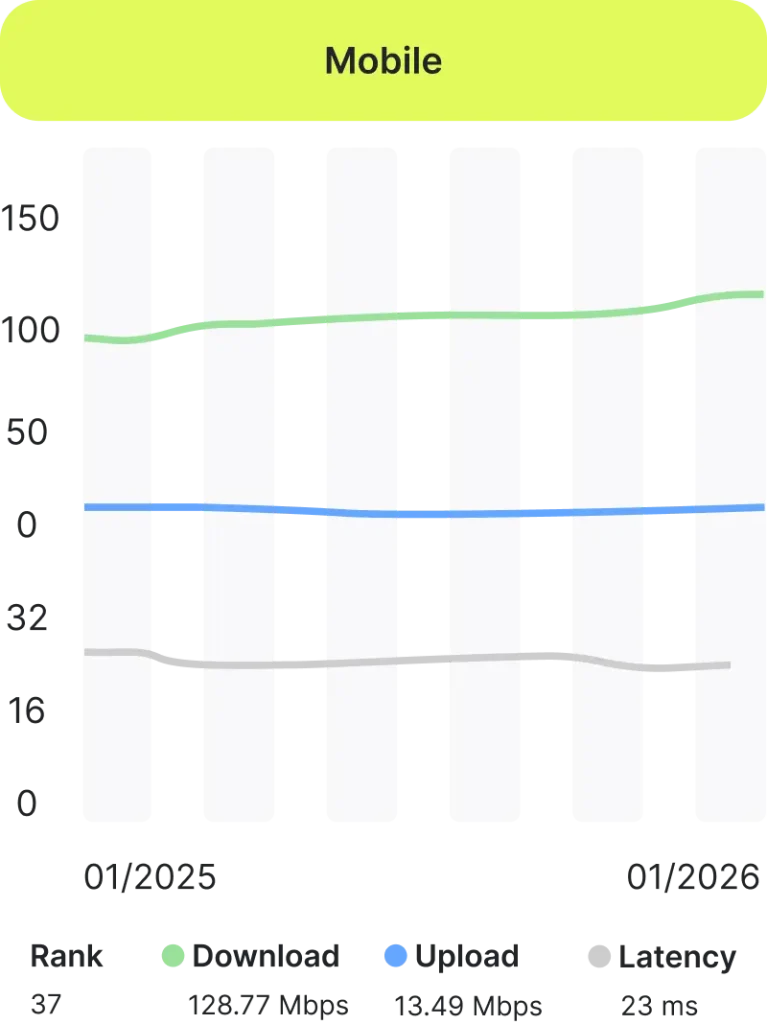
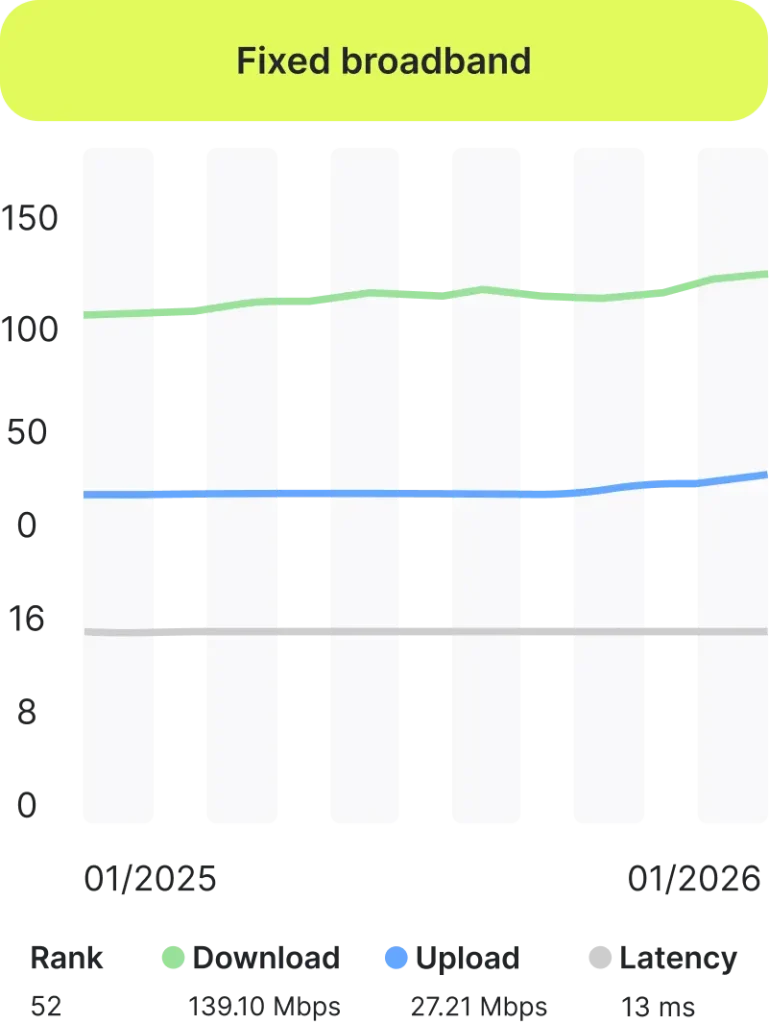
In this table, I’ve added other countries to show you the differences in mobile download and to illustrate what speeds you can expect during the country visit (updated in March 2026).
| Place | Country | Median mobile download speed |
| 6 | Brazil | 264.39 Mbps |
| 7 | South Korea | 252.97 Mbps |
| 10 | United States | 209.17 Mbps |
| 13 | Denmark | 189.00 Mbps |
| 14 | Netherlands | 175.98 Mbps |
| 26 | France | 151.91 Mbps |
| 37 | Belgium | 128.77 Mbps |
| 42 | Australia | 121.01 Mbps |
| 59 | Germany | 75.88 Mbps |
| 80 | Nigeria | 46.77 Mbps |
| 94 | Tanzania | 34.19 Mbps |
Coverage quality and 5G expansion
There are almost no coverage gaps in Belgium compared to larger European countries. In large cities such as Brussels, Antwerp, and Bruges, mobile internet operates at speeds that allow you to watch high-quality videos or join online conferences without interruption.
In rural areas, speeds are slightly slower, but the connection remains stable. You can expect 10-15 Mbps upload speed.
Another feature of the Belgian market is the active transition to 5G. Proximus and Orange are already testing and expanding their next-generation networks, while Telenet is also increasing its presence. For users, this means access to ultra-fast Internet, reduced latency, and comfortable operation even during peak hours.
eSIM in Belgium
Traditional SIM cards still dominate the market, but eSIM is becoming a popular technology. This is especially relevant for tourists who come to Belgium for a few days or weeks and don’t want to waste time looking for a physical SIM card in physical stores.
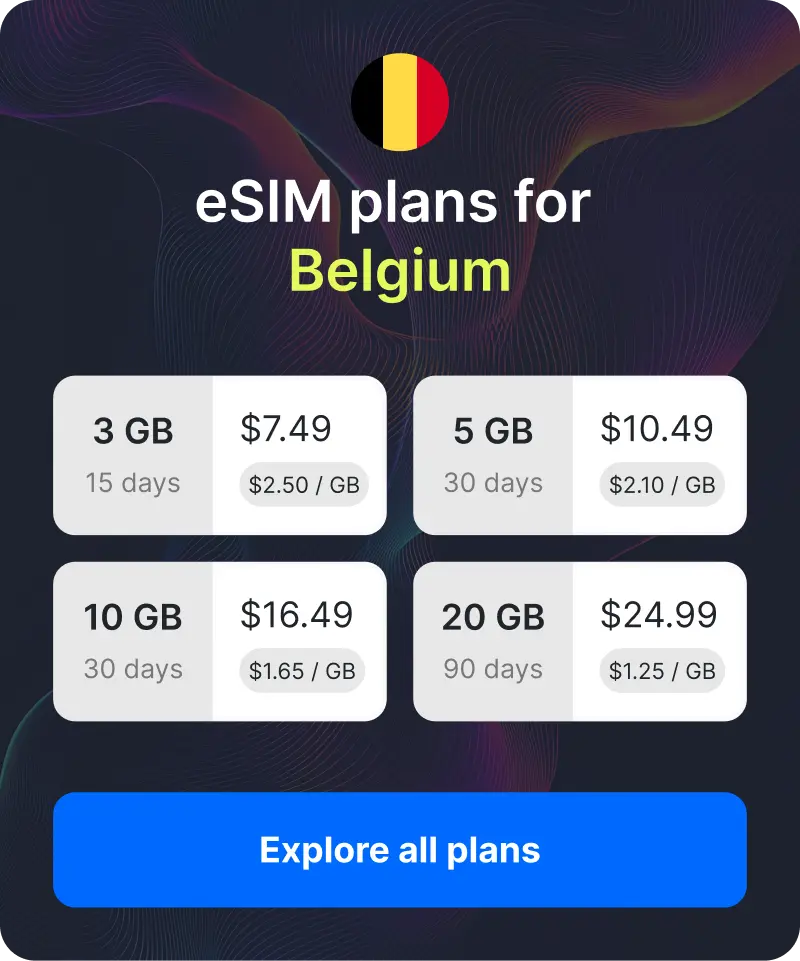
Ohayu allows you to select a plan online, download and install the eSIM profile to your smartphone, and connect to local Belgian networks to get mobile internet when you arrive in Belgium. This is convenient not only for travel but also for those who frequently cross borders and don’t want to carry several SIM cards. This approach is in line with mobility and digitalization, which are trending in European countries. eSIM plans start at $7.49 for 3GB.
It is important to check your iPhone or Android device compatibility before buying a Belgian eSIM. Find it in the compatible devices list, or dial *#06#. It is not a call, but a free request to the smartphone’s settings. If you see the EID number after dialing, your device is eSIM-compatible.
Top 3 Belgium mobile operators
Now let’s take a closer look at Belgium mobile operators, what makes them special, and which tariff plans appeal to clients.
- Proximus is the oldest and largest carrier in the country. Its main advantage is its coverage, reaching both large cities and small towns. It is the optimal choice for those who prioritize stability.
- Orange has affordable plans and simple connection conditions. Orange often provides promotions and packages with an emphasis on data, making it attractive to heavy internet users. Coverage quality and speed in large cities are high.
- Telenet has a strong network in the northern part of the country, particularly in Flanders. It focuses on high-speed mobile internet and a combination of mobile services with home internet and television. This is an advantageous option for those who want an all-in-one solution.
Orange
Orange is known for its customer focus and digital services. For example, Orange is developing solutions for smart homes and offers attractive packages for those who work with large amounts of data (Unlimited 5G Ultra for €32/month). This provider has transparent terms and conditions, with no hidden fees or confusing fine print.
Another unusual advantage is that Orange often adds travel bonuses, making roaming in EU countries as inexpensive as possible. This makes it attractive for frequent EU travelers.
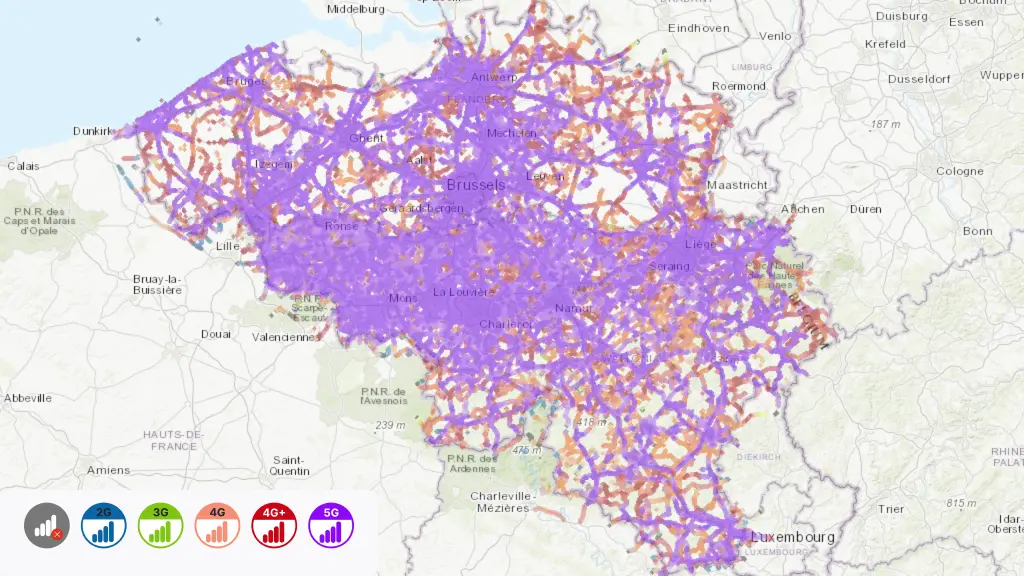
Orange has a particularly strong position in Brussels, Antwerp, and Ghent, as well as in tourist centers such as Bruges, where it provides stable and fast coverage. Based on SpeedGeo reports 2026, the operator delivers 104.5 Mbps download and 22.2 Mbps upload speed. The latency is 31 ms.
For convenience, the packages are divided into two types: Mobile Subscription and Data Subscription.
- The cheapest Mobile Subscription plan costs €8 for calls and SMS within Belgium + 2 GB of data.
- The most expensive is €52. It covers calls and texts, 300 GB, 3000 minutes or SMS within the EU zone.
If you only plan to use data, you will spend from €11 to €32 (from 10 GB to unlimited, respectively).
Proximus
Proximus is associated with reliability and trust. It is not always the cheapest, but it has the image of an enterprise-focused carrier. Its distinctive feature is a wide range of digital solutions: from corporate packages with a high level of data protection to 5G-based services.
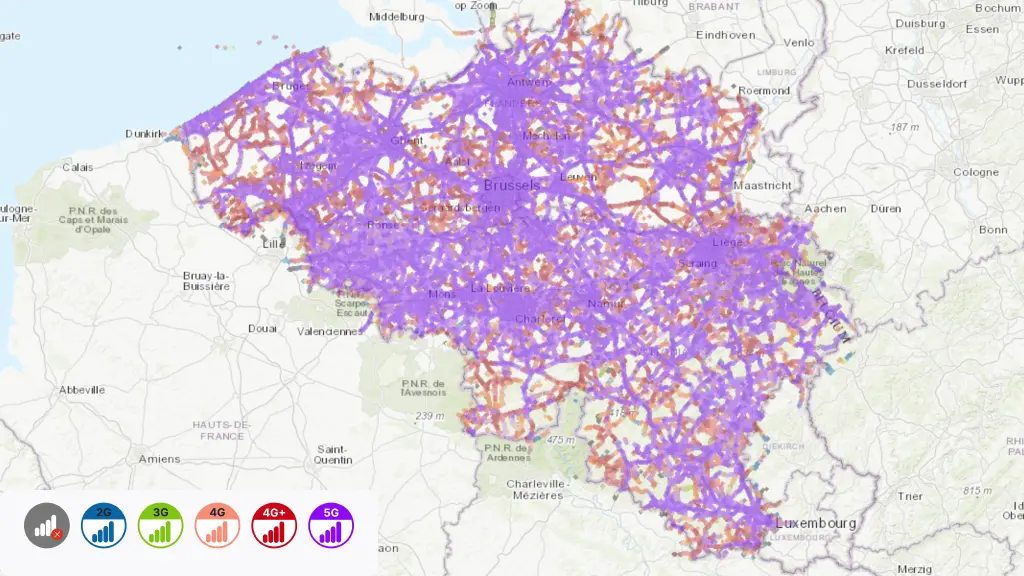
Proximus actively works with businesses that value stability and cybersecurity. It was the first in Belgium to begin large-scale deployment of fiber optic infrastructure, which provides stable and fast mobile internet even in places where other providers lose signal.
The Proximus network is strongest in Brussels, Liege, and Namur, and in smaller towns and villages. Proximus has an average of 100.9 Mbps download and 20.2 Mbps upload performance. Latency is 31 ms.
- Packages start at €14.99 for 5 GB, 150 min and unlimited SMS.
- Mobile Maxi package is €21.99 for 120 GB, no limits on calls & SMS, 5G up to 500 Mbps.
- Unlimited data starts from €34.99.
Telenet
Telenet stands out for its flexibility and ability to create hybrid solutions. It combines mobile communications with cable TV and home Internet. Thanks to this, subscribers receive a lower price for packages compared to separate services.
In addition, Telenet has a reputation for fast-speed mobile data and home internet. Another interesting feature is that the company is investing in its own Wi-Fi hotspot network across the country. It creates additional access points for customers to stay online even without a mobile signal. This makes Telenet unique among its Belgian competitors.
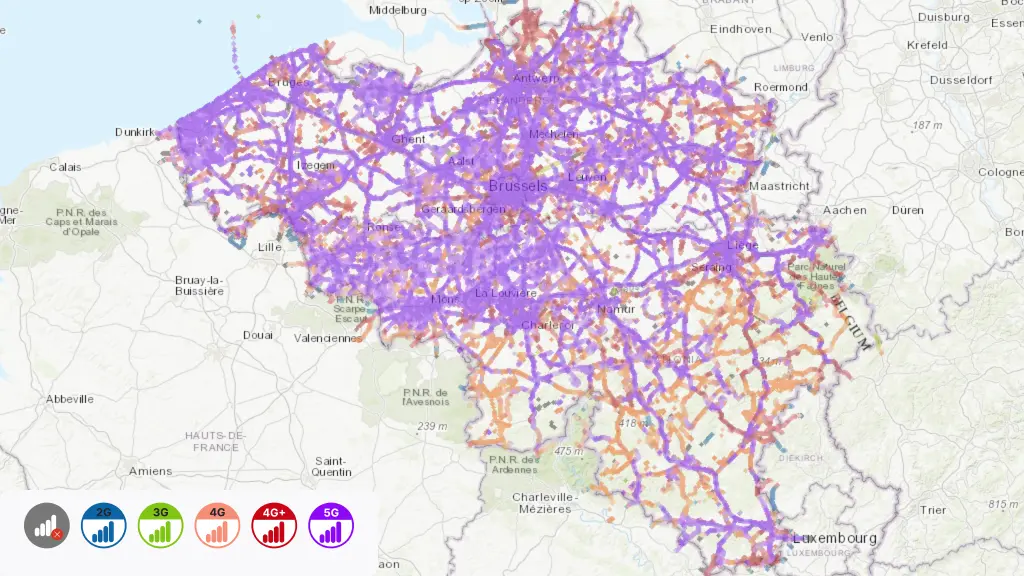
Telenet has the strongest coverage in Flanders, particularly in Antwerp, Leuven, and Mechelen, where the operator has historically developed its network and now gives the highest mobile speeds.
Telenet reaches 81.6 Mbps for downloads and 21.3 Mbps for uploads. Latency is 40 ms.
The provider has ONE packages that also cover home data. Prices start at €50 per month.
DIGI
DIGI is the fourth Belgian MNO (Mobile Network Operator) that joined the market in December 2024. Its parent company is Romanian Digi Communications that created a joint venture with Belgian telecom company Citymesh. As a result of a 5-year roaming agreement with Proximus, it started using its 4G network and creating its own 5G sites and optical fiber infrastructure at the same time.
The provider entered the market with an aggressive price-reduction strategy and the lowest prices for mobile internet. Now they have three cheap mobile plans.
- 7 GB for €3/month.
- 30 GB for €5/month.
- 40 GB €7/month.
Considering that it relies on the Proximus network through roaming, the speed results are similar to Proximus’ 4G.
Belgium mobile operators comparison
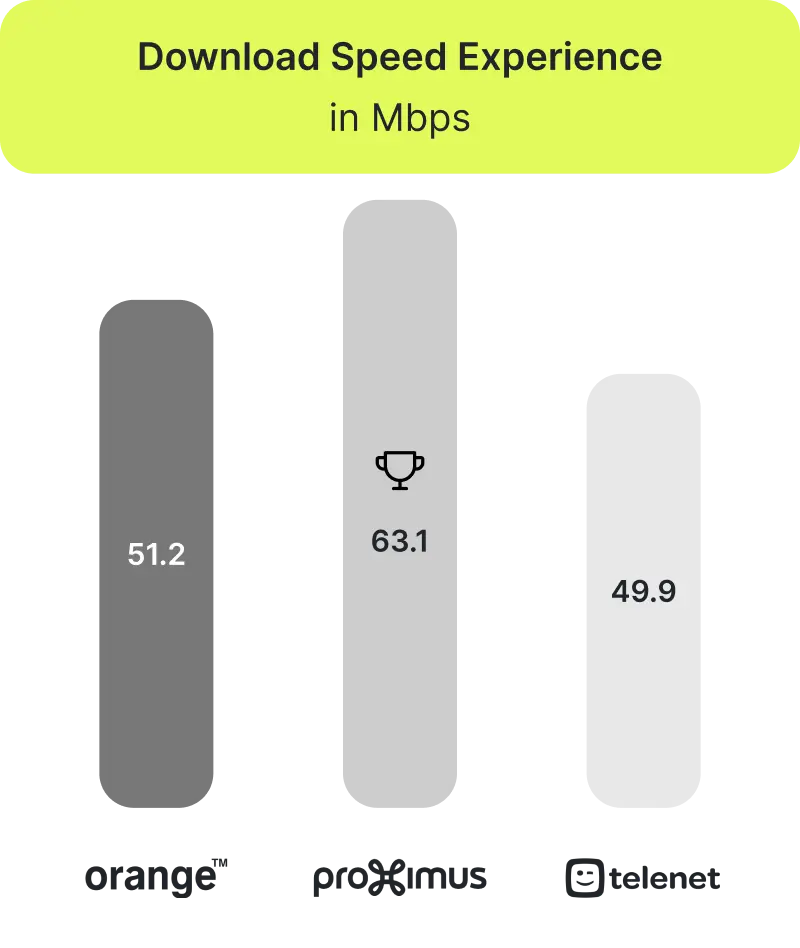
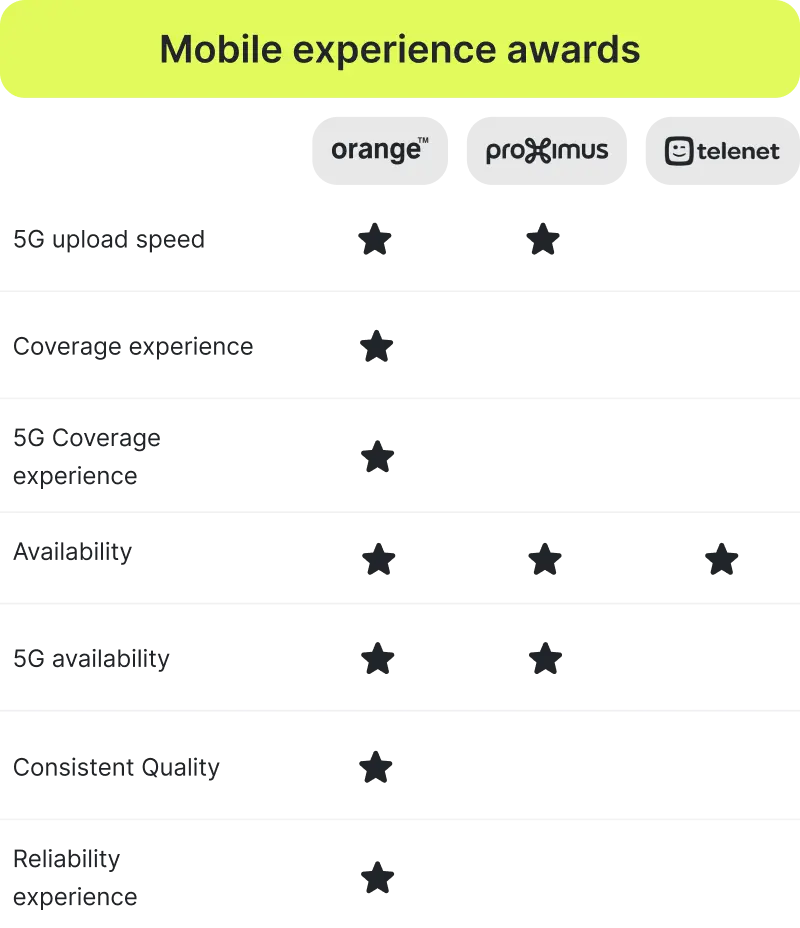
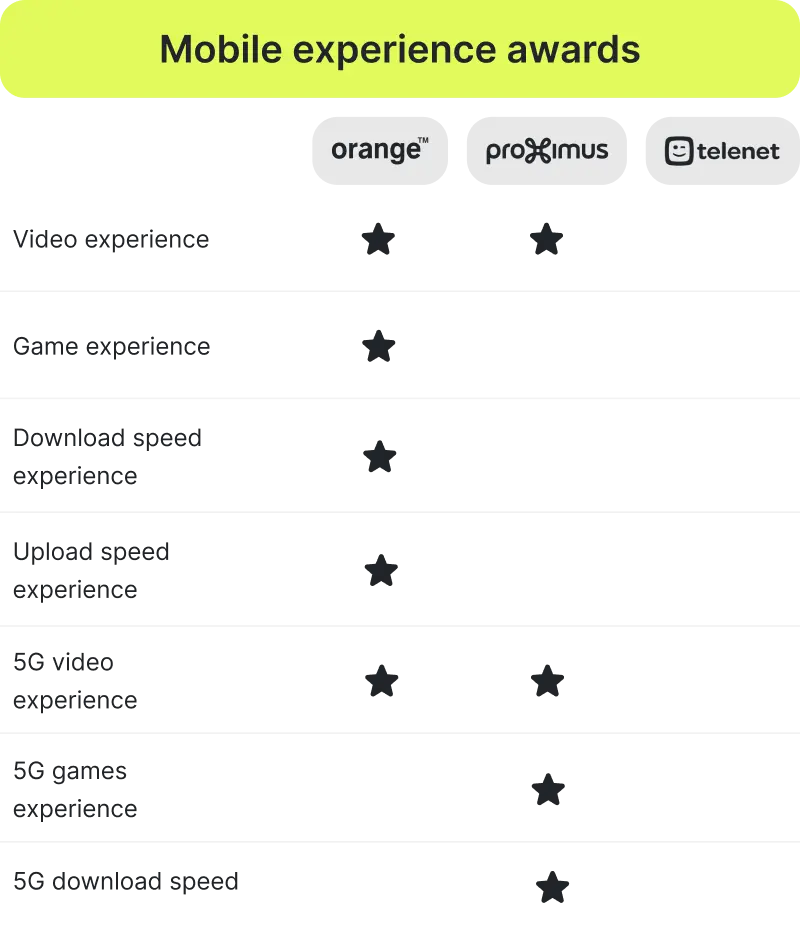
The Opensignal report for March 2025 shows that Proximus leads in data upload and download speeds.
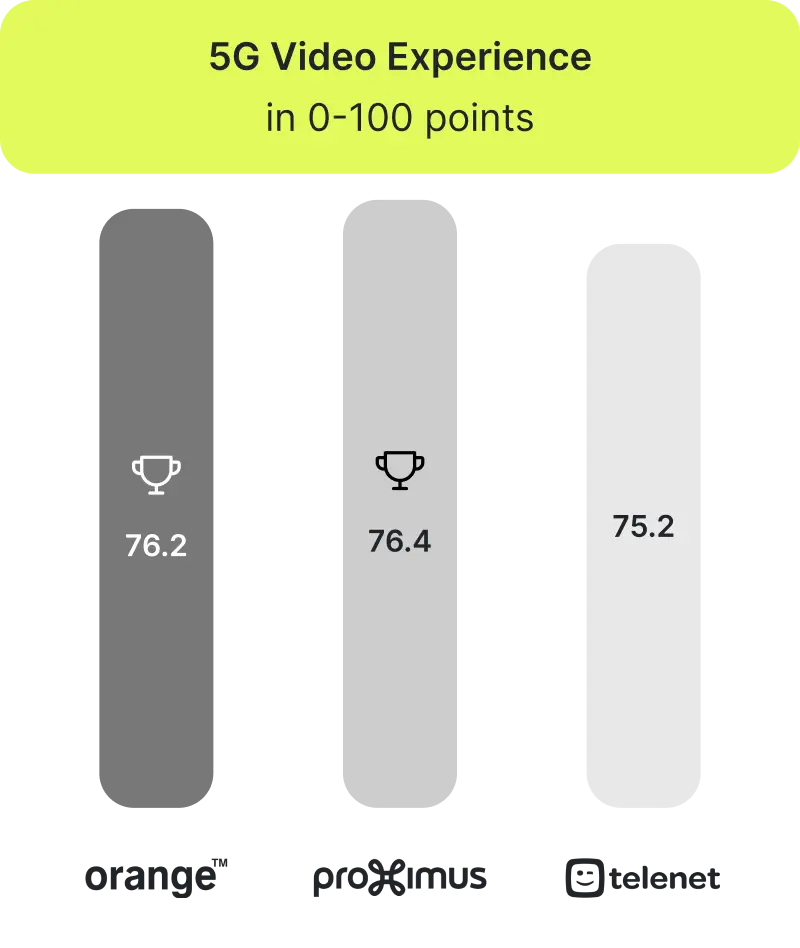
Several carriers received awards in the 5G category. Orange shared awards for video and gaming quality in next-generation networks. Proximus became the leader in 5G speed and availability. Telenet also performed well, with awards for coverage and availability.
Final thoughts
Proximus is the leader in terms of speed, stability, and coverage. Orange excels in multimedia and 5G gaming. Telenet focuses on developing a 5G signal. DIGI provides the lowest prices for data packages. Each operator has its strengths, and the choice depends on your priorities, whether it’s stability, speed, or cost.
For those who want to get a travel eSIM, Ohayu is also worth considering. A Global Plan works not only in Belgium, but also automatically connects to supported networks in France, the Netherlands, Germany, and 120+ other destinations.