



The main mobile networks in Canada are Bell (broadest 4G and 5G coverage), TELUS (5-year plan price lock), and Rogers (Roam Like Home plan for travelers).
Mobile communications in Canada are often compared with the United States networks due to geographical similarities. The Internet is historically more expensive here. According to the Rewheel study, published in April 2021, the minimum monthly price for a smartphone plan that included 20 gigabytes in Canada was the highest among 51 European, American, Asia Pacific, Middle East, and African countries.
However, even though Internet and cellphone prices are higher compared to other countries, 2025 CRTC (Canadian Radio-Television Communications) tracking shows that prices have decreased by 10-25% or stayed the same in several plan categories compared to previous years.
What to expect from mobile networks in Canada?
Canadian mobile service is strong in major cities and transport corridors. People report that coverage and speeds can drop in northern areas. Prices for citizens and tourists significantly differ depending on discounts, bundles, and the BYOD (Bring Your Own Device) program. Local operator prices start from $40-$60 per month for large data plans. Locals often use 2-3-year contracts with big discounts on carrier-locked devices.
Development and coverage
Canadian network operators are developing 4G and 5G networks in cities, but it is difficult to get good coverage in rural and northern areas. Not all of Canada has been reached by 5G, but providers are actively investing in the new technology. According to the Canadian Telecommunications Association, by 2026, the country will have invested $6B in 5G scaling.
Speed
According to Speedtest Global Index, Canada ranks 44th with a 113.48 Mbps download speed. In a detailed breakdown, mobile upload speed is 12.74 Mbps, while the latency is 23 ms.
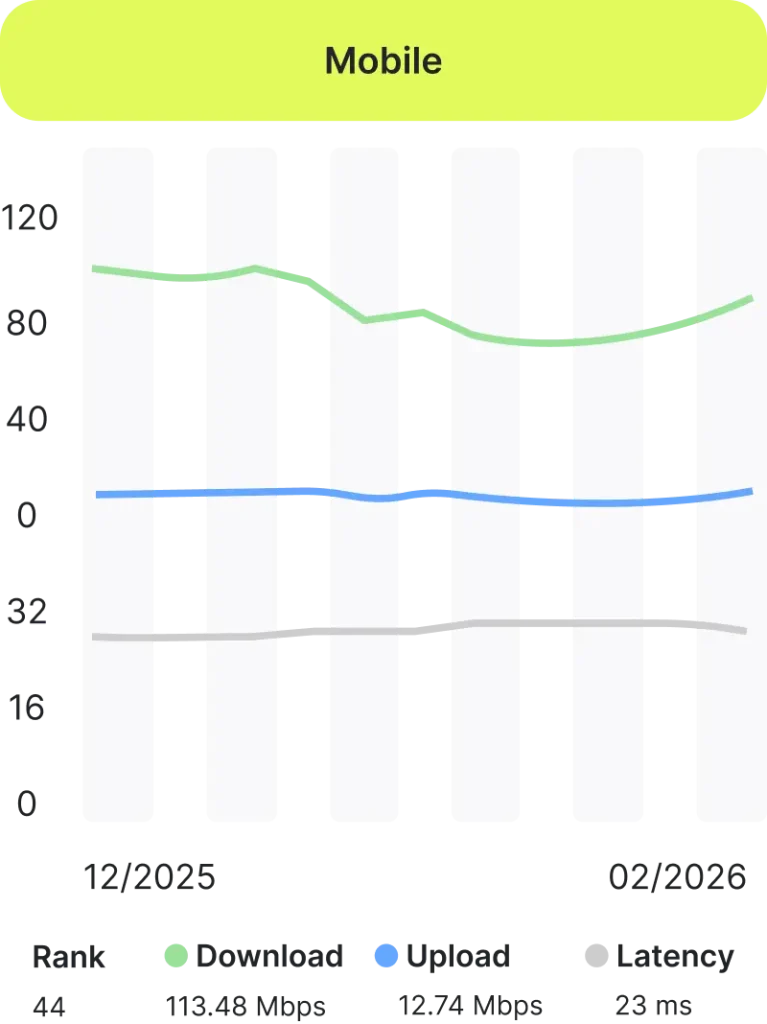
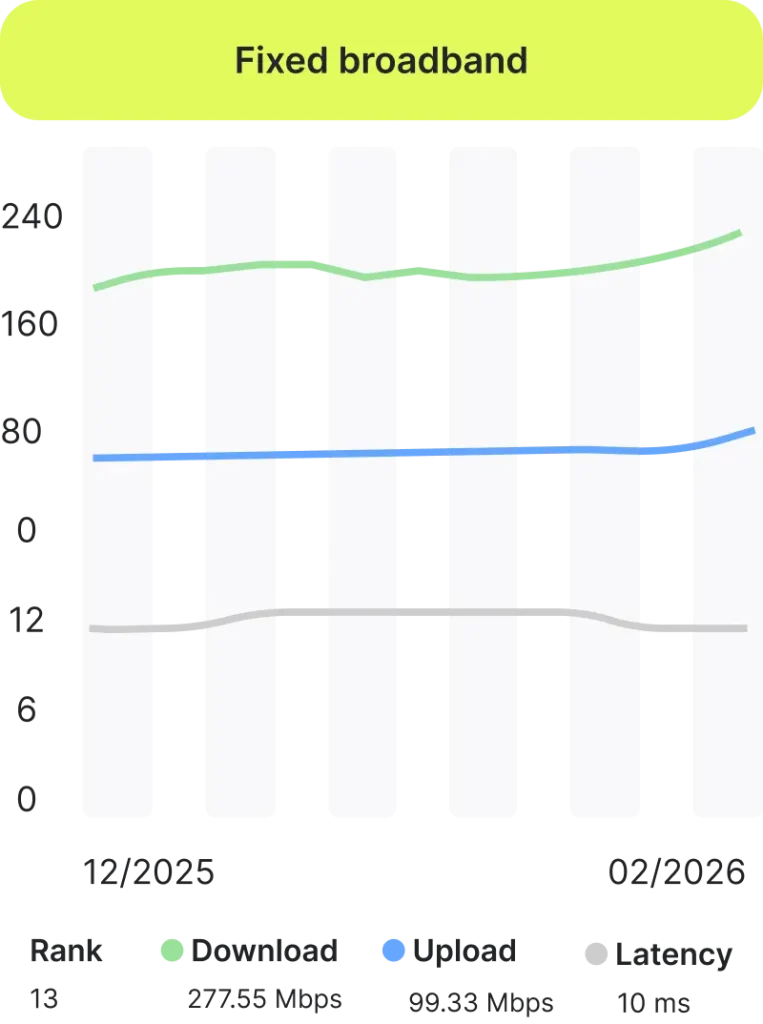
This table shows the difference in mobile download speed between Canada and other countries (updated in April 2026).
| Place | Country | Median mobile download speed |
| 5 | Brazil | 262.35 Mbps |
| 6 | South Korea | 257.05 Mbps |
| 10 | United States | 211.84 Mbps |
| 13 | Denmark | 190.85 Mbps |
| 16 | Netherlands | 176.52 Mbps |
| 27 | France | 150.50 Mbps |
| 40 | Australia | 119.32 Mbps |
| 44 | Canada | 113.48 Mbps |
| 60 | Germany | 74.78 Mbps |
| 81 | Nigeria | 49.78 Mbps |
| 96 | Tanzania | 33.32 Mbps |
Roaming
Mobile networks in Canada are regulated by the Wireless Code, which includes bill-shock protections. This way, users are protected from roaming overcharging. That means, very high rates when traveling to other countries are usual for Canadians, and therefore operators offer special limits or warnings to avoid a lot of unexpected expenses.
eSIM in Canada
An alternative way to get connected to the Canadian network without a physical SIM card is an eSIM. eSIMs are digital SIM card alternatives that are already built into most smartphones released after 2022. They are most often used by travelers to store several profiles on the same device.
Aside from obvious eSIM advantages like saving time, no ID required, quick installation and activation, the prices are often much lower than roaming or buying prepaid plans by Rogers, Bells or TELUS. E.g., Ohayu data-only eSIMs for Canada start from $10. Canada is also often included in Global eSIM packages that cover 120+ countries and automatically switch networks when users cross borders.
Before getting an eSIM for Canada, check your iPhone or Android device compatibility. You can find your phone in a compatible devices list, or dial *#06#. It is a free request to your smartphone’s settings. If you see the EID number after dialing, your device is eSIM-compatible.
The top 3 mobile networks in Canada
The three main national operators are Bell, Rogers, and TELUS.
- Bell – leader in 4G/5G coverage, media services.
- Rogers – 5G+ plans, travel roaming plans, cable TV, and Internet services.
- Telus Communications – offers plan-price stability, develops medical IoT solutions.
They own the majority of the telecommunication infrastructure and provide nearly all services available, from simple voice to data and Internet access.
In addition to these major operators, there are virtual mobile operators or MVNOs. These companies don’t have their own telecommunications infrastructure but rent it from large carriers. Virtual providers often offer cheaper tariffs or special deals. They are an important part of the market, contributing to increased competition and choice for consumers.
Bell Mobility
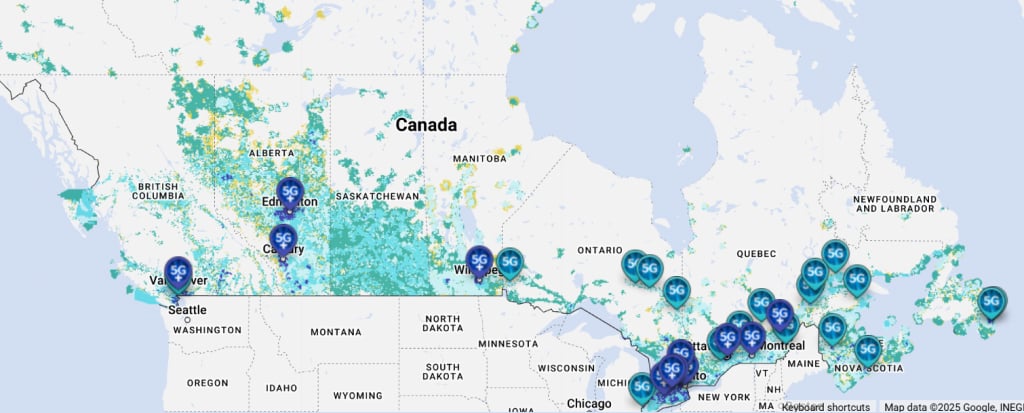
Bell has one of the best and most stable networks with extensive coverage in major cities and even remote areas. Its 5G network is among the fastest for big data, streaming, or quality video calls. It also boasts innovative entertainment solutions. The basic tariff with 100GB starts at $50 per month.
Pros:
- Excellent coverage even in mountainous or countryside areas.
- Fast 5G network for those who work remotely or stream a lot.
- Affordable family tariffs.
- Extended roaming.
- Integrated with entertainment – one of the finest things about the Bell Fiber TV platform is being able to connect communications with digital TV access.
- Reliability – the network doesn’t fail during harsh weather.
| Bell MVNOs | Prices |
| PC Mobile | $29/mo |
| Execulink Mobility | $20/mo |
Rogers Wireless
Here is one of the largest and oldest mobile operators in Canada, with fantastic coverage, particularly across major metropolitan areas like Toronto, Vancouver, and Montreal. Rogers is good in rural areas, but a little worse in the most remote parts. The price for a package starts from $55 per month.
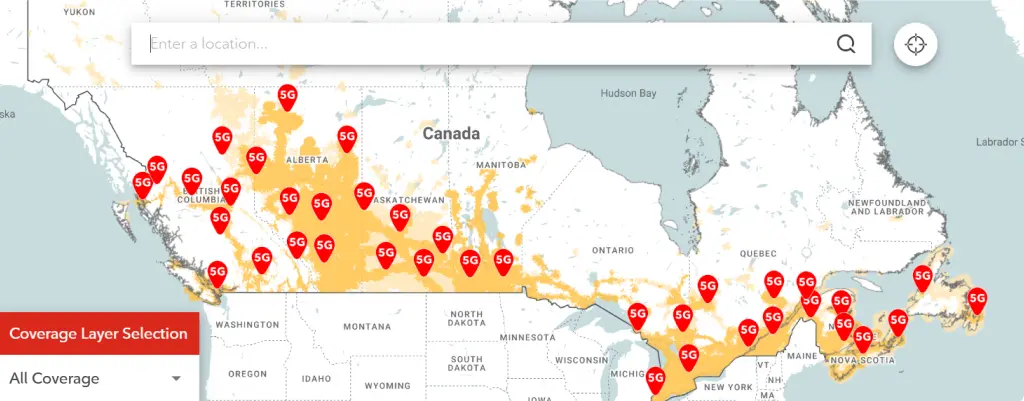
Pros:
- Bundling packages – mobile, internet, TV, and home security in one plan.
- Special benefits: tickets to the Rogers Arena and other events, with access to all NHL games for clients.
- Loyalty: Discounts on services for long-term use or combining services. Packages are available for adults 55+, newcomers, parents of kids and teens, students, and employees.
| Rogers MVNOs | Prices |
| Speak Out 7-Eleven | $25/mo |
| Fongo Wireless | free via phone app |
| Good2Go Mobility | $17/mo |
| Wundle | $50/mo |
| PhoneBox | $35/mo |
| Canadian Sim | $35/mo |
Telus Mobility
Telus is a highly reputable operator because of its high-quality communications and focus on eco-friendly tech.
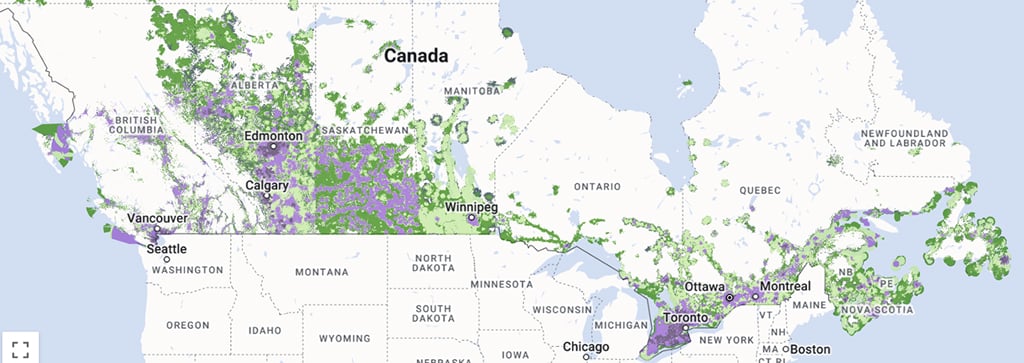
The network is well-covered in cities and functions well even in rural or hard-to-reach areas because of its sharing with Bell. The provider actively develops its eco-social initiatives and attracts clients who care about the environment. How much would that cost? Plans start from $60 for 100GB per month, and there is an option for $35/mo, including only voice and text messages.
Pros:
- Great coverage.
- Eco-projects – they are planting a tree for each new user and helping local communities.
- Health services – Telus Health-assigned access for comfortable online consultations with doctors.
- Family and business plans.
- Best value for fun – Optik TV integration and friendly rates for gamers and streamers.
- Telus has the top 1 rank in customer service in the annual Canada’s Most Respected Awards.
| Telus MVNOs | Prices |
| Wightman Mobility | $24.95/mo (no data), $39.95/mo (from 200MB of data) |
| CTExcel | $29/mo |
Detailed comparison of Canadian mobile operators
Now is the time to analyze these three industry-leading mobile networks in Canada. We can track their performance in light of the Opensignal report for February 2026. It concerns download and upload speeds, coverage, video quality, gaming experience, and accessibility:

Rogers is the leader when it comes to mobile services. It is great for users who regularly watch videos online and value a smooth experience.
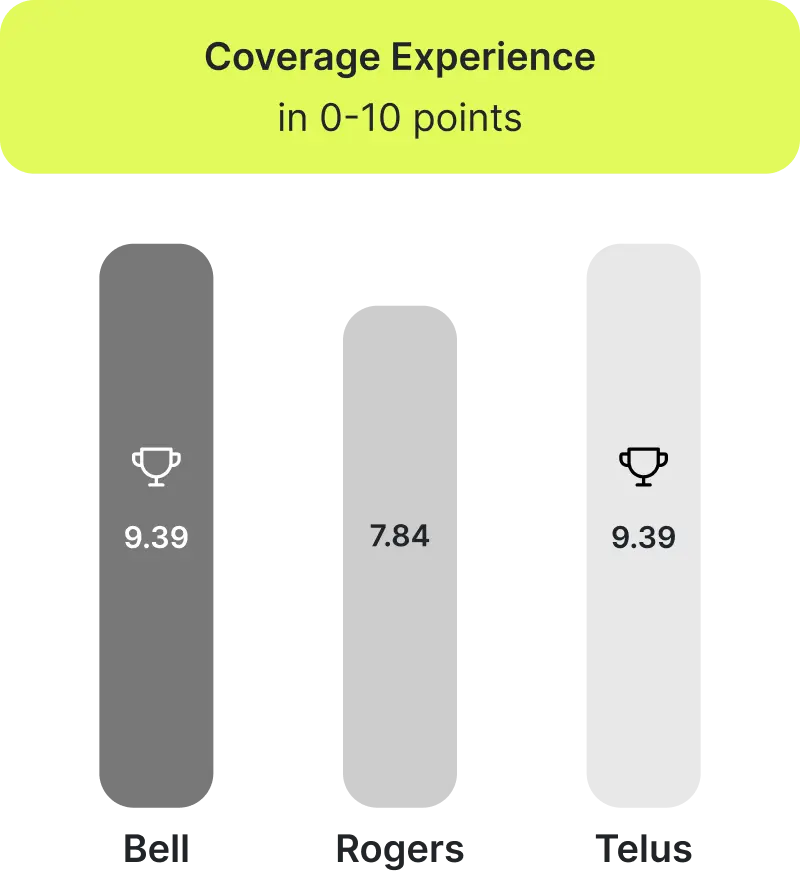
Telus has extensive coverage (most of all rural areas included) and very high performance in gaming-on-the-go, meaning top position for both gamers and people on the road.
Bell remains supreme in data download speeds, while it shares the spotlight with Telus in coverage and gameplay. That’s why it’s great for those who download large files or are active users of cloud services.
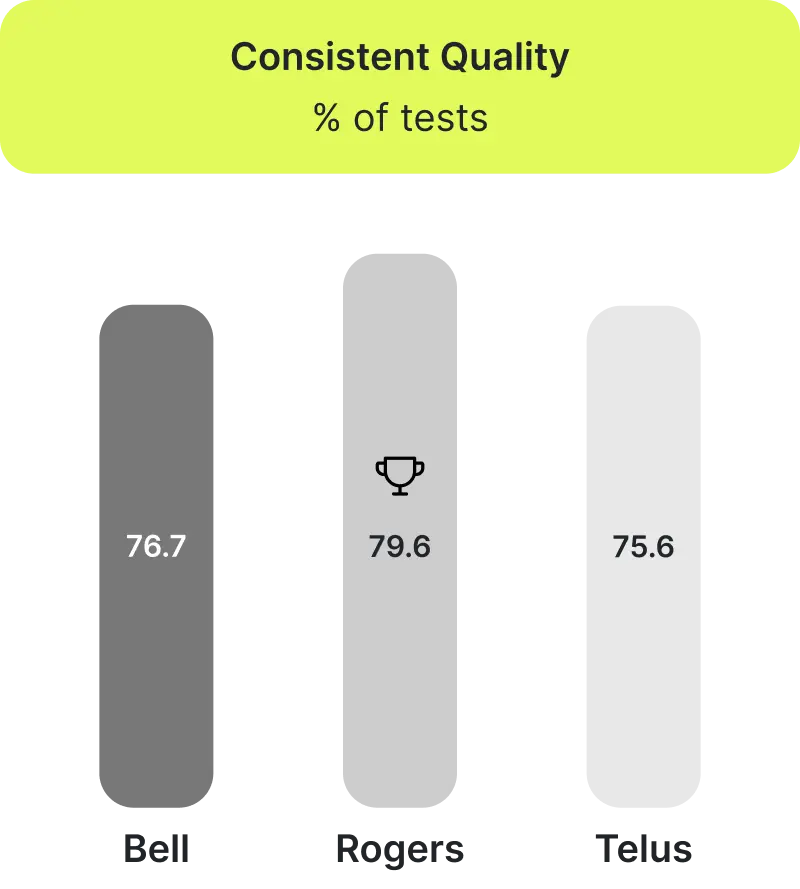
In a detailed view, each provider showed the following results (with points).
Coverage experience and availability
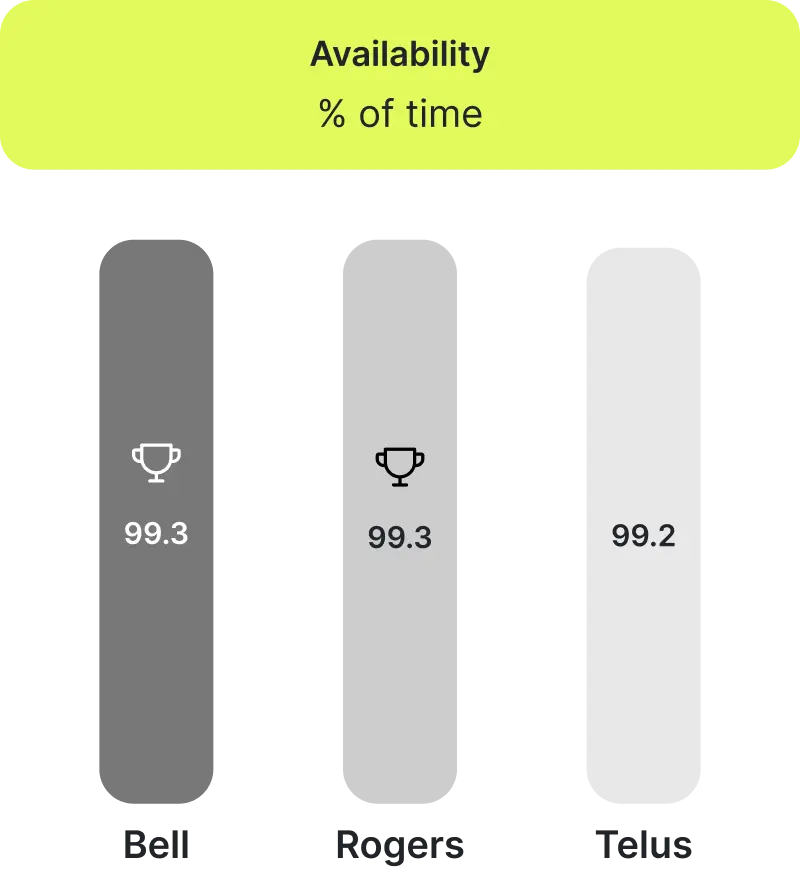
Consistency & reliability

Final thoughts
As in every country, Canada’s mobile networks have their specific features.
For a 2026 comparison, Bell looks strongest on recent speed awards with the best 5G metrics, Rogers stands out more on roaming-friendly and cross-border plan features, and TELUS has plan-price stability and strong quality metrics. The best choice depends on whether you care most about speed, roaming convenience, or pricing structure.
Also, although high tariffs and no short-term packages may disadvantage travelers, eSIM technology powered by international data plans greatly simplifies getting mobile internet in Canada. E.g., Ohayu lets you access local data without physical SIM cards. Rates are cheaper, and the plans are more flexible (subscribe or pay per GB).